Vacuum sealer pulling the air out but leaving a weak or open seal? A sealer that will not seal is usually a bag placement or seal-bar issue, and most fixes take only a minute.
Here is why a sealer will not seal and how to fix it.
This article will teach you:
- How the seal is made
- Why it fails
- What to check first
- When a part has failed
Why It Won’t Seal
- The bag not flat across the seal bar.
- Moisture or food on the seal area.
- A dirty or damaged seal bar strip.
- A worn seal gasket.
What You’ll Need
- A dry cloth
- Compatible bags
- Your owner’s manual
How to Fix a Sealer That Won’t Seal
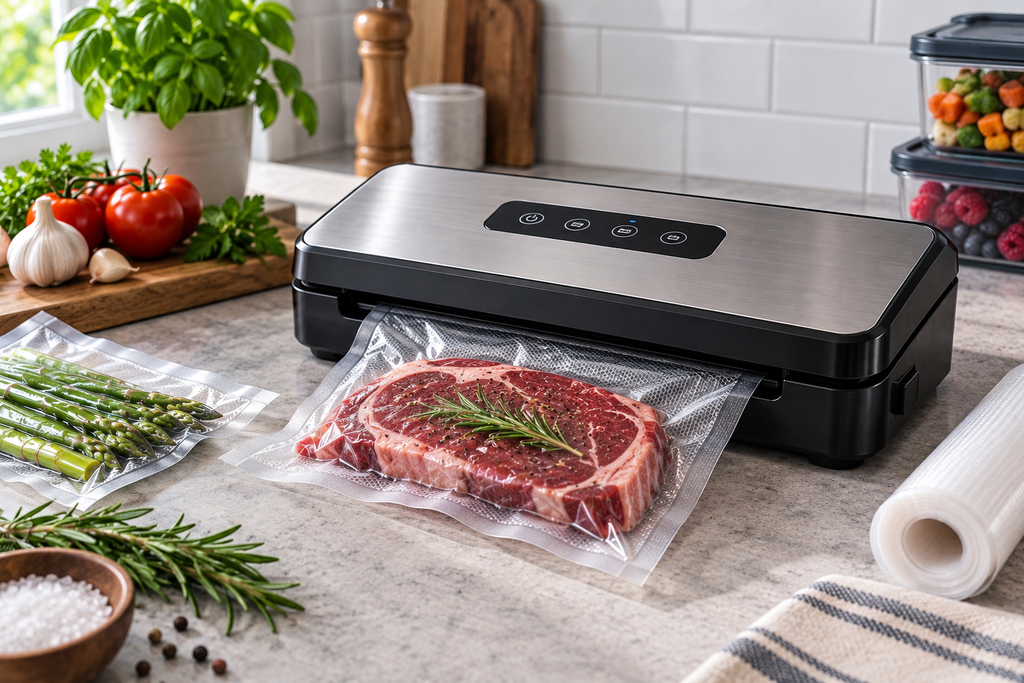
- Lay the bag flat. Place the open end flat and wrinkle-free across the seal bar.
- Dry the seal zone. Wipe moisture and crumbs from the bag end and bar.
- Clean the bar. Wipe the heat strip and check for damage.
- Use a manual seal. Try the manual seal button for a longer seal on tricky bags.
Pro Tip: A wrinkle across the bag end is the top reason for a failed seal. Smooth the open end perfectly flat on the seal bar, and most weak seals disappear.
When to Look a Little Deeper
Because sealing ties to the bar and gasket, it helps to check those, and reviewing the seal bar, a worn gasket, or a bag leak can reveal the cause.
When to Call a Pro
If the bag is flat and dry and the bar is clean but seals still fail, the heating strip or element has failed. On most home sealers, replacement is the practical route.
Related guides
- Keep a KitchenAid Stand Mixer from Moving While Mixing
- Food Dehydrator Essentials: 10 Reasons of Having One
Wrapping Up
A failed seal is usually placement or the bar. Here’s the recap:
- Lay the bag flat and wrinkle-free.
- Dry the seal zone.
- Clean the seal bar.
- Try a manual seal.
Smooth the bag flat first, and seals usually hold. You’ve got this.
With the cause confirmed, order the vacuum parts for your exact model and keep the old part until the repair has passed a full cycle.