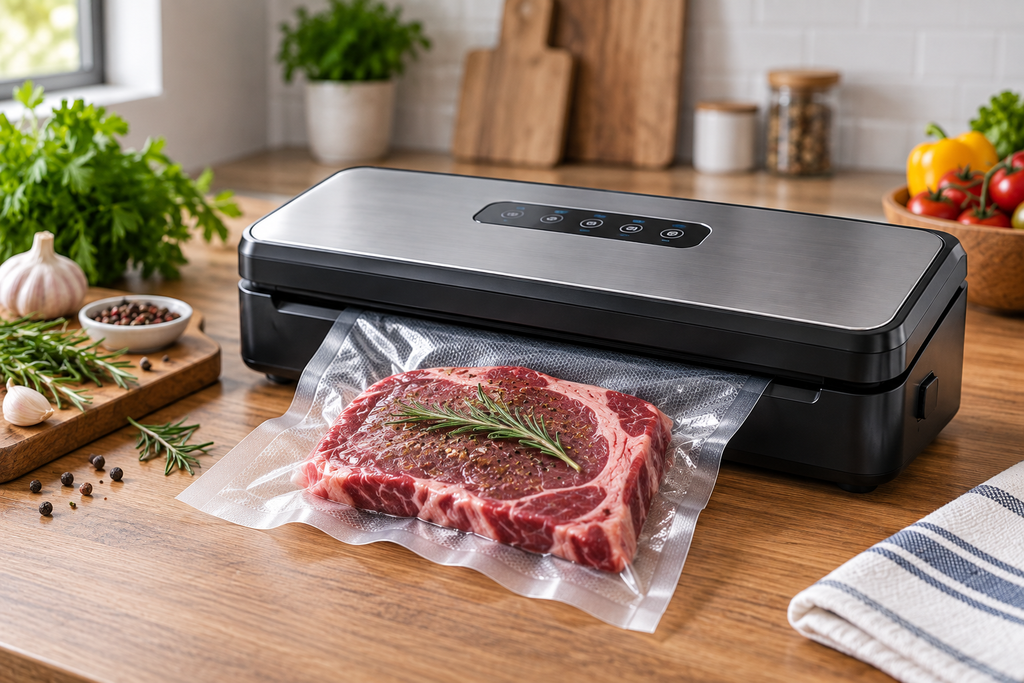
Sealer losing suction or struggling to pull air lately? The foam gaskets that form the airtight chamber wear out with use, and a flattened or cracked gasket is one of the most common sealer failures.
Here is how the gaskets work and how to fix them.
This article will teach you:
- What the gaskets do
- Why they wear out
- How to clean and replace them
- How to make them last
Why the Gasket Wears
- Compression from repeated sealing.
- Heat hardening the foam over time.
- Food and moisture degrading the gasket.
- A gasket dislodged from its groove.
What You’ll Need
- Replacement gaskets for your model
- A cloth
- Your owner’s manual
How to Fix a Worn Gasket
- Inspect the gaskets. Look for cracks, flat spots, or a gasket out of its groove.
- Clean them. Wipe food and moisture from the gaskets and channel.
- Reseat. Press a dislodged gasket back into its groove.
- Replace. Fit new gaskets if they are hard, cracked, or flattened.
Pro Tip: Store the sealer with the lid unlatched. Latching it down between uses keeps the gaskets compressed, which flattens them faster and shortens their life.
When to Look a Little Deeper
Because the gasket forms the vacuum, it helps to check related parts, and reviewing a sealer that will not vacuum, a lid latch problem, or a sealer that will not seal can reveal the cause.
When to Call a Pro
Gaskets are a DIY replacement on most sealers. If new gaskets do not restore suction, the pump is the next suspect.
Related guides
- Toaster Lever Won't Stay Down: Safe Checks Before Replacement
- Multi-Cooker Basics: Selecting and Utilizing Your Kitchen Ally
Wrapping Up
Worn gaskets are a common, fixable wear item. Here’s the recap:
- Inspect for cracks and flat spots.
- Clean the gaskets and channel.
- Reseat a dislodged gasket.
- Replace hard or flattened gaskets.
Replace the gaskets, and strong suction returns. You’ve got this.
The last step is the part itself: match a vacuum parts to your model number rather than to a photo or a part name.