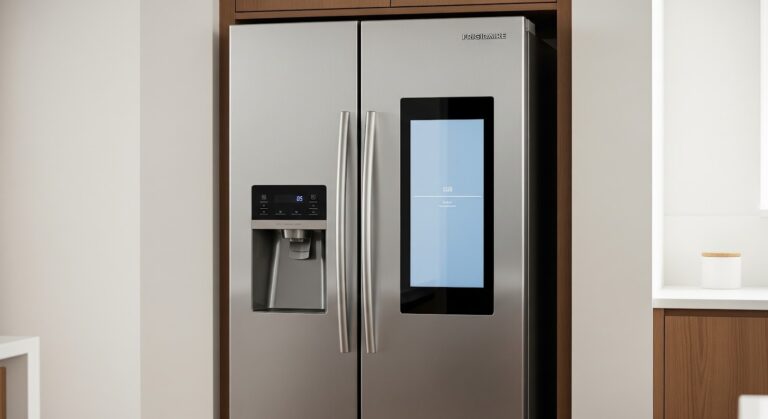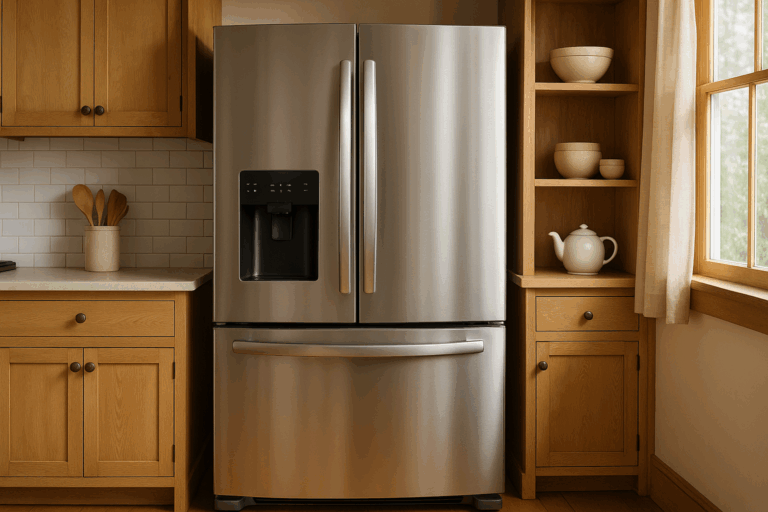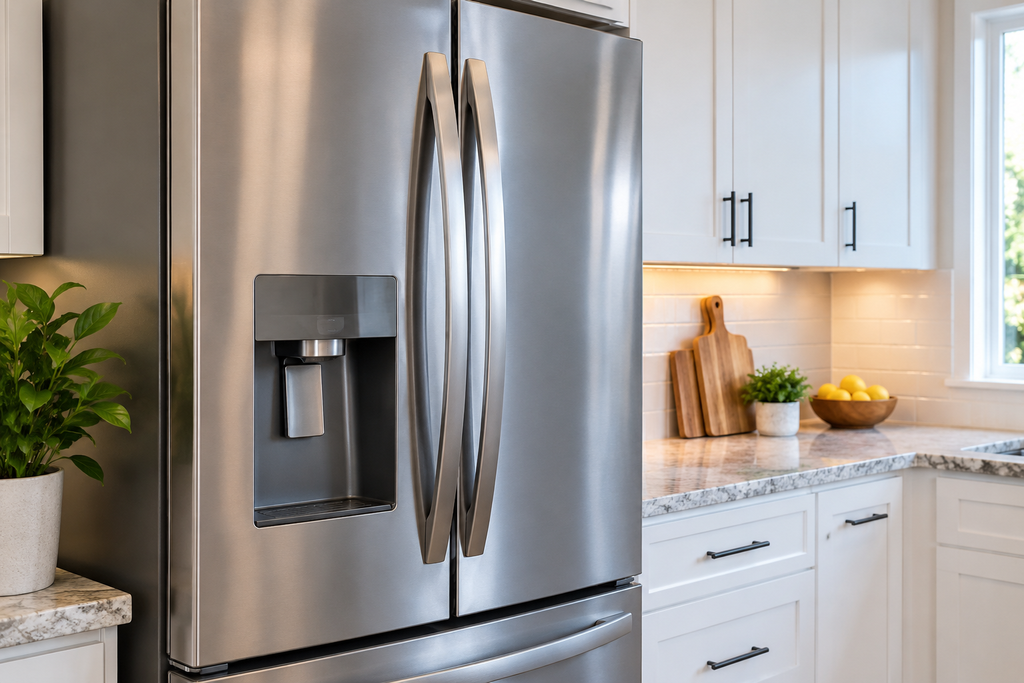
The problem called refrigerator door pops open when freezer door closes can happen because one compartment pushes air through the shared cabinet passages. That brief pressure can move the other door. A small bounce that ends with the refrigerator door sealing again may be normal. A door that stays open can warm food and waste energy.
The key question is what happens after the door moves. Does it settle back against the cabinet, or does a gap remain? Checking the load, gasket, cabinet position, and closing force can often solve a refrigerator door not sealing problem before service is needed.
Quick diagnosis table
Decide first whether the door reseals, then work through the rows in order.
| Symptom detail | Likely cause | What to check | Fix or part |
|---|---|---|---|
| Door bounces, then reseals | Air pushed between compartments | Watch door for several seconds | Normal, close doors gently |
| Door stays open after freezer shuts | Package or drawer blocking closure | Check shelves and drawer tracks | Clear items, push drawers in |
| Visible gap at gasket | Dirty, twisted, or worn gasket | Inspect folds for tears, flat spots | Clean with mild soap, press into channel |
| Cabinet rocks when door moves | Refrigerator not level | Level on top, check feet contact | Adjust leveling feet |
| Door swings out when released | Heavy load on door shelves | Check weight at outer edge | Move heavy items toward hinge |
| Door sags or rubs cabinet | Worn hinge or door closer | Watch hinges as door moves slowly | Arrange service |
Why a Refrigerator Door Pops Open When Freezer Door Closes
Many refrigerators have air channels between the fresh-food and freezer sections. The channels let cold air circulate. When the freezer door closes quickly, it pushes air through the cabinet. The pressure can nudge the lighter or less secure refrigerator door outward.
Several conditions make the movement more noticeable:
- The freezer door is slammed or closed with strong force.
- The refrigerator door was already resting against the gasket without fully sealing.
- A package, shelf, or drawer prevents complete closure.
- The cabinet leans forward or to one side.
- The gasket is dirty, twisted, loose, or worn.
- Heavy items in the refrigerator door pull it away from the cabinet.
- A hinge or door closer is worn or out of position.
A quick movement alone does not prove a fault. The problem begins when the refrigerator door remains open, opens far enough to trigger a light or alarm, or repeatedly needs a push to seal.
Signs the Door Fails to Reseal
Inspect the door after several normal closing tests. Look for signs that cold air can escape.
- A visible gap remains between the gasket and cabinet.
- The interior light stays on or a door alarm sounds.
- Condensation forms near the opening.
- Food near the door feels warmer than expected.
- Frost develops around an air passage or freezer opening.
- The door swings outward when released from a nearly closed position.
- The gasket has a folded, torn, or hardened section.
- The cabinet rocks when either door moves.
Repeated air leaks can affect food temperature. Use an appliance thermometer when the door may have been open for an unknown amount of time.
Safety Before Door and Leveling Checks
- Keep hands clear of hinges and closing edges.
- Remove breakable containers from door shelves before adjustments.
- Ask another adult to steady the refrigerator.
- Protect the floor before moving or tilting the appliance.
- Unplug the refrigerator before tightening hardware or removing covers.
- Follow the installation guide for leveling foot adjustments.
- Do not loosen hinges on a loaded door.
- Do not use oil or an unapproved product on the gasket.
How to Stop the Refrigerator Door from Popping Open
Start with the closing action and storage arrangement. Continue to cabinet and gasket checks only if the door still stays open.
Test a Gentle Closing Motion
- Open both doors and confirm that no package extends past a shelf.
- Close the refrigerator door fully.
- Close the freezer door with a smooth, gentle motion.
- Watch the refrigerator door for several seconds.
- Repeat the test without slamming either door.
- Continue only if the refrigerator door remains unsealed.
Clear Shelves and Drawers
- Remove tall or wide packages near the front of each compartment.
- Push every crisper, freezer basket, and sliding shelf into its track.
- Check the floor of the freezer for loose ice or packaging.
- Move heavy containers from the outer edge of the refrigerator door.
- Close each door separately and feel for smooth gasket contact.
Clean and Inspect the Gasket
- Mix mild dish soap with warm water.
- Wipe the gasket folds and the cabinet contact surface with a soft cloth.
- Remove sticky spills and crumbs without sharp tools.
- Wipe away soap with a clean damp cloth.
- Dry the surfaces fully.
- Look for tears, loose corners, flat areas, or a folded hinge-side edge.
- Press a loose gasket into its channel only when the manual allows it.
- Test both doors again.
Check Cabinet Level and Stability
- Remove loose and breakable items from the door shelves.
- Place a level on top of the cabinet from side to side.
- Check the front-to-back position described in the installation guide.
- Confirm that all leveling feet contact the floor firmly.
- Adjust the approved feet in small amounts.
- Keep the refrigerator stable with the slight rearward position specified by its maker.
- Retest the doors after the cabinet is steady.
Check Door Loading and Hinge Movement
Door shelves can hold useful items, but a large load at the outer edge adds force to the hinges. Uneven weight can also make a lightly opened door swing away from the cabinet.
Good door-loading practices include:
- Store heavy containers closer to the hinge when the shelf design permits it.
- Spread weight across the available door bins.
- Keep containers below the bin rim.
- Remove any item that touches the cabinet frame during closure.
- Replace cracked bins that tilt or shift their contents.
- Avoid hanging towels, bags, or organizers from the door.
Watch the top and bottom hinge while another adult moves the empty door slowly. Sideways play, scraping, or a change in door height may indicate a worn hinge, loose fastener, or failed closer.
When the Brief Pop Is Normal
A slight pop can be normal when the door immediately returns and seals. Manufacturer guidance for some two-door models explains that air pushed from one compartment can move the other door. The door position and seal matter more than the momentary motion.
Normal behavior usually has these traits:
- The door moves only a small distance.
- The gasket pulls back against the cabinet at once.
- The interior light turns off.
- No frost or condensation appears around the opening.
- Food temperatures remain steady.
- Gentle closing reduces the movement.
Continue to check that the door has sealed after use. Family members may not notice a small gap, especially when the appliance has no door alarm.
When to Arrange Service
Professional help makes sense when simple cleaning, loading, and leveling checks do not restore a secure close.
- The door stays open after every test.
- The hinge is loose, bent, or noisy.
- The door has dropped and rubs the cabinet.
- The gasket is torn or will not stay in its channel.
- The cabinet cannot be made stable with normal leveling adjustments.
- The door alarm continues after the door appears closed.
- Frost or warm temperatures return after the seal is cleaned.
Give the technician the model number and describe which door is closed first. Mention whether the other door bounces and reseals or remains visibly open.
Related guides
- Refrigerator Compressor Replacement
- Refrigerator Liner Crack Repair: Kits, Steps, and Prevention Tips
Found the faulty part? Find the exact part for your refrigerator by model number.
To Recap
Air movement between compartments can make one refrigerator door move when the other closes. A brief pop that ends in a complete seal is often normal. Gentle closing, clear shelves, clean gaskets, balanced door loads, and a stable cabinet help the door reseal every time. A door that remains open, sags, or shows gasket damage needs prompt attention so food stays safely cold. A few careful checks usually reveal whether the cause is simple storage pressure or a part that needs service.
Once you know which part failed, find the matching refrigerator parts by model number so the replacement fits the first time.