Quick answer
Unplug the unit, clean its accessible housing and filter, and let all washed parts dry completely. Remove it with suitable help using the installation’s proper support sequence. Store it in the required orientation in a dry, protected space, with the cord loosely arranged and a breathable dust cover or original packaging where suitable.
Putting a window air conditioner away while it is damp can leave an unpleasant job for next summer. What should happen before it leaves the window? Learning how to store a window air conditioner for winter brings cleaning, full drying, safe lifting, and a suitable storage space into one clear plan.
This guide explains cleaning, complete drying, safe removal planning, and a sensible storage spot. You’ll also learn what to check before the unit goes back into service. Window units can be heavy and awkward, so get suitable help and use the removal process designed for your installation. A unit that cannot be safely removed needs an approved alternative plan.
Quick Facts
Support the unit securely during removal; do not work alone with a heavy or awkward appliance.
- Difficulty: Not specified
- Time: Not specified; includes complete drying
- Tools: Soft cloth, soft brush, approved filter-cleaning supplies, suitable packing materials
- Part cost: Not specified
- Skill level: Not specified; safe lifting and installation knowledge required
Order the part with confidence
- Guaranteed to fit when you search by model number
- Same-day shipping on in-stock parts
- 365-day returns on any part
- Free tech support before and after you buy
Why Proper Storage Matters for Your Window Air Conditioner
A stored window unit may sit for months without anyone checking it. Moisture trapped behind a tight covering can leave odors or corrosion. Dust can collect in openings, while a bent support or damaged cord may go unnoticed until the next hot day.
Good storage also protects the room. Removing an approved removable unit lets you close and secure the window, but the job needs a plan. Where will you set the unit as it comes free? Who will support its weight? Work out those details before you remove mounting hardware. Do not let a window sash become the only support.
How to Clean and Dry It Before Storage
Follow these steps to clean and dry owner-accessible parts before storage.
Clean and Dry the Disconnected Unit
- Clean the unit while it is stable and disconnected.
- Wash a reusable AC filter only if its design permits washing, then let it dry fully.
- Replace a non-washable filter when needed rather than soaking it.
- Wipe the housing and use a soft brush for loose exterior dust.
- Keep water away from controls and electrical parts. Accessible evaporator or condenser surfaces need gentle care; thin fins can bend under hard brush pressure.
- Do not open the sealed refrigerant system or use a pressure washer.
- Use its actual draining procedure if the unit has an owner-accessible drain feature. Complete drying matters more than a fast packing job.
- Do not drill a new drain hole or tip the appliance in a random direction to empty it.
Didn't fix it? Ask a technician on the AppliancePartsPros forum.
Post your model number, the symptom, and what you've already tried. Appliance techs and experienced DIYers answer for free, usually the same day.
Ask the forum →80,000+ solved repair threads · no account needed to readHow to Prepare Your Window Air Conditioner Step by Step
Follow these steps to prepare the dry unit for storage.
Remove and Protect the Unit
- Disconnect power and clear the work area inside and outside the window.
- Arrange suitable help and a stable place to set the air conditioner.
- Support the unit while releasing the installation hardware in the required order.
- Move the unit in its specified handling orientation.
- Keep brackets, foam seals, and screws together for inspection and later use.
- Coil the cord loosely without sharp bends.
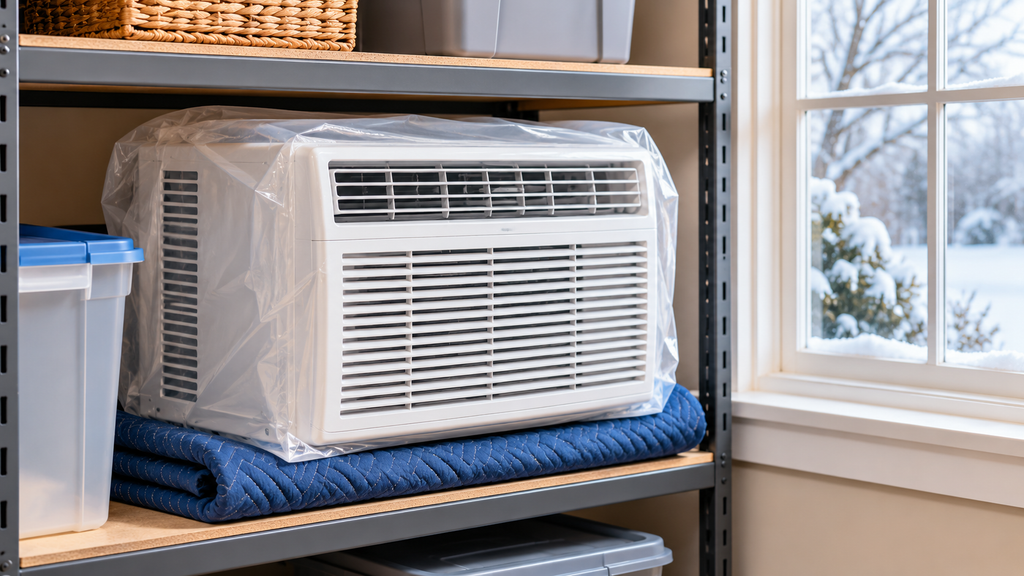
- Cover the dry appliance with suitable clean packing or a dust cover.
- Close and secure the empty window.
These are planning steps, not a replacement for the mounting system’s removal instructions. Stop if the unit is stuck, the support is damaged, or you cannot control its weight.
Where and How to Store It
Use these storage precautions.
- Choose a dry, protected area where the unit will not be struck or used as a shelf. A climate-controlled storage space is a useful choice from the care plan.
- Keep it away from leaking pipes, wet floors, and places where snowmelt may reach the packaging.
- Maintain the required storage orientation.
- Do not lay the unit on its side simply because it fits under a bench.
- Keep pressure off coils, fins, controls, and the cord.
- A label on the hardware container saves searching next spring. When planning how to store a window air conditioner for winter, include the small mounting parts, the appliance as well.
- Replace damaged support items before the next installation rather than improvising with spare screws.
How to Bring It Back Into Service
Follow these steps to inspect stored equipment and return it to use through its approved startup procedure.
Inspect and Restore Normal Operation
- Inspect the housing, cord, plug, mounting parts, and seals before installation.
- Look for moisture damage, pests, or crushed fins. Clear loose dust from accessible areas. Any electrical damage or evidence of a leak needs service before use.
- Reinstall the unit with the correct support and sealing method.
- Follow any model-specific waiting period after handling before switching it on.
- Do not assume every unit can be powered immediately after being moved.
- Once installed, observe normal operation briefly. Listen for unusual noise and check that cooling and drainage behave normally. Knowing how to store a window air conditioner for winter includes bringing it back carefully, rather than treating storage as proof that it is ready.
Frequently Asked Questions
These answers cover seasonal storage planning and return to use.
When should you put your window air conditioner away for the season?
Put it away when cooling is no longer needed and you can clean, dry, and remove it safely. Choose a dry work period rather than rushing during bad weather. The timing depends on your climate and whether the installation permits seasonal removal.
How do you clean your window air conditioner before storing it?
Disconnect power, clean the accessible housing, and care for the filter by its type. Dry every washed part completely. Avoid flooding controls or forcing water into coil areas. Do not pack a damp unit because the outside feels dry.
Where is the best place to store your window air conditioner?
Use a dry, protected space that supports the required orientation and keeps the appliance safe from knocks. Keep hardware with it and avoid placing heavy objects on top. The answer to how to store a window air conditioner for winter is protection without trapped moisture.
How do you get your window air conditioner ready to use again?
Inspect the unit and mounting parts, reinstall it correctly, and follow any required waiting period after handling. Then check normal cooling operation. Routine accessible cleaning may be owner work, while refrigerant, electrical, or damaged mounting concerns need qualified help.
Final Thoughts: Keep It Simple and Consistent
Clean, dry storage protects more than the outside finish. It keeps the filter, cord, and installation parts ready for a careful return next season. Plan the lifting help and storage space first so the job does not become rushed halfway through.
Check your model number, then shop air conditioner maintenance parts to find compatible supplies for your next care task.
Still stuck after this guide?
Two free options: post your model number and symptom on the forum, or search the model number in the shop to see every part that fits.