Quick answer
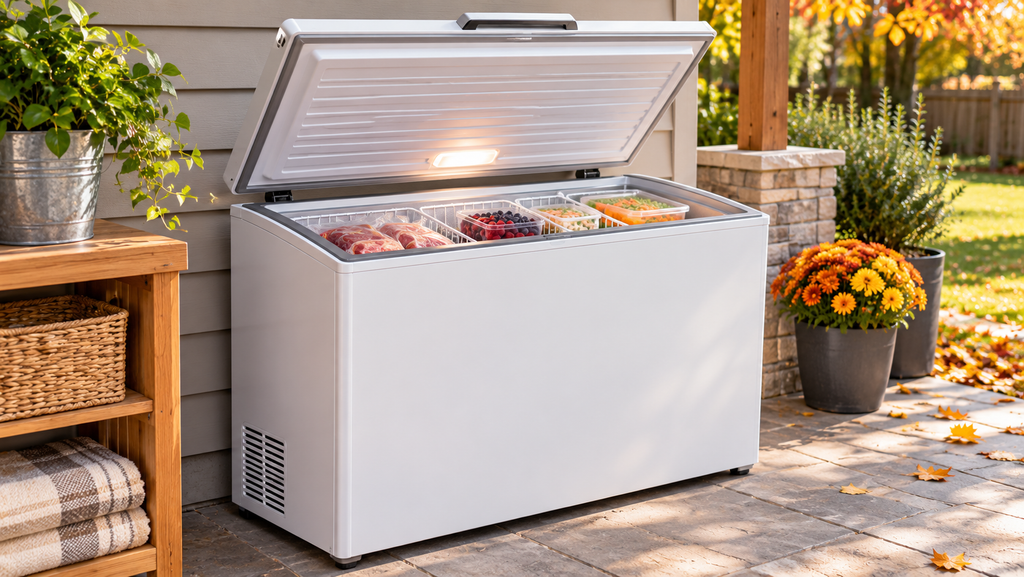
Keep a deep freezer outside only when its installation requirements allow that location and its temperature range covers your winter weather. Protect an approved unit from moisture, keep its ventilation space clear, and track the temperature inside. Keep frozen food at 0°F. Outdoor cold does not replace a working freezer or reliable temperature checks.
Outdoor freezer space can be useful until the weather changes. Does your appliance permit the temperatures and conditions it will face? Before choosing how to keep a deep freezer outside in winter, check its rating and location. A kitchen freezer is not automatically suited to cold air, damp conditions, rain, or snow.
The first task is to check whether your freezer belongs in that location at all. This guide explains what to check before winter, how to protect an approved unit, and which daily habits help you track its condition. You will also learn when routine cleaning is not enough and a different storage location is the better choice.
Quick Facts
Check the location limits before planning any outdoor freezer care.
- Difficulty: Not specified; depends on the location and freezer rating
- Time: Not specified
- Tools: Freezer thermometer, soft cloth, vacuum for accessible areas
- Part cost: Not specified
- Skill level: Basic care; electrical or operating faults need qualified service
Order the part with confidence
- Guaranteed to fit when you search by model number
- Same-day shipping on in-stock parts
- 365-day returns on any part
- Free tech support before and after you buy
What Shortens the Life of Your Deep Freezer
An unsuitable location can create problems that cleaning will not solve. A freezer rated for an indoor room may face temperatures outside its permitted range in a shed, porch, or garage. An outdoor location can also expose electrical parts to water. A roof overhead does not automatically make that spot suitable.
Look for the freezer’s installation limits before choosing a position. Check the allowed surrounding temperature, protection from weather, electrical supply, and ventilation space. Do not assume that the words “garage ready” mean the unit can sit in rain or snow.
Dirt and blocked airflow can add strain during warmer spells. A damaged door gasket, the soft seal around the lid or door, can let damp air in. That moisture can turn to frost and make the seal harder to keep clean. Heavy frost also takes up storage space and can affect how well the lid closes.
Daily Habits That Protect It
Would you notice a temperature change before food begins to soften? A freezer thermometer gives you useful information even when the air outdoors feels cold. Check it when you use the freezer, and pay attention to changes rather than judging by touch alone.
Keep these habits in mind during routine use.
- Keep the lid or door closed between trips.
- Plan what you need before opening it, and group food so you can find items quickly. Baskets help keep small packages from getting lost under large ones. In an upright freezer, avoid packing food against vents or blocking the door with oversized containers.
- Keep the surrounding floor clear and dry.
- Do not store wet garden tools, snow-covered items, or open liquids against the cabinet.
- Leave the required ventilation space open.
- Never wrap a running freezer in blankets or block its vents to keep it warm.
Check that the door closes fully after every visit. A bag caught in the seal may look harmless but can leave a gap all night.
Weekly and Monthly Care Tasks
Use regular visual checks to catch small changes before they become hard to trace. The right cleaning interval depends on dust, moisture, use, and the freezer’s design. There is no single schedule that fits every outdoor setting.
Include these items in your care routine:
- Door seal: Wipe visible dirt with a soft cloth and check for splits or trapped food.
- Cabinet: Remove spills and dry the surface instead of letting water collect.
- Storage baskets: Keep them seated correctly so they do not hold the lid open.
- Accessible vents: Keep leaves, lint, and loose debris away from airflow openings.
- Temperature record: Note unusual readings and any power interruption.
Before vacuuming accessible coils or areas near electrical parts, disconnect power and follow the freezer’s cleaning directions. Some coils are enclosed and are not a routine homeowner cleaning task. Do not remove service panels just to find them.
Check the drain plug after any manual defrost. It should be in its correct position before normal use resumes. Keep the area around it clean so a slow leak does not go unnoticed.
Seasonal Checks
Include these items in your seasonal checks.
- Winter suitability: Plan how to keep a deep freezer outside in winter before the first hard freeze. Compare expected local conditions with the freezer’s stated limits. When those conditions fall outside its rating, arrange a suitable indoor location rather than adding makeshift heaters or insulation.
- Safe access: Check the route to the freezer too. Ice, poor lighting, and drifting snow can make routine access difficult. You need safe access to the food, thermometer, and power connection throughout the season.
Manual-defrost models need a food plan before defrosting. Move frozen items to suitable cold storage, disconnect the unit, and let ice melt using the method allowed for that freezer. Do not chip frost with a knife or use an open flame. Dry the interior and check the drain arrangement before returning the freezer to use.
After a storm or outage, check the interior temperature and food condition. Do not judge food safety from the weather forecast or from a package’s outer surface alone.
Signs It Needs Attention
Look for these changes in your freezer.
- A rising interior temperature
- Repeated heavy frost
- Water near the cabinet
- A lid that will not close
These observations call for action, but they do not identify a failed part by themselves.
How should you respond? Protect the food first and check whether the location still meets the freezer’s limits. Arrange service for damaged wiring, a burning smell, repeated power loss, or an operating problem that persists. Do not bypass controls or keep resetting a tripping circuit.
Frequently Asked Questions
How do you keep your deep freezer?
Use it in an approved location, keep the seal clean, leave airflow space open, and check the inside temperature. For anyone learning how to keep a deep freezer outside in winter, the location rating comes before a maintenance checklist.
How often should you keep your deep freezer?
Check its condition whenever you use it. Clean spills promptly and plan deeper care around visible dirt, frost, and the freezer’s own maintenance directions. Review the location again before seasonal weather changes.
What happens if you skip it?
You may miss a poor seal, blocked airflow, moisture damage, or a temperature change. Outdoor cold can hide a problem for a time, so a freezer that feels cold still needs monitoring.
What supplies do you need?
A freezer thermometer, soft cloth, and suitable cleaning supplies cover basic care. Use a vacuum only on areas the owner can safely reach. Choose baskets, gaskets, drain plugs, and shelves by the exact freezer model.
Final Thoughts: Keep It Simple and Consistent
The best plan for how to keep a deep freezer outside in winter starts with a suitable location. Follow its temperature limits, keep moisture away, and check the food space through the season. Routine care helps, but it cannot make an indoor freezer weatherproof.
For compatible door gaskets, baskets, drain plugs, and shelves, shop freezer maintenance parts so your storage space stays organized and closes as it should.
Still stuck after this guide?
Two free options: post your model number and symptom on the forum, or search the model number in the shop to see every part that fits.