Quick answer
Locate the sound before you choose a part. A blade striking ice needs a different repair than a worn motor. A heavy knock near the compressor, the pump that moves refrigerant, needs a closer service check if simple causes are ruled out.
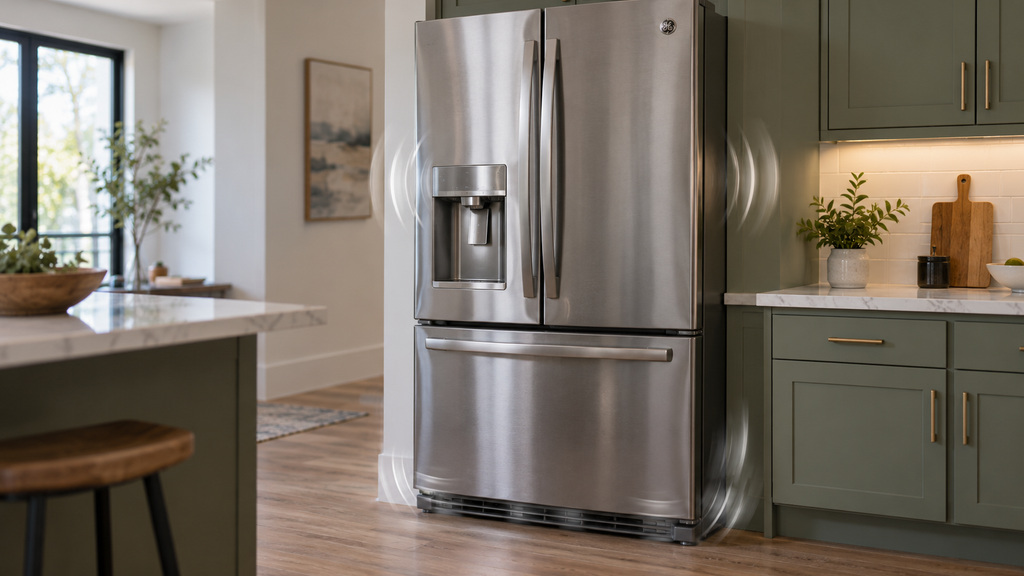
Your GE refrigerator making loud noises may have a fan touching ice, a loose pan or a cabinet that shakes. The sound alone cannot prove that the motor is bad. Where does the noise begin, and what is the fridge doing when you hear it? A sound during water fill calls for a different check than a squeal behind the freezer panel.
What This Symptom or Part Can and Cannot Prove
These clues help narrow the search.
- Freezer squeal: The fan or nearby ice may be involved.
- Rear rattle: A loose part, pan or condenser fan may be the cause.
- Fill noise: The valve, water supply or ice maker may be involved.
- Short normal sounds: Ice drops, clicks and flowing refrigerant can make noise without a failed part.
With your GE refrigerator making loud noises, cooling performance also matters. A stable temperature and a short sound during a known cycle give a different picture than a new harsh noise and warm food. The normal refrigerator sounds include several clicks and water noises.
Verify Your Model First
Find the Refrigerator model tag before ordering. Record the full model number, including its suffix, because parts with the same name can use different connectors, dimensions, ratings or mounting points across models.
The GE model tag locations depend on the cabinet design. A complete number makes GE evaporator fan motor replacement by model more reliable than a search for a motor that looks alike. The motor, blade and mounting hardware may be separate items.
Safety Before Testing
Keep these limits in mind before you open a cover.
- Unplug the refrigerator before internal checks or repairs.
- Confirm that power is off before you touch wiring.
- Shut off the water before work on the inlet valve.
- Follow applicable local electrical codes.
- Leave household wiring problems to a licensed electrician.
- Keep hands away from moving blades and restore covers before powered operation.
Resistance means how much a part opposes electric current. A multimeter measures it in ohms. Resistance checks require power to be off; the correct value comes from the model’s service data. A beep alone cannot confirm that every motor or valve is good.
Causes to Check Before Buying a Part
What else could make the same sound?
| Cause | Evidence | Safe check | What result means |
| Blade contact | Scrape from freezer | Unpowered blade and ice inspection | Contact can mimic motor failure |
| Worn fan motor | Rough movement after contact is ruled out | Inspect motor and blade | Motor remains a suspect |
| Loose pan or hardware | Cabinet rattle | Inspect seating and fasteners | Secure loose parts before purchase |
| Water or ice issue | Noise during fill or harvest | Inspect the relevant assembly | Fan purchase may not help |
| Compressor concern | Deep knock near rear pump | Check simple external causes | Persistent noise needs service |
Once the test identifies the failed part, confirm the exact evaporator fan motor with the full model number. This motor category also contains other motors, so the model diagram must identify the freezer fan.
How to Diagnose a GE Refrigerator Making Loud Noises
Follow these steps to inspect the noise source and replace only a part whose failure is confirmed.
Replace a Confirmed Faulty Evaporator Fan
- Unplug the refrigerator.
- Remove freezer food and shelves to reach the rear panel.
- Remove the screws and rear panel with a screwdriver.
- Disconnect the old motor’s wiring harness and remove its mounting screws.
- Fit the new motor, secure the screws and reconnect the wiring.
- Reinstall the rear panel and shelves.
- Plug in the refrigerator and listen for the noise.
Inspect the Condenser Fan
- Unplug the refrigerator.
- Remove the lower rear access panel.
- Clean the fan blades with a soft brush or vacuum.
- Check the blade for obstructions.
- Inspect the motor for trouble if the blade cannot turn freely.
- Replace a confirmed faulty motor with the correct GE fan motor.
Check Simple Compressor Noise Causes
- Check that the refrigerator is level and does not touch walls or cabinets.
- Inspect the compressor mounting springs for wear or damage.
- Clean the condenser coils.
Inspect the Water Inlet Valve
- Shut off the refrigerator’s water supply.
- Reach the inlet valve at the rear of the refrigerator.
- Inspect its screen for mineral buildup or debris.
- Measure the valve solenoid’s resistance with a multimeter.
- Replace a confirmed faulty valve with a compatible valve.
Inspect the Ice Maker
- Check that the ice maker parts are secure.
- Check the ejector blade for ice jams and clear them.
- Perform the ice maker’s manual reset.
- Measure the motor winding’s resistance with a multimeter.
- Replace the confirmed faulty parts.
Secure Loose Parts
- Adjust the leveling legs to level the cabinet.
- Tighten loose screws or bolts at hinges, handles and internal parts.
- Rearrange stored items so they do not touch and rattle.
Check Door Noise
- Apply food-safe lubricant to the hinges.
- Inspect the door gasket for cracks or damage.
- Replace a worn gasket with a compatible seal.
Check the Drip Pan
- Reach the drip pan from the bottom front or rear.
- Seat it snugly without contact with moving parts.
- Clear debris from the pan.
Interpret the Result
Does the noise come from the motor itself? Ice touching a good blade does not confirm motor failure. Persistent roughness or wobble after obstructions are ruled out supports a motor problem. An electrical fault still needs the model’s test limits. GE refrigerator evaporator fan squealing can describe either contact or wear.
Test result confirmed the failure? Find the exact evaporator fan motor for this model number.
How to Identify the Correct Replacement for This Model
Match the diagram position, connector, mount and part number. Do not use a condenser motor in the freezer fan position. An evaporator fan fault also affects air movement, but that symptom still needs confirmation.
When to Stop and Call a Professional
Stop if a test requires exposed live wiring, the correct resistance range is unavailable or noise continues after simple checks. Leave compressor and sealed refrigerant work to a qualified professional.
FAQ
What should be checked first when a GE refrigerator makes loud noises?
Locate the sound and note whether it occurs during cooling, water fill, ice release or door movement. For GE refrigerator noise from freezer areas, blade contact is one possibility.
How can you tell whether the GE evaporator fan motor is actually bad rather than iced over or hitting debris?
Rule out ice and debris before judging the motor. Rough movement or wobble that remains after contact is ruled out supports a motor fault.
What finding confirms a failed evaporator or condenser fan motor on a noisy GE refrigerator?
Mechanical damage or a failed model-specific electrical test is stronger evidence than noise alone. The two motors serve different locations.
Where is the model number on a GE refrigerator and why does the suffix matter when ordering a fan motor?
The interior tag location varies by design. The full suffix identifies parts changes within a model family.
When does a loud GE refrigerator need a professional instead of a fan motor?
A deep compressor knock, unclear electrical results or continued noise after the safe checks calls for service.
In Summary
Your GE refrigerator making loud noises deserves a location check before a parts order. A confirmed fault and the full model number help you choose the right repair.
Check the model tag, then find the correct evaporator fan motor for your model to match a confirmed freezer fan fault.