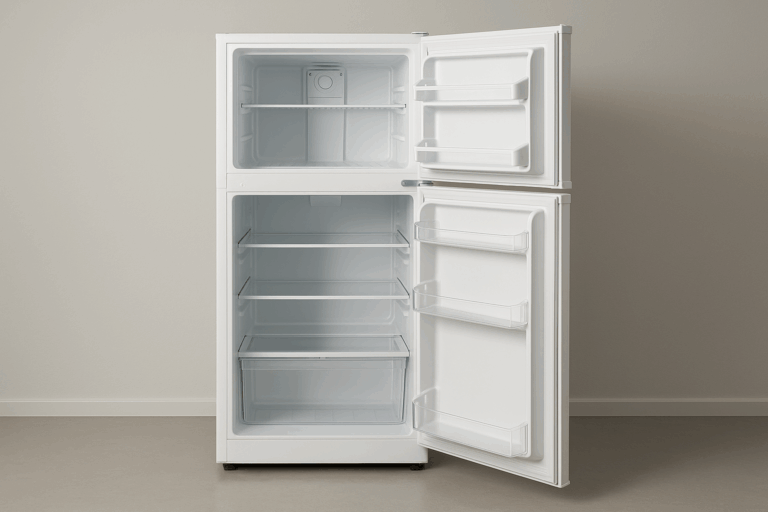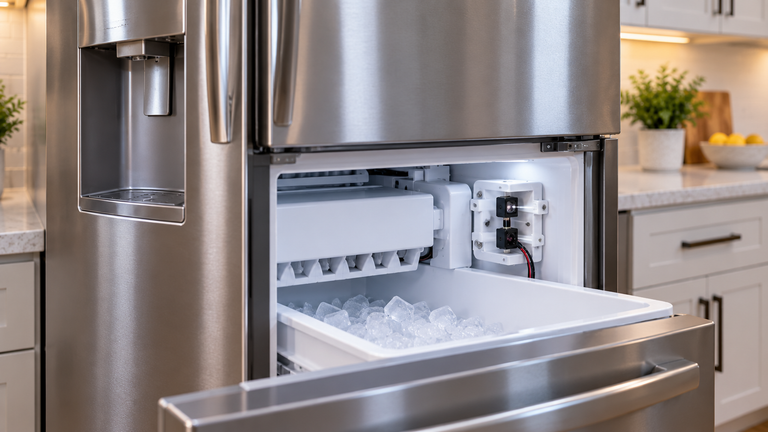
The freezer makes the cold and a fan or damper moves it to the fridge, so this symptom is almost always airflow, a frozen evaporator or a sensor, and the first checks cost nothing. This guide explains fridge not cooling but freezer works with observations first, model-specific checks second, and a part decision only after a repeatable result. That order keeps a free correction from turning into an unnecessary part order and gives a homeowner a clear point to stop when the work moves beyond safe DIY testing.
What the symptom tells you before any tools come out
These checks help narrow fridge not cooling but freezer works without buying the first part that seems possible.
- Freezer cold means the compressor and sealed system are working.
- Warm fridge means cold air is not arriving.
- Three ways it fails to arrive.
- Signs of a dying refrigerator vs a single failed part.
Repeat any surprising result once. Confirm the meter setting, disconnect the required wire, and use clean probe contact before treating the result as final.
Quick diagnosis table
| Symptom detail | Likely cause | Part to check | Test |
| Fan silent with door switch pressed | Evaporator fan | Fan motor | Spin and voltage |
| Evaporator covered in solid frost | Defrost failure | Heater and thermostat | Continuity |
| Frost only on a small part | Sealed system | Cooling system | Professional diagnosis |
| Temperature swings | Sensor or damper | Thermistor and damper | Resistance and movement |
| Vents blocked | Airflow restriction | Food placement | Clear the vents |
Use the table as a starting point, not as proof. More than one fault can create the same symptom, so the next section narrows the result with an inspection or meter reading before any part is ordered.
Side by side refrigerator not cooling but freezer is fine
These checks help narrow fridge not cooling but freezer works without buying the first part that seems possible.
- Damper behind the fridge ceiling or top vent.
- Fan in the freezer side.
- Long airflow path.
- Where the damper sits on French door and top freezer layouts.
Repeat any surprising result once. Confirm the meter setting, disconnect the required wire, and use clean probe contact before treating the result as final.
Verify your model first
The model tag on a refrigerator is inside the fresh food compartment, on the side wall, the ceiling, or behind the crisper drawers, and on some freezers it is inside the door or on the back of the cabinet. The same part name (start relay, evaporator fan motor, defrost heater, thermistor) has several part numbers by model because connectors, mounting brackets and resistance ratings change between models.
A matching photo is not enough. Compare the connector, mounting points, electrical rating, and any revision suffix with the model-specific listing.
Safety
- Unplug before removing panels.
- Let ice melt rather than chipping it.
- Capacitors hold a charge.
- Sharp fins on the evaporator.
- Towels for meltwater.
Tools
- Multimeter
- Phillips screwdriver
- 1/4 inch nut driver
- Flashlight
- Hair dryer
- Towels
How to test the parts behind a warm fridge and cold freezer
Test the Defrost Parts
- Mark the timer shaft and check later for movement, or advance it by hand and listen for defrost operation.
- Test the defrost thermostat for continuity while it is cold.
- Disconnect the heater and test it for continuity.
- Measure the defrost sensor resistance and compare it with the model’s service data.
Test the Controls and Sensors
- Tap the cold control and note whether cooling restarts.
- Disconnect power, remove the control wires, and test the specified contacts for continuity.
- Remove the temperature sensor and compare its resistance with the model chart.
Test the Airflow Parts
- Check that the evaporator fan blade turns freely.
- Test the motor for continuity when the blade is free but the motor stays silent.
- Inspect the damper for ice and a damaged door.
- Test the damper motor for continuity when the model procedure calls for it.
What the result means and which part to order
These checks help narrow fridge not cooling but freezer works without buying the first part that seems possible.
- Fan silent, continuity absent = evaporator fan motor.
- Solid frost, heater open = defrost heater.
- Solid frost, heater good, thermostat open = defrost thermostat.
- Damper stuck or no continuity = damper control.
- Sensor reading off = thermistor.
Repeat any surprising result once. Confirm the meter setting, disconnect the required wire, and use clean probe contact before treating the result as final.
How to reset a fridge that is not cooling, and what a reset cannot fix
These checks help narrow fridge not cooling but freezer works without buying the first part that seems possible.
- Unplug 5 minutes.
- Control panel reset per manual.
- A reset clears a board glitch, never a frozen evaporator or a dead fan.
Repeat any surprising result once. Confirm the meter setting, disconnect the required wire, and use clean probe contact before treating the result as final.
When to stop and call a professional
- Stop when live-voltage testing is required and safe meter work is unfamiliar.
- Stop when wiring, terminals, or insulation show heat damage.
- Stop when the procedure or connector layout does not match the model documentation.
- Use professional service for sealed-system refrigerant work, repeated breaker trips, or a repair that requires unsafe lifting.
FAQ
How do I get my fridge cooling again?
Start with the free observation named in the table, then follow the tests in order. The first clear failed result identifies the next repair decision.
How do I reset a fridge that is not cooling?
A power cycle or model-specific reset may clear a control state, but it cannot repair an open coil, broken switch, blocked hose, or damaged motor.
How do I fix a warm fridge with a cold freezer?
Start with the free observation named in the table, then follow the tests in order. The first clear failed result identifies the next repair decision.
What are the signs of a dying refrigerator?
Start with the free observation named in the table, then follow the tests in order. The first clear failed result identifies the next repair decision.
Once testing names the failed part, shop evaporator fan motor parts for your model and confirm the fit with the complete model number.
Looking Ahead
The safest answer to fridge not cooling but freezer works comes from a clear observation followed by the correct model-specific test. Start with free checks, write down the meter setting and result, and stop when the work calls for live electricity, refrigerant, heavy lifting, or a procedure that does not match the appliance. A confirmed result makes the next repair easier to price and far less likely to become a guess.
Keep the old part until the appliance completes a normal cycle without leaks, unusual heat, new noise, or an error code. Recheck every wire, hose, panel, and fastener before restoring regular use. When a replacement fails again quickly, return to the original cause instead of buying the same part twice. Restricted airflow, poor water flow, damaged wiring, and an incorrect model match can all shorten the life of a new component. Careful testing and a final operational check finish the repair properly.
A short test record also helps if professional service becomes necessary. Note the symptom, error code, meter setting, measured value, and the point where the test stopped. That information can shorten a service visit and prevents the same checks from being repeated. Store the model-number photo and wiring photos with the appliance manual so they are available for the next repair or maintenance check.
Work one step at a time. Keep the floor dry and the work light bright. Put screws in a small cup so none are lost. Take a photo before each plug or hose is moved. Read the meter twice when a value seems odd. Stop if a part will not come free with light force. These habits take little time, but they make the work easier to check and undo.