Quick answer
A dishwasher leaking water most often has a worn door gasket, a dripping water inlet valve, or a loose or split drain hose. Where the water appears tells which: at the front of the door means the gasket, under the unit during fill means the inlet valve, under the sink during drain means the hose. Remove the kick plate and watch one cycle. A gasket costs $15 to $50.
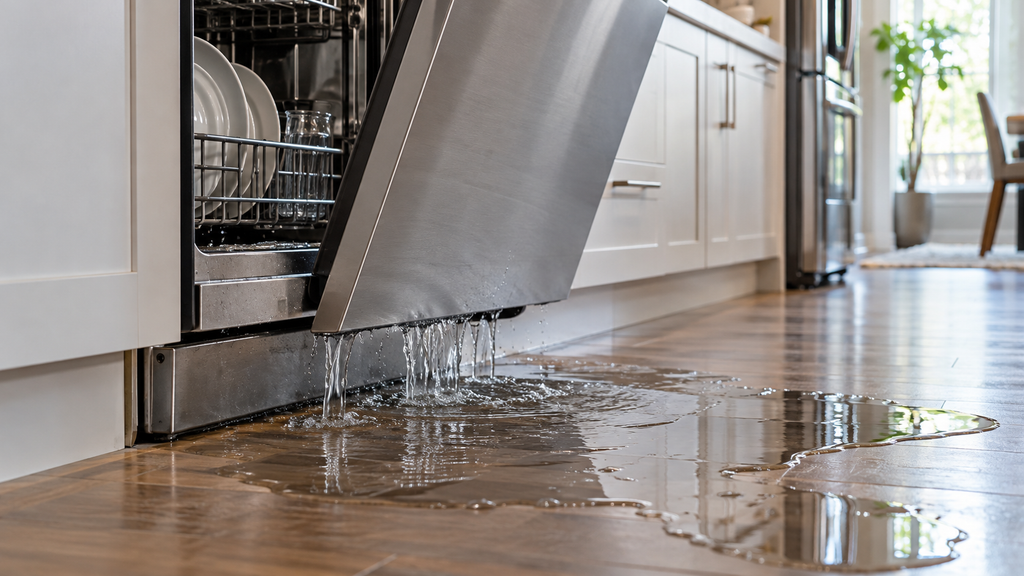
The puddle beneath the dishwasher is a clue, but its source may be some distance away. With a dishwasher leaking water, a drip at the front can come from a door seal, hose, or component underneath. Location alone cannot identify the failed part.
Did the leak begin during filling, washing, or draining? That timing helps narrow the search before you disturb any connections.
A careful inspection starts with those observations and moves through the seals, hoses, and leak check. The repair choices below also explain which work suits a beginner and when a technician should take over.
Quick Facts
Use these details to plan the work:
- Difficulty: Easy to Moderate
- Time: 15 minutes to locate, 30 to 90 minutes to repair
- Tools: Flashlight, paper towels, Torx T20 and Phillips screwdrivers, nut driver, adjustable wrench, towels
- Part cost: $15 to $50 for a gasket, $20 to $60 for an inlet valve, $15 to $35 for a drain hose
- Skill level: Beginner for gasket and hose, intermediate for valve and pump
Order the part with confidence
- Guaranteed to fit when you search by model number
- Same-day shipping on in-stock parts
- 365-day returns on any part
- Free tech support before and after you buy
Why Is My Dishwasher Leaking Water?
A worn seal, leaking inlet valve, or damaged hose can let water escape. The cycle stage helps you narrow the cause before you order anything.
Use the first wet spot as a clue, rather than the largest puddle.
| First Wet Spot | When It Appears | Likely Area |
|---|---|---|
| Front door edge | Wash | Door gasket or lower door seal |
| Front door edge | Heavy spray | Spray arm or excess water |
| Under the front | Fill | Inlet valve or fill hose |
| Under the center | Wash | Pump seal or sump |
| Under the rear | Drain | Drain hose or clamp |
| Under the sink | Drain | Hose connection |
| Inside or beneath the unit | At rest | Inlet valve or supply connection |
A float is the part that rises with the water level. A float fault can allow an overfill, so a wet door does not always mean the gasket failed.
Why Is My Dishwasher Leaking Water From the Bottom?
Water beneath the cabinet can come from the inlet valve, pump seal, drain hose, or sump, the collection area for wash water before circulation.
These observations help separate components beneath the tub.
- During fill: A drip near the front points toward the inlet valve or fill hose.
- During wash: Water around the pump housing points toward a seal or damaged housing.
- During drain: A wet drain hose or clamp points toward the drain path.
- Across several stages: A cracked sump or water running from another area needs a closer look.
Why Is My Dishwasher Leaking Water Onto the Floor?
A front puddle can result from a damaged gasket, lower seal, overfilled tub, or spray arm directing water toward the door.
Notice which edge gets wet first.
- Along the door sides: A worn gasket or poor fit can break the seal.
- Below the door: The separate lower seal may be damaged.
- At a corner: A gasket corner or corner baffle may not seal.
- Only under strong spray: A damaged spray arm can direct water toward the door.
Does the floor stay dry during fill but get wet once washing begins? That timing makes the door and spray pattern more useful clues than the supply connection.
Is the Door Gasket, Inlet Valve, or Drain Hose Causing the Leak?
Follow these checks to compare the three common leak areas.
Compare the Wet Areas
- Cut power and water before touching the dishwasher or removing a panel.
- Examine the door edge for moisture and the gasket for hard, cracked, or worn rubber.
- Observe the valve body during a guarded fill check without reaching inside the powered unit.
- Look for water at the drain hose clamp or under the sink during the drain phase.
Keep the observations separate. A wet gasket points toward the door seal, while drips from the valve body during fill point toward the valve. A hose leak that appears with the drain pulse belongs to the drain path.
Didn't fix it? Ask a technician on the AppliancePartsPros forum.
Post your model number, the symptom, and what you've already tried. Appliance techs and experienced DIYers answer for free, usually the same day.
Ask the forum →80,000+ solved repair threads · no account needed to readHow Do I Find Where a Dishwasher Leak Is Coming From?
Follow these steps to find the first wet area during the cycle.
Phase 1: Cut Power, Remove the Kick Plate, and Dry the Area
- Disconnect electrical power at the dishwasher breaker and close its water supply valve.
- Remove the kick plate and dry the exposed area with towels.
- Inspect the door gasket and lower seal for wear, tears, damage, or poor seating.
- Inspect the inlet valve for cracks or damaged threads with power and water off.
- Check the full drain hose and its ends for wear or splits.
- Check the fill hose from the inlet valve to the tub for damage.
- Inspect accessible pump seals and impeller parts for visible damage.
Phase 2: Run a Fill and Watch the Inlet Valve
- Keep hands and tools clear of exposed parts before restoring water and power.
- Start a fill and watch the inlet valve from outside the cabinet opening.
- Note the first drip with a flashlight, without reaching into the powered area.
- Stop the test and disconnect electrical power and water if a leak starts.
Phase 3: Run a Wash and Watch the Door, Gasket, and Pump Housing
- Continue into wash only if the area remains safe and dry.
- Watch the door edge and pump housing from a safe distance.
- Record whether the first water appears at the door or beneath the tub.
- Stop the cycle and disconnect electrical power before using a dry paper towel to trace residual moisture.
Phase 4: Run a Drain and Watch the Hose and Clamps
- Run the drain phase only if no active leak or electrical hazard remains.
- Watch the drain hose and visible clamps without touching the running unit.
- Switch off power and water before checking a wet connection or fitting a part.
Should You Replace the Gasket, the Valve, the Hose, or Call a Technician?
Use these part costs to plan the next step.
- Door gasket: About $15 to $50, with a typical repair taking around 20 minutes.
- Inlet valve: About $20 to $60, with roughly an hour for access and replacement.
- Drain hose: About $15 to $35 when the hose itself is split or worn.
- Pump seal or motor: About $100 to $220, with more involved access.
- Cracked tub or sump: Compare replacement of the dishwasher with a repair quote.
A dishwasher leaking water needs diagnosis before you buy, since gasket shapes, hose connections, and valve mounts vary with the model.
When Should I Call a Technician for a Dishwasher Leak?
Call a technician when water reaches the control housing, the tub is cracked, or the leak has damaged the floor. A pump-housing leak on a unit under five years old also deserves a repair assessment.
Stop home testing in these situations.
- Water is near wiring or controls.
- The leak cannot be watched without reaching near live parts.
- The flooring or cabinetry already shows swelling or damage.
- The pump housing or tub needs work beyond your experience.
FAQ
Can Too Much Detergent Cause a Leak?
Yes, excess suds can push water past the door area. A sudden foamy leak calls for a detergent check before a gasket purchase.
Does an Unlevel Dishwasher Leak?
An unlevel cabinet can affect how water sits near the door and how the door meets its seal. A new gasket may not solve that alignment problem.
Why Does the Dishwasher Leak Only on Heavy Cycles?
A longer or stronger wash can expose a weak seal or spray-arm problem. The timing still matters, so note whether the first drip starts during fill, wash, or drain.
A Dry Floor Starts With the Right Location
Your best repair clue is the first wet spot. Once you connect that location with the cycle stage, a dishwasher leaking water becomes easier to sort out without buying several parts.
Find the replacement gasket, inlet valve, or drain hose that matches your dishwasher’s full model number so the floor stays dry after the next cycle.
Still stuck after this guide?
Two free options: post your model number and symptom on the forum, or search the model number in the shop to see every part that fits.