

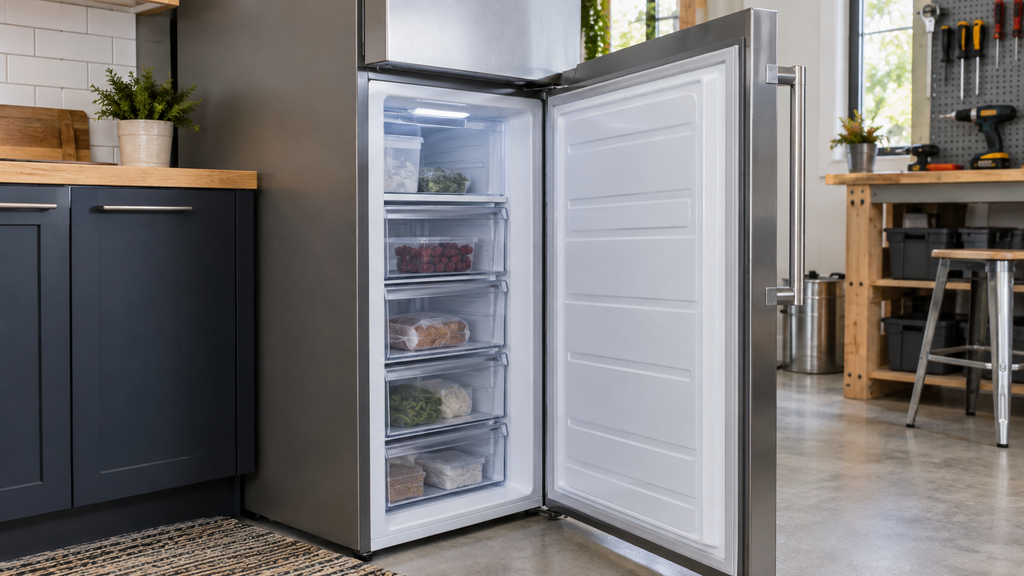
Finding a freezer door hard to open after closing often points to normal pressure changes inside the cabinet. Opening the door lets cold air fall out while warmer room air enters. After the door closes, that warmer air cools and contracts. The lower pressure can pull the gasket firmly against the cabinet for a short time.
That strong pull is usually a sign that the gasket has formed a tight seal. The door should become easier to open after the pressure balances, often within a minute. A door that stays stuck, needs great force, or has a damaged handle needs a closer look. Simple checks can separate a normal freezer door vacuum from a gasket, leveling, or drain problem.
Why a Freezer Door Hard to Open After Closing Can Be Normal
Freezers work best when very little room air enters the cabinet. The flexible gasket around the door presses against the cabinet face to limit air leaks. Right after the door closes, the change in air temperature can create a temporary pressure difference.
Several conditions can make that pull feel stronger:
- The door was open long enough for a large amount of warm air to enter.
- The room is warm or humid.
- The freezer is lightly loaded, leaving more open air inside.
- The gasket is clean, flexible, and making full contact.
- The door was reopened within a few seconds of closing.
Can the door simply be left alone for a moment? In many cases, yes. Wait about 30 to 60 seconds, then try again with steady pressure on the handle. Jerking the handle can strain the handle mounts without making the pressure balance any faster.
Signs the Door Needs More Than a Short Wait
A temporary tight seal should ease quickly and should not damage the door or handle. These signs suggest another condition needs attention:
- The door remains very hard to open after several minutes.
- The gasket sticks to the cabinet or pulls out of its channel.
- Frost forms around the door opening.
- The door needs to be lifted before it will open.
- The handle flexes, cracks, or feels loose.
- A hissing sound continues for an unusually long time.
- The freezer rocks or shifts when the handle is pulled.
- Food packages or baskets rub against the door.
Some upright freezers use a pressure relief path or a drain system that helps cabinet pressure balance. A blocked part may extend the tight feeling. The design differs by model, so the owner’s manual should guide any model-specific access or cleaning.
Safety Before Checking the Freezer Door
- Keep fingers away from hinges and closing edges.
- Do not pry the door open with a tool.
- Do not pull hard enough to bend or loosen the handle.
- Unplug the freezer before removing panels or working near wiring.
- Ask another adult to steady the freezer before adjusting its feet.
- Protect the floor before moving the appliance.
- Follow the owner’s manual for any pressure vent or drain access.
How to Troubleshoot a Freezer Door Hard to Open After Closing
Follow these checks in order. Stop when the door opens normally and continues to seal well.
Let the Cabinet Pressure Balance
- Close the freezer door with normal pressure instead of slamming it.
- Watch the gasket to confirm that it sits flat against the cabinet.
- Wait 30 to 60 seconds before trying the handle again.
- Pull the handle with smooth, steady pressure.
- Repeat the check after the freezer has been closed for several minutes.
Check for Food and Basket Interference
- Open the door after the pressure has balanced.
- Move packages away from the front edges of shelves and baskets.
- Push every basket fully into its track.
- Look for ice, labels, bags, or packaging caught near the gasket.
- Close the door and check whether the resistance returns to a normal level.
Clean and Inspect the Door Gasket
- Unplug the freezer if the cleaning work will take more than a quick wipe.
- Mix a small amount of mild dish soap with warm water.
- Wipe the cabinet contact surface and every fold of the gasket with a soft cloth.
- Remove sticky spills, crumbs, and dried residue without using a sharp object.
- Wipe away soap with a clean damp cloth.
- Dry the gasket and cabinet surface fully.
- Check for torn sections, hardened rubber, loose corners, or areas that remain folded.
- Reconnect power and test the door after the cabinet returns to its normal temperature.
Check the Freezer Position
- Place a level on top of the cabinet from side to side.
- Check the front-to-back position according to the installation guide.
- Confirm that every leveling foot rests firmly on the floor.
- Adjust only the feet identified in the owner’s manual.
- Keep the cabinet stable and avoid a strong forward lean.
- Test the door without holding or rocking the appliance.
Check Model-Specific Pressure Paths
- Find the model number and open the correct owner’s manual.
- Look for instructions about a vacuum relief valve, pressure equalization port, or defrost drain.
- Inspect only the areas the manual identifies as user accessible.
- Remove visible surface debris with the method approved for the model.
- Stop if the check requires panel removal, electrical testing, or sealed-system work.
Gasket Problems That Can Feel Like Strong Suction
Pressure can hold a door closed, and other forces can add resistance. A dirty gasket may stick to the cabinet. A loose gasket can fold and catch. A cabinet that sits out of position can make the door bind at the hinge.
Useful gasket checks include:
- Look for shiny, sticky residue on the cabinet face.
- Press loose gasket edges back into their channel only when the manual allows it.
- Check whether one corner has a larger gap than the others.
- Inspect the hinge side for rubbing or a folded seal.
- Replace a torn, split, or hardened gasket with the correct model-specific part.
Avoid coating the gasket with oil or an unapproved lubricant. Some products can damage rubber or attract dirt. Use a treatment only when the manufacturer lists it for that freezer and explains where to apply it.
When Professional Service Makes Sense
Some symptoms call for a trained technician instead of more pulling or prying:
- The door will not open after the freezer has had time to equalize.
- The handle or hinge moves away from the cabinet.
- The cabinet shifts even though the leveling feet are firm.
- The gasket is damaged and its replacement requires door disassembly.
- The pressure relief system appears blocked but cannot be reached safely.
- Frost returns soon after the gasket and door opening are cleaned.
- The door sags, scrapes, or will not close on its own.
Record the model number, how long the door stays tight, and whether the symptom began after a move or repair. Those details can help a technician focus on the hinge, gasket, cabinet alignment, or pressure relief system.
In Summary
A strong seal for a short period is common after a freezer door closes. Waiting about a minute gives the pressure time to balance and protects the handle from needless force. Clean gasket surfaces, clear baskets, and a stable cabinet also help the door work as designed. When the resistance lasts, the door binds, or the gasket shows damage, service can prevent a small door problem from becoming a larger air leak. A calm set of checks usually makes the cause clear and keeps the freezer easy to use.