

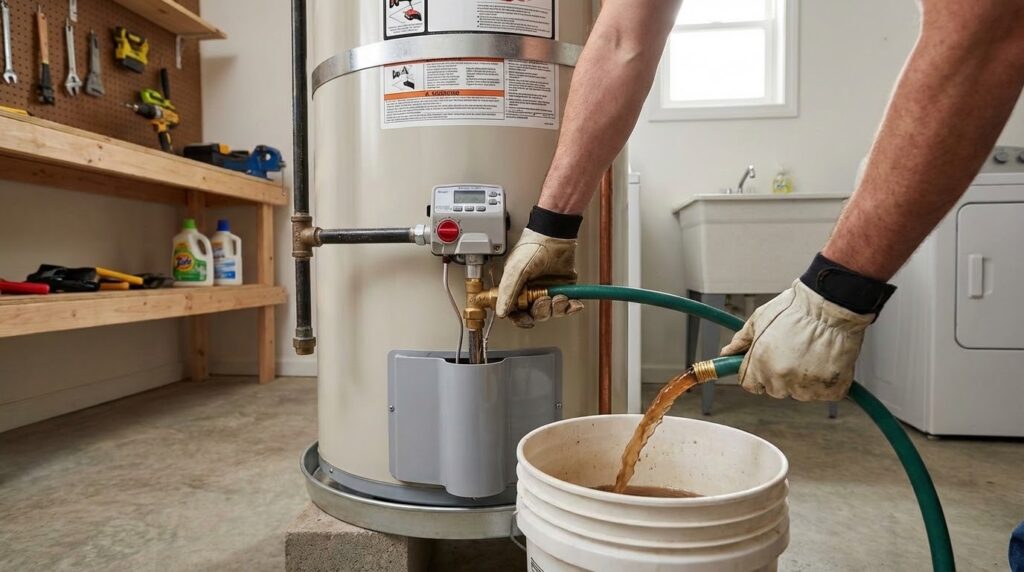
A regular water heater sediment flush is one of the simplest things you can do to keep your system running well. Most homes only need to do this once a year. But depending on where you live and how much water you use, you may need to do it more often.
In this guide, you will learn what sediment is, why it matters, and how to build a simple maintenance schedule that works for your home.
Why Removing Sediment from Your Water Heater Matters
A sediment flush means draining water from your tank to remove mineral deposits that have settled at the bottom. Think of it like cleaning the bottom of a pot after boiling water many times. Over time, minerals collect and harden. Flushing the tank gets rid of this buildup before it causes real problems.
This is purely preventive maintenance. You do not have to wait for something to break. Staying ahead of sediment keeps your water heater running efficiently for years.
What Sediment Is and Why It Builds Up
When water is heated, minerals like calcium and magnesium separate from the water. They sink to the bottom of the tank and slowly harden into a layer of sediment. The harder your water, the faster this happens. If you live in an area with hard water, your tank can build up sediment much more quickly than someone in a soft water area.
Problems Caused by Water Heater Sediment Buildup
Sediment buildup causes a chain of problems that get worse over time:
- Reduced heating efficiency because the heating element has to work through a thick layer of minerals
- Less hot water available because sediment takes up space in the tank
- Strange noises like popping or rumbling caused by water trapped under hardened sediment
- Increased wear on the tank from constant overheating
- Early failure of the unit, costing you money on repairs or full replacement
How Often Should You Flush Sediment from a Water Heater?
The standard answer is once per year. This works well for most homes with average water quality and normal usage. But the right schedule for your home depends on a few important factors.
Annual Sediment Flush for Most Homes
For the average household, a yearly water heater sediment flush is the ideal baseline. Pick a time of year, mark it on your calendar, and stick to it. This simple habit can add years to the life of your water heater.
Flush Every 6 Months for Heavy Sediment Conditions
Some homes need more frequent flushing. You should flush every six months if:
- You live in a hard water area
- You have a large household with high water usage
- Your unit is older and has not been flushed in a while
- Your water heater runs almost constantly throughout the day
When Once a Year Is Enough
On the other hand, once a year is plenty if you have:
- Soft water from a municipal supply
- A newer water heater in good condition
- Low to average water usage
- No signs of sediment problems like noise or slow heating
Factors That Affect Sediment Buildup in Water Heaters
Not every home is the same. Here is what influences how fast sediment builds up in your tank.
Water Hardness and Mineral Content
This is the biggest factor. Hard water is packed with calcium and magnesium. These minerals settle faster and build up thicker layers. If your dishes have white spots or your shower has scale buildup, you likely have hard water.
Household Water Usage
More people using hot water means more heating cycles. More heating cycles mean faster sediment accumulation. A family of five will need to flush more often than a single person living alone.
Age of the Water Heater
Older tanks have more layers of accumulated sediment. They also tend to have more wear on their parts. If your water heater is more than ten years old, you should be watching it closely and flushing it at least once a year.
Tank Size and Heating Cycles
Smaller tanks heat water more frequently to keep up with demand. More heating cycles lead to faster mineral separation and sediment buildup.
Water Source: Well vs. Municipal
Well water often contains more minerals and debris than city water. If you use a private well, your tank may collect sediment faster and need more frequent flushing.
Signs Your Water Heater Has Too Much Sediment
Do not wait until something breaks. Watch for these warning signs:
Rumbling or Popping Sounds
This is one of the clearest signs of heavy sediment. When water gets trapped under a thick layer of minerals and then heats up, it creates those loud, unsettling noises.
Reduced Hot Water Supply
Is your shower going cold before you finish? Sediment takes up physical space inside the tank, leaving less room for hot water.
Slow Heating Times
If your water is taking longer to heat than it used to, sediment may be blocking heat transfer from the element to the water.
Rising Energy Bills
When your heater has to work harder to push heat through a layer of sediment, it uses more energy. If your bills are creeping up with no explanation, this could be why.
Cloudy or Dirty Hot Water
If the hot water from your tap looks cloudy or slightly brown, sediment may be breaking loose inside the tank. This is a sign to flush soon.
Annual Water Heater Sediment Flushing Guide by Household Type
Here is a simple breakdown of how often to flush based on your situation:
| Household Type | Recommended Flush Schedule |
| Light-use home (1 to 2 people) | Once per year |
| Average family home (3 to 4 people) | Once per year, mid-year check |
| Heavy-use or hard water home | Every 6 months |
| Older water heater (10+ years) | At least once per year with close monitoring |
Simple Water Heater Maintenance Schedule for Sediment Prevention
Building a schedule does not have to be complicated. Here is an easy checklist to follow:
Monthly Checks
- Look around the base of the tank for any leaks or moisture
- Listen for unusual sounds like popping or rumbling
- Make sure the pressure relief valve area looks dry and undamaged
Every 6 Months
- Inspect all fittings and connections for corrosion or drips
- Do a partial flush if you are in a hard water area or a heavy-use household
- Check the temperature setting (120 degrees Fahrenheit is recommended)
Annual Maintenance
- Perform a full water heater sediment flush
- Inspect the anode rod (this is the rod inside the tank that prevents corrosion)
- Check all visible components for wear or damage
- Review your water heater’s manual for model-specific recommendations
As Needed
- Flush whenever you notice sediment symptoms like noise, slow heating, or dirty water
- Call a professional if you see leaks, corrosion, or anything you are unsure about
Best Time of Year to Flush Sediment from a Water Heater
The truth is, any time of year works. What matters most is consistency. That said, many homeowners find it helpful to time their flush with other seasonal tasks:
- Spring is a popular time because it aligns with general home maintenance
- Fall works well to prepare the heater for the heavy use during the winter months
- You can also tie it to a birthday, a holiday, or any date that is easy to remember
Can You Flush Sediment from a Water Heater Too Often?
In most cases, flushing is often safe and even beneficial. Regular flushing keeps mineral buildup from hardening into a thick, difficult-to-remove layer.
However, if you have a very old tank that has never been flushed, be careful. Draining a heavily neglected tank can sometimes disturb loose debris and even cause leaks at the drain valve. If your unit is old and has not been maintained, it may be worth having a professional take a look first.
Sediment Prevention Tips for Water Heaters
Want to slow down sediment buildup between flushes? Try these tips:
- Stick to a regular flushing schedule so minerals never get a chance to harden
- Install a water softener if you live in a hard water area to reduce mineral content
- Monitor the anode rod and replace it every three to five years to protect the tank lining
- Do occasional partial draining between full flushes to release loose sediment
- Follow manufacturer guidelines for your specific model, as some tanks have unique needs
Extend Water Heater Lifespan by Controlling Sediment
A well-maintained water heater can last 10 to 15 years or more. Sediment control is one of the biggest factors in reaching that lifespan.
- Keep the temperature set around 120 degrees Fahrenheit to reduce mineral separation
- Fix small leaks or drips right away before they become bigger problems
- Inspect connections and fittings regularly for signs of wear
- Replace worn parts like the anode rod before they fail
- Stay consistent with your maintenance schedule every single year
Common Mistakes When Flushing Water Heater Sediment
Avoid these pitfalls to get the most out of your maintenance:
- Skipping annual maintenance because nothing seems wrong yet
- Only partially draining the tank instead of doing a full flush
- Ignoring hard water as a factor and not adjusting your schedule accordingly
- Forgetting safety steps like turning off the power or gas before starting
- Waiting too long until symptoms are severe and damage has already been done
What to Remember
A regular water heater sediment flush is one of the easiest ways to protect your home and save money. The standard recommendation is once a year for most households. If you have hard water, a large family, or an older unit, bumping that up to every six months makes a lot of sense.
Pay attention to the warning signs: strange noises, less hot water, rising bills, or cloudy water. These are your tank telling you it needs attention. Follow the simple maintenance schedule in this guide, and you will keep your water heater running efficiently for many years to come.
Add your next flush to the calendar today. It only takes an hour, and your water heater will thank you for it.