

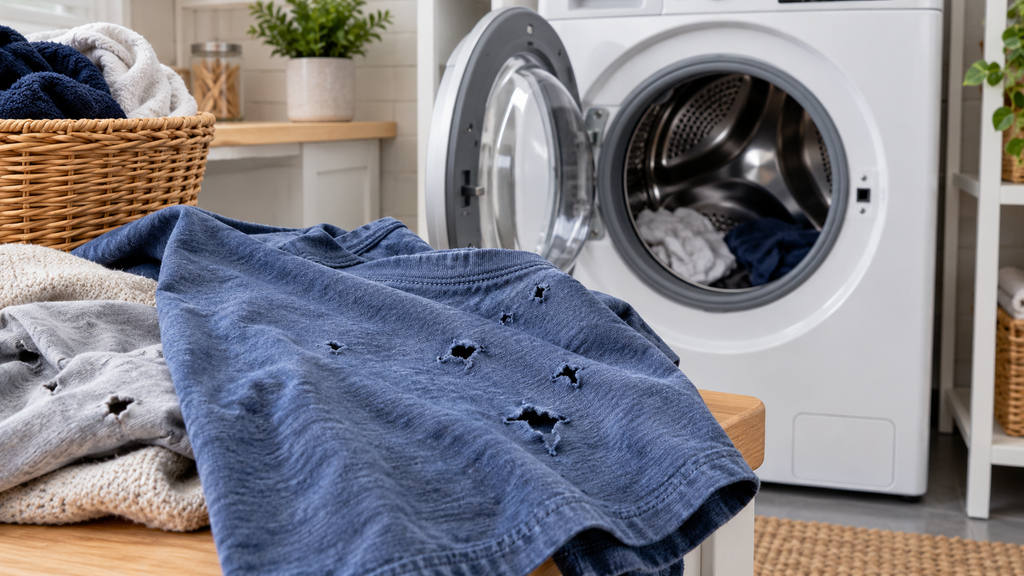
When a washing machine leaves holes in clothes, the damage often starts with a sharp surface, an overloaded drum, or a harsh cycle. Zippers, bra hooks, coins, and damaged drum holes can snag fabric while the load moves. Too much bleach or the wrong cycle can weaken fibers until they tear.
The pattern of the hole gives useful clues. A clean snag near a zipper differs from scattered weak spots caused by chemicals. Check the clothing, washer drum, and wash habits before assuming the washer needs a major repair.
Why a Washing Machine Leaves Holes in Clothes
Look at several damaged items in bright light. Note the fabric type and where the holes appear.
Common patterns include:
- Small pulled holes that line up with a zipper tooth or hook.
- Long tears near seams after a crowded wash.
- Random thin spots after direct contact with bleach.
- Repeated snags on the same side of many garments.
- Dark marks with holes near the door opening.
- Frayed fabric after a high-speed cycle.
- Punctures caused by screws, coins, or hard items left in pockets.
Are only delicate shirts affected, or does the damage reach towels and jeans too? Damage across heavy fabrics makes a rough machine surface more likely.
Safety First
- Unplug the washer before reaching into the drum or checking the door area.
- Turn off water supplies if the machine must be moved.
- Wear work gloves when feeling for sharp metal.
- Do not run a machine with a cracked drum, loose baffle, or damaged door seal.
- Keep hands away from the door lock and moving basket.
- Arrange service if a sharp edge cannot be reached safely.
How to Find Why the Washer Is Tearing Clothes
Use damaged items as evidence, then inspect the washer with the power off.
Check the Load and Clothing
- Empty every pocket and turn each item inside out.
- Close zippers, hooks, snaps, and hook-and-loop fasteners.
- Place small or delicate items in mesh laundry bags.
- Separate heavy jeans and towels from thin fabric.
- Reduce the load so clothing can move freely.
- Choose the cycle listed on each care label.
- Run one test load with sturdy, older items.
Inspect the Drum and Baffles
- Unplug the washer and open the door or lid.
- Shine a flashlight across the drum surface.
- Slowly rotate the drum by hand.
- Feel the surface with a cotton ball or nylon stocking over a gloved hand.
- Look for places where the fibers catch.
- Check every drum baffle or agitator fin for movement and cracks.
- Remove only loose objects that can be reached without taking panels apart.
Check the Door Seal and Gap
- Pull back each accessible fold of a front-load door seal.
- Remove coins, pins, and other trapped objects.
- Inspect the seal for cuts, exposed wire, or rough edges.
- Check the gap between the inner drum and outer tub.
- Look for fabric marks near the door glass.
- Stop using the washer if the seal support wire is loose.
- Arrange repair for a torn seal or excessive drum movement.
Avoid Chemical Damage
Bleach and strong spot treatments can weaken fabric before the washer begins to spin. Damage may show up after the wash even though the chemical caused it.
Safer laundry habits include:
- Measure bleach with the product cap or a marked cup.
- Use the bleach dispenser when the washer has one.
- Dilute bleach only as the product and machine instructions direct.
- Never pour concentrated bleach onto clothing.
- Let the dispenser rinse clean after use.
- Keep stain products from drying on fabric for too long.
- Check care labels before using bleach or hot water.
Repeated pale spots around the holes strongly suggest chemical weakening.
Check for Overloading and Wrong Cycles
A packed drum pushes fabric against zippers, baffles, and door parts. High spin speed adds more stress, especially to thin or loose-knit clothing.
Load problems often show these signs:
- Clothing comes out twisted into a tight rope.
- The washer struggles to balance before spinning.
- Items remain dry in crowded areas of the drum.
- Delicates are washed with heavy towels or work clothes.
- Drawstrings wrap around the agitator or other garments.
- The cycle uses a high spin speed for fragile fabric.
Follow the washer manual for load size. The drum needs open space for items to lift, fall, or roll according to the machine design.
When a Mechanical Fault Is Likely
Damage that continues after better sorting and smaller loads points toward the washer.
Mechanical clues include:
- The cotton-ball test catches in one drum hole.
- A baffle lifts or shifts by hand.
- The inner drum rubs the door seal.
- The basket has large side-to-side movement.
- A scraping sound appears during hand rotation.
- Clothing gets trapped at the bottom of the door seal.
- Rust or chipped coating creates a rough spot.
A damaged drum, bearing, basket support, or seal requires model-specific repair. Continued use may turn small snags into larger tears.
Protect Clothes in Future Loads
Good loading habits reduce both fabric wear and washer strain.
- Sort by fabric weight and care needs.
- Use mesh bags for bras, lace, and small socks.
- Tie drawstrings loosely and close garment fasteners.
- Check pockets for metal and sharp items.
- Choose a lower spin speed for delicate loads.
- Replace damaged laundry bags before they expose rough zippers.
- Inspect the drum after washing shoes, mats, or hardware-heavy clothing.
Keep one damaged garment aside until the cause is found. Its snag direction, stain pattern, and fabric type can be compared with later test loads. When damage stops after one change, such as closing zippers or reducing load size, that result gives a stronger answer than changing several habits at once.
New clothing can also have weak seams or small manufacturing cuts. Check unworn matching items when possible. A single damaged piece may come from the garment, while the same hole pattern across several loads points back to the laundry process or washer.
Key Takeaways
A washing machine leaves holes in clothes because of sharp items, rough washer parts, crowding, harsh cycles, or chemical damage. The hole pattern and a careful drum inspection can separate laundry habits from a machine fault. Smaller sorted loads and closed fasteners prevent many snags. A torn seal, loose baffle, rough drum, or rubbing basket needs repair before another load is washed.