

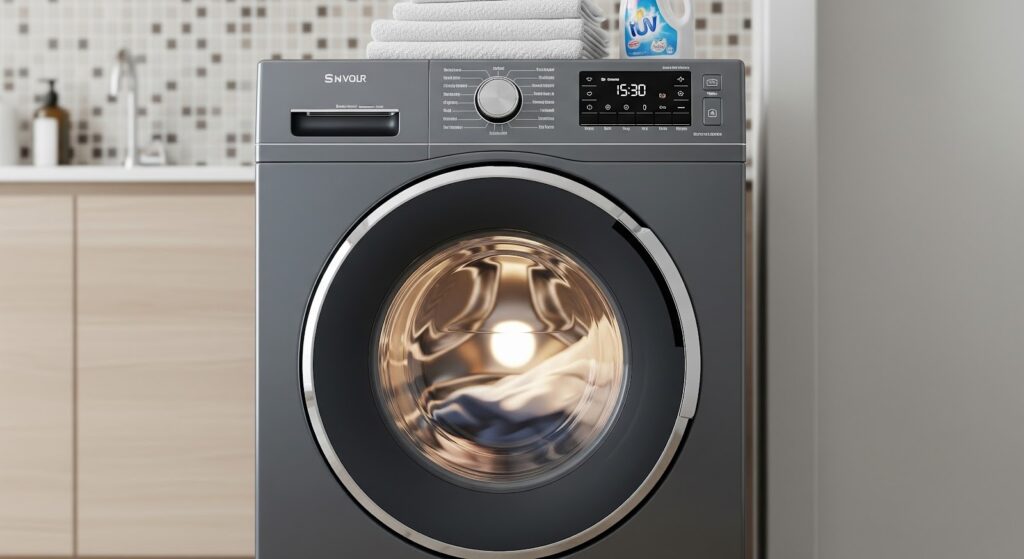
A faulty washer timer knob can make it difficult to choose a wash cycle, and a damaged knob can even prevent the machine from running properly. Replacing it is a simple DIY project that restores smooth operation and gets your laundry routine back on track.
When to Replace a Washer Timer Knob
The timer knob is the large dial on the control panel that allows you to set the cycle length. Because it attaches directly to the timer shaft, it often fits differently than the other knobs or buttons on the washer. Damage is usually obvious. The knob may be cracked, loose, missing, or visibly worn. In some situations, you may need to take a closer look to confirm the source of the problem.
Signs the Knob Is the Issue
The knob may spin freely when you turn it. This often means the interior of the knob is cracked and can no longer grip the timer shaft. When that inner section is damaged, replacing the knob solves the problem.
Signs the Timer May Be Faulty
The washer may skip cycles or fail to respond when you attempt to set a wash time. The timer shaft may appear worn or stripped. In situations like these, a new knob will not help, and the timer assembly will need to be replaced.
Common Problems That Mimic a Bad Timer Knob
A few issues may look similar to knob failure but come from different components. Identifying these saves unnecessary part replacements.
- A worn timer shaft that no longer grips any knob
- A loose control panel that shifts when you turn the dial
- A broken knob clip that prevents proper seating
- Debris behind the control panel that blocks rotation
- A failing timer motor that leads to unresponsive controls
Tools You Will Need
This repair requires only a few basic tools.
- A compatible OEM replacement timer knob
- Needle nose pliers
- Phillips screwdriver
- Putty knife if needed for your specific washer model
- Work gloves for hand protection
How to Replace a Washer Timer Knob
Here are the steps to replace the washer’s timer knob from start to finish.
Accessing the Control Panel
- Remove the control panel’s mounting hardware.
- Pry off any plastic trim pieces if they cover the mounting screws.
- Remove the mounting screws from the front or back of the control panel, depending on the model.
- Release any locking tabs by sliding a putty knife under the front edge and pressing the tabs inward.
- Open the control panel and swing it back or upward.
Removing the Old Timer Knob
- Locate the timer inside the control panel behind where the timer knob sits.
- Hold the rotating knob on the back of the timer still using needle-nose pliers.
- Pull the old timer knob off from the front of the washer.
Inspecting the Timer Shaft
- Inspect the timer shaft and confirm both prongs are intact.
- Replace the timer assembly if a prong is broken.
Installing the New Timer Knob
- Align the flat sides inside the new knob with the angled sides of the timer shaft.
- Push the new knob firmly onto the timer shaft until it locks into place.
- Pull the main timer shaft back out by hand if it was pushed inward.
- Push the inner black shaft back down with needle-nose pliers if needed.
Reassembling the Control Panel
- Close the control panel and lock it back into position.
- Reinstall all mounting screws and replace any trim pieces.
Testing the Washer
- Turn the new knob and confirm it does not spin freely.
- Select several cycles to confirm each one activates correctly.
Tips for Extending the Life of Your New Timer Knob
Once a new knob is installed, a few habits can help it last longer and avoid repeat repairs.
- Turn the dial gently rather than forcing it past resistance
- Clean the control panel regularly to prevent buildup around the knob
- Avoid pulling the machine away from the wall by grabbing the knob
- Keep moisture away from the control area to prevent internal wear
- Teach household members to adjust cycles carefully
Key Takeaways
A fresh timer knob puts your washer back in sync with your daily routine and makes cycle selection feel smooth again. A quick check of the knob, the timer shaft, and the surrounding parts often clears up any confusion about what needs replacing. A careful install and a few simple habits keep the new knob working the way it should. Little fixes like this make home upkeep feel a lot more manageable and help your washer stay dependable load after load.