

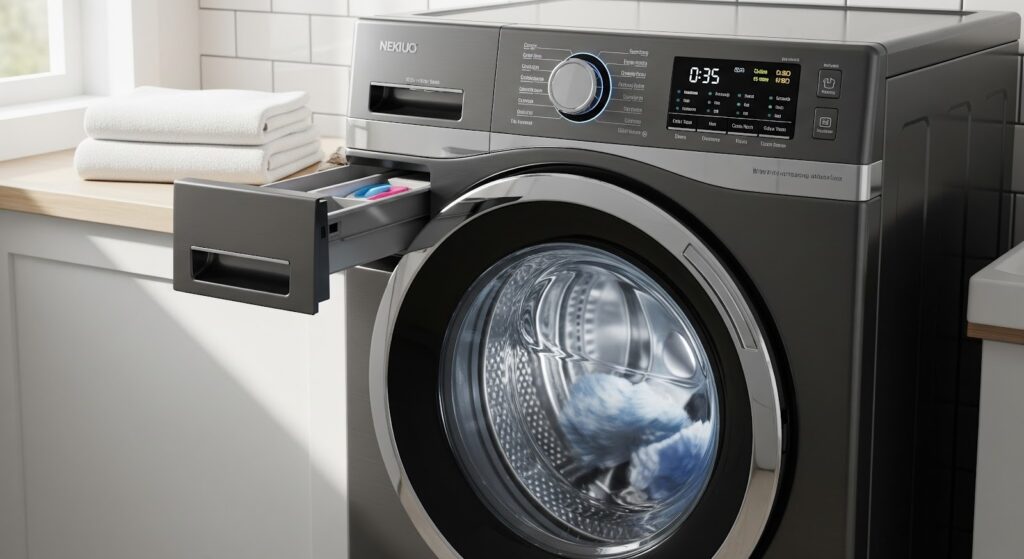
A noisy washer or unexpected puddles on the floor often point to worn bearings or a damaged seal. These parts work hard every time you run a load, and eventually, they wear out. Fortunately, replacing them is easier than most people think. With a few tools, some patience, and this step-by-step guide, you can get your washing machine running quietly and efficiently again without paying for costly repairs.
Why Bearings and Seals Wear Out
Over time, a washer’s bearings and seal experience constant friction, vibration, and water exposure. This normal wear and tear leads to noise, leaks, and rough operation. When these symptoms appear, it can sound like the end of the appliance, but the problem is repairable. Although the bearings and seal are located deep inside the machine, they are straightforward to replace. Doing the job yourself can save a significant amount of money compared to buying a new washer.
Signs of Worn Bearings or a Damaged Seal
Not sure whether your washer’s bearings or seal is the problem? Watch for these common warning signs:
- Loud grinding or rumbling sounds during the spin cycle
- Water leaking from the back of the washer
- Excessive vibration or movement while running
When one of these parts fails, the others are often close behind. Replacing both the bearings and the seal at the same time prevents future issues and avoids taking the washer apart twice.
Tools You’ll Need
Before beginning, gather the following items:
- New replacement bearings and seal
- Bucket or container for catching water
- Phillips and flathead screwdrivers
- Pliers and vice grips
- Snips or wire cutters (for cutting zip ties)
- Socket wrench set (10mm, 13mm, 17mm sockets)
- Hammer or rubber mallet
- Punch tool
- Rust Buster or another penetrating oil
- Zip ties
- Blue thread sealer
- Work gloves
How to Replace Washer Bearings and Seal
Follow these steps to disassemble your washer, replace the bearings and seal, and reassemble it so it runs smoothly again.
Disassemble the Washer
- Remove the top panel by taking out the mounting screws, pulling the panel back about 1½ inches, and lifting it off.
- Remove the detergent drawer by pressing the center tab and pulling it out.
- Remove the screws located behind the detergent drawer.
- Disconnect the wire harnesses at the front of the washer.
- Remove the control panel by releasing the locking tabs, lifting it slightly, and pulling it away.
- Open the washer door and locate the clamp holding the door gasket in place.
- Use a flathead screwdriver to lift the spring from the groove and remove the clamp.
- Push the gasket inward to clear it from the front panel.
- Disconnect the door switch wire harness.
- Drain any remaining water through the drain hose located behind the small access panel.
- Remove the access panel trim and the screw behind it.
- Remove the four screws at the top of the front panel while supporting it to prevent it from falling.
- Lift the front panel off and set it aside.
- Remove the gasket completely by detaching hoses and removing the interior clamp.
- Remove both tub weights using a 10mm socket wrench.
- Remove the hoses at the top of the tub using a Phillips screwdriver to loosen clamps.
- Disconnect the thermistor, heater wires, and grounding strap from the bottom of the tub.
- Remove the rear access panel by unscrewing it.
- Disconnect the hoses, pressure chamber mounting, and rotor assembly wires.
- Remove the 17mm bolt holding the rotor assembly in place and pull the rotor off.
- Remove the bolts holding the stator assembly and disconnect the attached wire harnesses.
- Disengage the shock absorbers by removing their locking pins with a 12mm or 13mm wrench and pliers.
- Lift the tub slightly to fold down each shock and remove them.
- Unhook the tub from its suspension springs and carefully lower it.
- Lift the tub out of the washer and set it on blocks with the opening facing upward.
- Remove all 10mm bolts around the perimeter of the tub and separate the two halves.
Replace the Bearings and Seal
- Lift the inner tub out and set it aside.
- Inspect the seals, the outer tub interior, and the inner tub shaft for damage or grime.
- Clean or replace any damaged or dirty parts.
- Pry the old seal off the inside of the outer tub with a flathead screwdriver.
- Apply penetrating oil around the inner edge of both bearings and let it soak for a few minutes.
- Remove both bearings using a hammer and punch.
- Wipe away excess oil and debris, and clean the bearing area with a nylon or brass brush.
- Apply a thin layer of liquid soap around the outer rim of each new bearing.
- Install the exterior bearing by gently hammering it into place until flush with the tub surface.
- Flip the tub and install the interior bearing using a punch or piece of wood to seat it fully.
- Apply a thin layer of soap around the outside of the new seal and press it into place inside the tub.
Reassemble the Washer
- Reinstall the inner tub, aligning the shaft properly.
- Reassemble the outer tub and tighten all bolts, making sure the heating element is properly seated.
- Place the tub back inside the washer body.
- Reattach the suspension springs.
- Reinstall the shock absorbers once the tub is hanging correctly.
- Reconnect all hoses at the top and rear of the tub.
- Reconnect the thermistor, heater wires, and grounding strap, securing them with zip ties.
- Reinstall the stator, securing one bolt first, then reconnecting the wire harnesses and grounding wire before tightening all bolts.
- Reinstall the rotor assembly and apply blue thread sealer to its bolt before tightening.
- Reattach the rear access panel, aligning all tabs properly.
- Reinstall the tub weights and secure them with bolts.
- Reinstall the gasket, aligning the indicator at 12 o’clock and securing the inner clamp.
- Reconnect the door switch wire harness.
- Pull the door gasket outward and install the outer clamp with the spring positioned at 6 o’clock.
- Reinstall the front panel, aligning it with the lower tabs and checking that the drain hose is correctly routed.
- Reinstall the access panel trim and cover.
- Reattach the control panel and reconnect all wire harnesses.
- Slide the detergent drawer back into place.
- Reinstall the top panel by sliding it forward to lock it and securing it with screws.
Final Checks
- Verify that all hoses and wires are connected securely.
- Spin the drum manually to confirm smooth rotation.
- Restore power and water supply.
- Run a short test cycle to confirm proper operation and check for leaks or noise.
When to Call for Professional Help
While replacing bearings and seals is a manageable DIY project, some situations call for professional service. You might consider contacting a technician if:
- The drum or inner tub is severely rusted or damaged.
- You notice cracked or broken suspension springs.
- The bearing housing is welded or difficult to remove.
- The machine is still under warranty.
- You are uncomfortable handling electrical or mechanical repairs.
A qualified technician can inspect the washer, provide an estimate, and confirm whether replacement or repair is the better choice.
How to Prevent Bearing and Seal Problems
After replacing these parts, a few simple habits can help extend the life of your washer:
- Avoid overloading the drum, which strains the bearings.
- Use only the recommended amount of detergent.
- Run a cleaning cycle regularly to remove soap buildup.
- Keep the door slightly open after each wash to let moisture evaporate.
- Check the hoses and fittings periodically for leaks.
- Dry off the drum and gasket area after washing large or wet items.
- Listen for changes in noise or vibration during each cycle.
Caring for your machine this way helps it run quietly and efficiently for years to come.
Summing Up
A washer that runs smoothly again is worth the effort. Taking the time to replace worn bearings and a damaged seal brings back quiet cycles and saves a good amount of money. It’s a project that rewards patience more than skill, and once you’ve done it, you’ll understand your machine better than ever. Keep up with small habits like cleaning, checking for leaks, and avoiding overloads, and your washer will last for many more years of laundry days without the noise or mess.