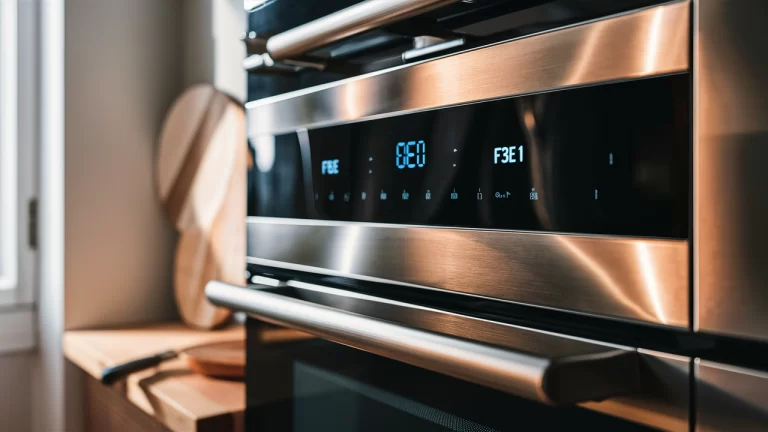
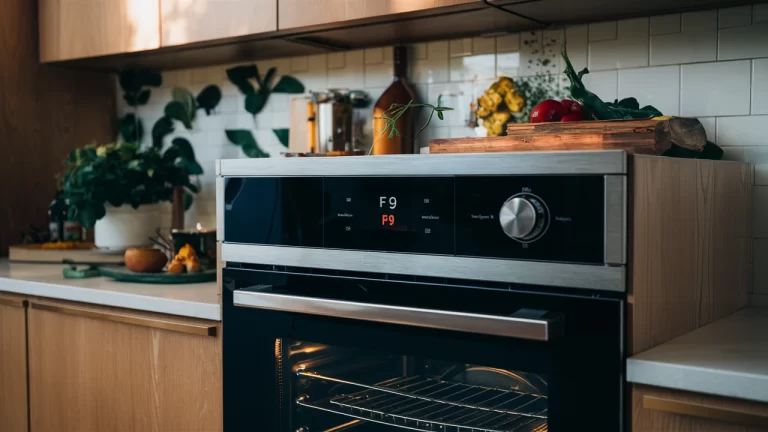
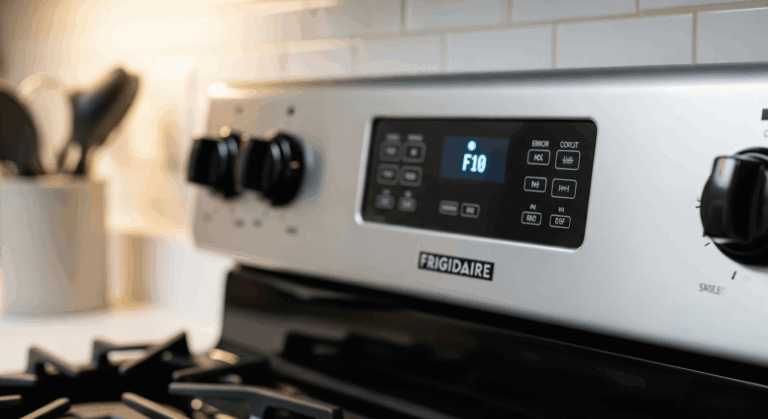
Seeing an F6 error code on your GE gas range? This means the temperature sensor is not working properly. The sensor helps control the gas flow. When it fails, the F6 code appears and the oven stops working. Don’t panic – this can often be fixed with basic troubleshooting. First, check that the sensor is positioned correctly inside the oven, not touching the walls. Inspect for any damage to the sensor. Make sure the wiring is tightly connected. Try resetting the range to clear the error code.
If these steps don’t work, you may need a repair technician’s help. With some simple troubleshooting, you can get your GE gas range cooking again.
Quick diagnosis table
Cut power and shut off the gas before any of the checks below.
| Symptom detail | Likely cause | What to check | Fix or part |
|---|---|---|---|
| F6, oven will not turn on | Temperature sensor touching oven wall | Check sensor position and damage | Reposition sensor, reset range |
| F6, gas lockout triggered | Faulty gas lockout motor | Resistance test, 2,000 to 3,000 ohms | Replace lockout motor |
| F6 returns after reset | Damaged lockout motor wiring | Inspect harness for frayed wires | Repair or replace harness |
| F6, burners get no gas | Lockout valve position switches | Test the lockout switches | Replace faulty switch |
| F6 comes and goes | Loose electrical connections | Check harness connectors are tight | Reseat connections |
What Does the F6 Error Code Mean?
Have you ever been cooking on your GE gas range when suddenly the oven won’t turn on and an “F6” error code appears on the display? Don’t panic! This error has a name and a solution.
The F6 error code stands for “Failed Gas Valve Lockout” on many GE range models. But what exactly does that mean?
The Gas Valve Lockout Explained
The gas valve lockout is an important safety feature in your oven. Its job is to stop the flow of gas to the cooktop burners when something goes wrong. This prevents a dangerous gas leak situation.
When the lockout is activated by a fault, it quite literally “locks out” the gas valve, preventing it from opening to supply the burners. The F6 error alerts you that this lockout has been triggered.
What Causes the F6 Error?
So if the gas lockout stops gas flow, what could be triggering it? The F6 code is directly tied to issues with the gas lockout motor or its wiring harness.
Some possible culprits include:
- A faulty gas lockout motor itself
- Damaged wiring to the lockout motor
- Problems with the lockout valve position switches
- Loose electrical connections
Basically, anything preventing the lockout motor from operating correctly can set off the lockout safety and display the F6 error.
The Purpose of the F6 Error
While an error code is never fun to see, the F6 actually serves an important purpose – keeping you safe. By shutting down operation when a gas flow issue is detected, it prevents a potential gas leak hazard in your kitchen.
The error also clearly alerts you to the issue at hand. Without it, you may be left wondering why your oven simply won’t turn on with no error displayed.
So while dealing with an F6 error can be frustrating, remember that it’s just doing its job by keeping your range working safely. With some basic troubleshooting, you can get to the root of the problem and back to cooking again soon.
Safety First: Important Tips to Keep in Mind
Working on appliances like gas ranges can be risky if you’re not careful. Safety should always be the top priority. Let’s go through some essential tips to ensure your well-being during any repair or maintenance work.
Power Down and Unplug
Before you start tinkering, it’s crucial to cut off the power supply to the appliance. This can be done in two ways:
- Unplug the Appliance: Locate the power cord and gently pull it out from the electrical outlet. Simple, right?
- Switch Off the Circuit Breaker: If you can’t access the power cord easily, head over to your home’s electrical panel and flip the circuit breaker that controls the range’s power supply.
Removing power ensures that no electrical current is running through the appliance, reducing the risk of shocks or short circuits.
Let it Cool
Gas ranges can get scorching hot, especially after extended use. Touching hot surfaces can lead to nasty burns. Always allow sufficient time for the appliance to cool down before attempting any repairs or replacements.
A simple trick is to open the oven door and let the heat dissipate naturally. You can also use an infrared thermometer (if you have one) to check the temperature of different components until they’re safe to handle.
Shut Off the Gas Supply
Since we’re dealing with a gas appliance, it’s essential to shut off the gas supply before proceeding. This prevents any potential gas leaks, which can be hazardous and even lead to fires or explosions.
Locate the gas shut-off valve, typically located near the range or on the gas line leading to the appliance. Give it a quarter turn to close the valve and stop the gas flow.
Declutter the Workspace
A cluttered workspace increases the risk of accidents. Before starting any work, clear the area around the range of any unnecessary items or potential tripping hazards.
Ensure you have plenty of space to move around and access the appliance’s components comfortably. A well-organized workspace not only promotes safety but also makes the job more efficient.
Keep Children and Pets Away
Repairs and maintenance can involve sharp tools, exposed wires, and potential hazards that little hands and paws shouldn’t be around. It’s best to keep children and pets out of the work area until you’ve completed the task and restored the appliance to its proper working condition.
Their safety should be a top priority, as curious minds and wandering paws can inadvertently cause accidents or injuries.
Consult the User Manual
Before starting any repair work, it’s always a good idea to consult the user manual or manufacturer’s instructions. These resources often provide valuable safety guidelines, step-by-step procedures, and diagrams specific to your appliance model.
Following the manufacturer’s recommendations can help you avoid potential pitfalls and ensure you’re taking the correct approach for your particular range.
Handle Parts with Care
Appliance components can be delicate and expensive to replace. When handling parts, such as wiring harnesses or control boards, exercise caution and gentleness.
Consider wearing insulated work gloves to protect your hands from sharp edges or pinching hazards. Additionally, avoid touching exposed wires or terminals, as they may carry residual electrical charges.
Use Proper Tools
Using the right tools for the job can make all the difference in terms of safety and efficiency. Non-conductive tools, such as insulated screwdrivers or pliers, can help prevent accidental shorts or shocks when working around electrical components.
If you need to test voltage or continuity, use a multimeter correctly to avoid short-circuiting or damaging the appliance’s circuitry.
Document Connections
Before disconnecting any wiring harnesses or connectors, it’s a good practice to take photos or make detailed notes of their positions and terminal connections. This visual reference can be invaluable when it’s time to reassemble everything, ensuring you don’t mix up any connections.
Stay Alert and Focused
Repair work requires your full attention and concentration. Distractions or multitasking can lead to mistakes or oversights, potentially compromising your safety or the appliance’s functionality.
Work in a well-lit area, take breaks when needed, and stay focused on the task at hand. A clear mind and a methodical approach can go a long way in preventing accidents or costly errors.
Troubleshooting the F6 Error on Your GE Gas Range
So your GE gas range is showing the F6 error code, and you’re not sure what to do next? Don’t worry, we’ve got you covered! In this section, we’ll walk through the steps to troubleshoot and potentially fix the F6 issue.
Step 1: Retrieve the F6 Error Code
Before we begin, let’s confirm that the F6 error code is indeed present on your range. To do this, you’ll need to enter the diagnostics mode on your appliance. Consult your user manual for the specific button combination required to access the diagnostics menu. Once in the menu, look for the F6 code listed among the stored error codes.
Step 2: Check the Gas Valve Lockout Motor
The F6 error is related to the gas valve lockout motor, which is a safety component that controls the flow of gas to the cooktop burners. If this motor is faulty or not functioning properly, it can trigger the F6 error code.
Here’s how you can check the lockout motor:
- For safety reasons, turn off the power to your range, unplug it from the wall outlet, and shut off the gas supply.
- Locate the left side panel of your range and remove it to access the lockout motor assembly.
- Inspect the motor’s installation, orientation, and mounting screws to ensure everything is securely in place.
- Disconnect the wire harness connected to the lockout motor.
- Using a multimeter, measure the resistance between the harness connector pins. A normal reading should be around 2,000 to 3,000 Ohms. If the resistance is significantly higher, it could indicate a faulty lockout motor.
- Reconnect the harness and inspect it for any signs of damage, such as frayed wires or loose connections.
Step 3: Test the Lockout Switches
In addition to the lockout motor itself, there are also lockout switches that help control the gas valve. These switches need to be functioning properly to avoid the F6 error.
To test the lockout switches:
- Leave the wire harness connected to the lockout motor assembly.
- Manually rotate the motor shaft to actuate the gas valve, moving it to the open and closed positions.
- Use your multimeter to check for continuity between the switch terminals in each position. The switches should change their state (open or closed) as you move the valve.
- If the switches aren’t changing their state between the valve positions, it’s likely that one or more of the switches are faulty and need to be replaced.
Step 4: Check Control Board Connections
The lockout motor assembly is connected to the range’s control board through a wire harness. Any issues with this connection could also cause the F6 error code.
Follow these steps to check the control board connections:
- Ensure your range is turned off and unplugged from the power source.
- Locate the connector labeled “CN6” on the control board, where the lockout motor wire harness is connected.
- Remove the top console of your range to access the control board and connections.
- Inspect the harness connector at CN6 and ensure it’s securely seated. If it’s loose, reseat the connector properly.
- Use your multimeter to check for continuity on each wire between the control board connector and the lockout motor harness connector.
- Carefully inspect the entire wire harness for any signs of damage, bent pins, or corroded terminals.
- If you find any issues with the wire harness, it’s recommended to replace the entire lockout motor wire assembly.
By following these steps, you should be able to identify the root cause of the F6 error code on your GE gas range. Remember, safety should always be your top priority when working on appliances.
Related guides
- Electric Stove Troubleshooting: How to Fix a Non-Functioning Unit
- Samsung Range Dual Infinite Switch Troubleshooting and Replacement
Found the faulty part? Find the exact part for your range oven by model number.
Conclusion
After walking through the troubleshooting steps for the F6 error code on your GE gas range, you should now have a better understanding of what causes this issue and how to potentially resolve it. Let’s quickly summarize what we’ve learned.
The F6 error code stands for “Failed Gas Valve Lockout,” which indicates a problem with the gas valve lockout motor or its associated wiring harness. This lockout motor is a safety component that controls the flow of gas to the cooktop burners, ensuring that gas doesn’t leak when the burners are not in use.
If the lockout motor or its switches are faulty, or if there’s a loose connection or wiring issue, the F6 error code will appear, and your range’s oven won’t operate. By following the troubleshooting steps, you can identify the root cause of the problem and potentially fix it yourself.
Remember, safety should always be your top priority when working on appliances. Make sure to power off the range, unplug it from the wall outlet, and shut off the gas supply before attempting any repairs or maintenance. Handle all components gently, and don’t hesitate to seek professional assistance if you’re unsure about any step or feel uncomfortable working on your appliance.
Fixing appliances can be a rewarding experience, but it’s not always easy. Have you ever tried to troubleshoot an issue with your oven or cooktop? Maybe you’ve encountered a different error code or problem altogether. Share your experiences and let us know if this guide helped you resolve the F6 error on your GE gas range.
If you found this guide helpful, consider sharing it with your friends or family members who might be facing similar issues with their appliances. Together, we can learn from each other’s experiences and empower ourselves to tackle these challenges with confidence.
Remember, a little knowledge and patience can go a long way in keeping our homes running smoothly. Happy troubleshooting, and here’s to many more delicious meals cooked on your trusty GE gas range!
Once you know which part failed, find the matching range oven parts by model number so the replacement fits the first time.