

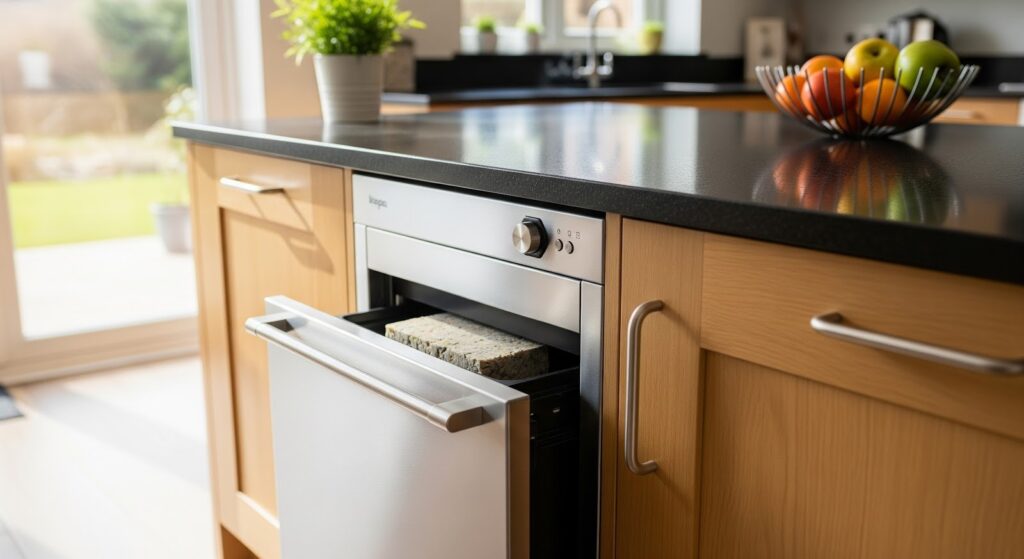
A foul odor from your trash compactor can make the entire kitchen unpleasant. The good news is that most smells can be fixed at home with a few simple steps. With some basic supplies and a little care, you can eliminate the odor and refresh your kitchen without calling a technician.
Let’s get started.
Common Causes of Bad Odors
Before cleaning, it helps to understand where unpleasant smells usually come from. Identifying the source helps you target the problem more effectively.
- Old or decaying food: Food particles can fall between compacted layers and begin to rot.
- Leaking trash bags: Liquids and waste from torn bags can seep into the compactor bin.
- Dirty ram plate: Food residue on the ram plate can create a lingering odor.
- Blocked air vents: When air cannot circulate properly, smells stay trapped.
- Worn filters or deodorizers: A used or expired deodorizing filter stops absorbing odors.
- Improper bag replacement: A bag that is too small or not secured can allow waste to spill into the interior.
- Lack of routine cleaning: Skipping regular maintenance gives bacteria and mold time to grow.
- Overfilled bin: Compressing waste beyond capacity can trap moisture and bacteria.
What You’ll Need
- Cleaning supplies
- Replacement deodorizer (if applicable)
Safety First
Before working on any appliance, make safety your top priority. Follow these precautions before starting any maintenance or cleaning task.
- Disconnect the power: Always unplug the trash compactor or switch off the circuit breaker before beginning. This prevents the risk of electric shock.
- Allow it to cool: Wait until the appliance has completely cooled if it was recently used.
- Work carefully: Move slowly and deliberately to avoid mistakes or injuries.
- Use good lighting: A bright workspace helps you see and reach all necessary parts.
- Keep the area clear: Remove clutter and keep children and pets out of the workspace.
- Stay dry: Do not handle internal parts with wet hands or work in damp conditions.
- Read the manual: Review your user manual for appliance-specific safety or installation instructions.
- Handle parts gently: Avoid using excessive force when removing or adjusting components.
- Wear gloves: Insulated work gloves protect your hands from sharp metal edges and debris.
- Be cautious with wiring: Do not touch exposed wires or terminals. Use a non-conductive tool or insulated gloves when you need to move them.
- Document connections: Take photos or notes before disconnecting wires or components to make reassembly easier.
- Avoid live testing: Do not test live voltage with a multimeter unless you fully understand how to prevent short-circuiting.
How to Fix a Smelly Trash Compactor
Follow these steps to remove bad odors and keep your trash compactor clean and fresh.
Check the Deodorizer
- Check the deodorizer compartment or system in your trash compactor.
- Follow the manufacturer’s instructions for the correct type and amount of deodorizer to use.
- If an aerosol deodorizer is used, inspect the nozzle for clogs or damage.
- Clean a clogged nozzle using a thin wire or toothpick to remove debris.
- Replace the deodorizer can if it is empty or damaged.
- If your compactor uses a liquid or solid deodorizer, check if the compartment is empty.
- Refill the compartment with the recommended deodorizer solution or block.
- Replace the deodorizer regularly according to the manufacturer’s recommendations.
- Place a small bag of baking soda or activated charcoal inside the compactor to absorb odors.
Clean and Remove Residue
- Consult the user manual for cleaning recommendations before starting.
- Remove all trash and debris from the compactor.
- Wipe down the interior surfaces with a damp cloth or sponge.
- Use a mild detergent or degreaser to scrub the interior walls, ram, and other parts.
- Rinse with clean water and allow the interior to dry completely.
- Run a clean cycle if your model has one, or an empty compaction cycle to dislodge waste.
- Make sure all food scraps are bagged or wrapped before placing them in the compactor.
- Clean the compactor at least once a month to prevent odor buildup.
Test the Compactor
- Insert a new trash bag and close the drawer securely.
- Run a test cycle to confirm the compactor operates properly and odors are gone.
Preventive Maintenance Tips
Consistent care helps keep your trash compactor clean and odor-free. Adding these habits to your regular kitchen routine can make a big difference.
- Wipe after each use: Clean the ram plate and interior walls regularly with a mild detergent.
- Use high-quality bags: Thicker compactor bags reduce leaks and prevent tears.
- Empty frequently: Do not let the compactor sit full for long periods.
- Replace deodorizers on schedule: Keep a reminder to change filters or inserts as recommended by the manufacturer.
- Inspect for damage: Check the bin, door seal, and hinges for cracks or gaps where odors could escape.
- Keep surrounding areas clean: Food scraps or spills near the compactor can contribute to odors.
- Dry completely after cleaning: Wipe all surfaces before closing the drawer to prevent mold growth.
- Run a deodorizing cycle: Some models support this feature to refresh the system between cleanings.
Key Takeaways
A fresh-smelling kitchen starts with a clean compactor. Once you’ve taken the time to clear out residue, replace filters, and wipe things down, your appliance should feel like new again. Staying consistent with quick wipe-downs and timely bag changes keeps bad smells from sneaking back. It’s one of those small habits that make your kitchen more pleasant every day. A few minutes of care go a long way toward keeping your trash compactor clean, fresh, and ready for the next load.