- Where the rust actually comes from
- How chipped rack tines and low-grade flatware contribute
- How to remove the rust and prevent more
- When your water itself is the problem
What Causes Rusty Silverware
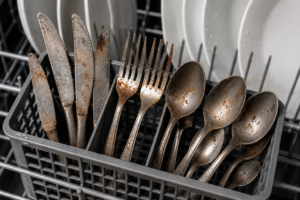
Ever notice the rust shows up in the same spots each time? That is a big clue. The usual causes are:- Chipped rack tines – when the coating on the basket or rack wears off, the bare metal underneath rusts and stains anything it touches.
- Low-grade or non-stainless flatware – cheaper pieces rust on their own, especially at worn edges.
- Mixing metals – carbon-steel knives or cast iron in the same load can transfer rust.
- Rust in the water supply – older pipes or a failing water heater can carry iron that deposits on dishes.
What You’ll Need
- Vinegar or a mild rust remover
- A soft cloth or scrubbing pad
- Vinyl tine repair paint or tine caps
How to Fix and Prevent Rusty Silverware
Ready? Work through these in order.- Remove the rust. Scrub affected pieces with vinegar or a mild rust remover, then rinse and dry.
- Inspect the rack tines. Look for chips in the coating. Repair bare spots with vinyl tine paint or slip on tine caps so no metal is exposed.
- Sort your flatware. Keep carbon-steel knives and any rust-prone items out of the dishwasher and hand wash them.
- Dry the load promptly. Do not leave wet flatware sitting for hours, which encourages rust.
- Check your water. If you see rust on many surfaces, have your water tested for iron.
When to Look a Little Deeper
A worn-out basket or rack is worth replacing outright, which is straightforward with a new dishwasher rack. Rust often travels with mineral marks, so it helps to also tackle white residue on dishes, and pieces that sit wet stay rust-prone, which is why a dishwasher that is not drying makes the problem worse. Keeping the inside clean also keeps loose debris and grit from scratching coatings, so it is worth knowing how to replace a clogged dishwasher sump filter, and a steady dose of rinse aid helps water clear off metal faster.When to Call a Pro
If your flatware and racks are fine but rust still appears on everything, the iron is likely in your water supply. A plumber can test for it and recommend a filter or treatment.Related guides
Wrapping Up
Rusty silverware is almost always fixable at the source. Here’s the short version:- Repair or replace chipped rack tines.
- Keep rust-prone metals out of the dishwasher.
- Dry flatware promptly and use rinse aid.
- Test your water if rust is everywhere.
The last step is the part itself: match a dishwasher parts to your model number rather than to a photo or a part name.