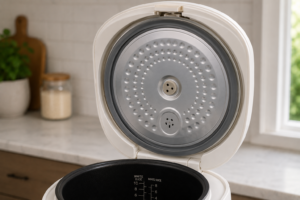
Seeing water dribble down the side of your rice cooker from around the lid? A leaking lid is usually a sealing problem, and most of the time you can fix it without any parts at all.
Here is why a rice cooker lid leaks and how to seal it up.
This article will teach you:
Where lid leaks come from
How the gasket seals the lid
What to check first
When a part has failed
Why the Lid Leaks
A worn or misaligned gasket around the lid rim.
Food or starch on the seal holding the lid open a hair.
Overfilling that forces water out under pressure.
A warped or bent lid that no longer sits flat.
What You’ll Need
A soft cloth
Warm soapy water
A replacement gasket if needed
How to Fix a Leaking Rice Cooker Lid
Clean the seal. Wipe the gasket and the lid rim so nothing holds the lid ajar.
Reseat the gasket. Make sure the rubber gasket sits evenly in its groove.
Check the fill level. Stay under the maximum line to reduce pressure.
Inspect the lid. Look for warping or cracks that stop a tight seal.
Pro Tip: A gasket that looks fine can still leak if it is stiff and flattened with age. If cleaning and reseating do not help, a fresh gasket is a cheap, quick fix.
When to Look a Little Deeper
Because leaks and boil-overs share causes, it helps to check them together, and reviewing a cooker that bubbles over or a clogged steam vent can reveal why water escapes. A leak paired with a burnt smell points to overflow hitting the heating plate.
When to Call a Pro
If the gasket is fresh, the seal is clean, and you are not overfilling but it still leaks, the lid or housing may be warped. Replacing the cooker is usually the practical route.