Clean water matters in every home. You use it for drinking, cooking, making coffee, washing produce, and filling a pet bowl. But what happens when your filter gets old? That is where replacing water filter cartridges becomes important.
Many people install a water filter and then forget about it. That is easy to do. Life gets busy. But an old filter cannot do its job well. It may slow down your water flow, change the taste, or stop filtering as well as it should. So, how often should you change it?
The short answer is this: most water filter cartridges need to be changed every 2 to 12 months, depending on the type of filter, how much water your home uses, and the quality of your water. Some filters last only a couple of months. Others can last much longer.
This guide breaks it all down in a simple way. You will learn what water filter cartridges do, how often to replace them, what signs to watch for, and how to make filter changes easier at home.
What Water Filter Cartridges Do
A water filter cartridge is the part inside the filter that traps or reduces unwanted material in your water. Think of it as the working part of the system. Without it, the filter housing is just a shell.
Different cartridges do different jobs. Some reduce dirt and sediment. Some help remove bad smells and odd tastes. Others are made to reduce certain chemicals or other unwanted materials in the water.
Common types include:
- Activated carbon filters for taste and odor
- Sediment filters for dirt, rust, and particles
- Reverse osmosis filters for deeper filtration
- Specialty filters made for certain water concerns
No matter the type, each cartridge has a limit. Over time, it fills up or wears out. When that happens, it cannot work as well as before. That is why replacing water filter cartridges on time is such a big part of home maintenance.
Why Replacing Water Filter Cartridges on Time Matters
It is easy to think, “The water still looks fine, so the filter must be okay.” But clear water does not always mean a filter is still working well.
When a filter cartridge gets too old, a few things can happen:
- Water may taste flat, bitter, or strange
- Water may smell different
- The flow may become slower
- The system may work harder than it should
- Filtration may become less effective
Would you keep using a vacuum with a full bag and expect top results? Probably not. Water filters work in a similar way when they are full or worn out, performance drops.
Changing a cartridge on time helps protect:
- Your water quality
- Your filter system
- Your appliances
- Your peace of mind
How Often Should You Change Water Filter Cartridges?
This is the question most homeowners ask, and for good reason. There is no single answer for every home, but there are general timelines that help.
Here are some common replacement ranges:
- Refrigerator water filters: About every 6 months
- Water pitcher filters: About every 2 months
- Faucet-mounted filters: About every 2 to 3 months
- Under-sink filters: About every 6 to 12 months
- Whole-house sediment filters: About every 3 to 6 months
- Reverse osmosis pre-filters and post-filters: About every 6 to 12 months
- Reverse osmosis membranes: About every 2 to 3 years
These are only general guides. The best place to start is your product manual. Most brands list replacement timing by months, gallons used, or both.
So, is six months always the rule? Not at all. Some homes need to replace water filter cartridges sooner, especially if they use a lot of water or have water with more sediment.
What Changes the Replacement Schedule?
Why does one family change a filter every two months while another gets six months out of the same type? A few key factors can affect filter life.
1. Household Water Use
A large family usually uses more filtered water than one person living alone. More use means the cartridge has to work harder and may wear out faster.
If your filter handles water for drinking, cooking, ice, and coffee every day, it may need more frequent changes.
2. Water Quality
Not all tap water is the same. Some homes have harder water. Others deal with more sediment, rust, or minerals. If your water is heavy with particles, your filter may clog faster.
This is especially common in homes with well water or older plumbing.
3. Filter Type
A small pitcher filter will not last as long as a larger under-sink unit. A simple sediment filter will have a different lifespan than a multi-stage reverse osmosis system.
That means you should not compare one system to another too closely.
4. Filter Capacity
Some cartridges are made to filter more gallons than others. A larger or higher-capacity cartridge may last longer than a smaller one.
5. Manufacturer Guidelines
Every model is different. Some brands are very clear about when to change the cartridge. Others rely on a filter light or gauge. Following the product guide is one of the easiest ways to avoid guesswork.
Signs It Is Time to Replace a Water Filter Cartridge
What if you forgot the install date? It happens. The good news is that many filters give warning signs.
Watch for these common clues:
- Water tastes different
- Water smells odd
- Water flow is slower than normal
- Ice from the fridge tastes off
- You see sediment in the water
- The filter indicator light turns on
- The filter has reached its time or gallon limit
- The system sounds different or loses pressure
Have you noticed your water dispenser taking longer to fill a glass? That could be a clue. Has your water started tasting less fresh? That could be another.
Even if the water looks normal, the cartridge may still be overdue for a change. That is why both timing and performance matter.
Replacement Timelines by Filter Type
Different systems have different needs. Here is a closer look.
Refrigerator Water Filters
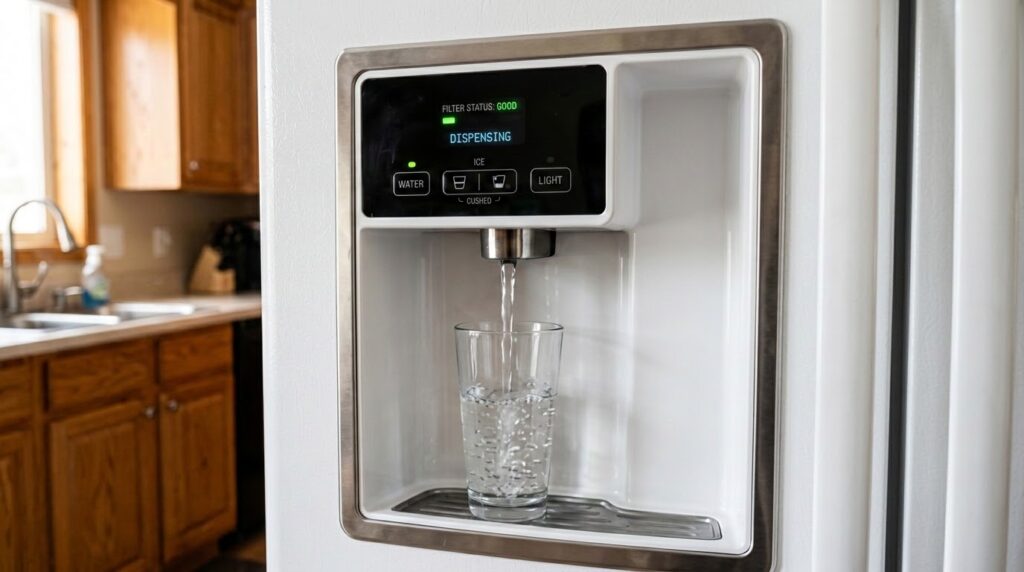
Refrigerator water filters are often changed every 6 months. Many fridges have a light that tells you when it is time. If your water or ice tastes strange, do not ignore it.
Water Pitcher Filters
These often need replacement every 2 months, sometimes sooner, with heavy use. They are simple to use, but they have smaller cartridges, so they do not last as long.
Faucet-Mounted Filters
These usually last about 2 to 3 months. Because they sit right on the faucet, flow changes are often easy to notice.
Under-Sink Filters
These can last 6 to 12 months, depending on the system. Some use more than one cartridge, and each may have a different schedule.
Whole-House Filters
These often need changing every 3 to 6 months. Since they handle all the incoming water, they can collect a lot of dirt and sediment.
Reverse Osmosis Systems
These systems often have several parts. Pre-filters and post-filters may need replacing every 6 to 12 months, while the membrane lasts longer. Missing a filter change here can affect the whole system.
What Happens If You Wait Too Long?
Putting off a filter change may not seem like a big deal at first. But over time, it can cause problems.
Here is what may happen:
- Filtration performance may drop
- Water may taste or smell worse
- Water pressure may go down
- The system may clog
- Parts may wear out sooner
- You may face more maintenance later
In many cases, replacing a cartridge on time is cheaper and easier than fixing a stressed or damaged system. A small task now can help prevent a bigger problem later.
How to Replace Water Filter Cartridges Safely
The exact steps depend on the model, but many systems follow the same basic process.
- Read the instructions for your filter model.
- Turn off the water supply if needed.
- Remove the old cartridge carefully.
- Clean the filter housing if your system allows it.
- Insert the new cartridge in the correct direction.
- Tighten everything securely, but not too tightly.
- Turn the water back on.
- Flush the filter as directed.
- Check for leaks.
- Write down the replacement date.
Why flush the filter? New cartridges often need a short rinse before use. This helps clear out loose carbon dust or trapped air.
Always take a minute to inspect for drips after installation. A small leak can turn into a bigger mess if you miss it.
Tips to Make Filter Changes Easier
Do you struggle to remember when you last changed the filter? You are not alone. A few simple habits can help.
Try these tips:
- Set a reminder on your phone
- Mark the date on a calendar
- Write the install date on the cartridge or housing
- Keep a spare cartridge at home
- Save the filter model number in your notes app
- Check the manual before buying a replacement
These small steps make replacing water filter cartridges much easier to keep up with.
Choosing the Right Replacement Cartridge
Picking the right cartridge matters just as much as changing it on time. A filter that looks similar may not be the right fit.
Before buying, check:
- Brand and model number
- Compatibility with your system
- Filter type
- Size and fit
- Rated lifespan
It is smart to compare product numbers instead of going by looks alone. This helps avoid returns, leaks, or poor fit.
Common Mistakes to Avoid
Many homeowners make the same filter mistakes. The good news is they are easy to avoid.
Here are some common ones:
- Waiting too long to change the filter
- Buying the wrong replacement
- Forgetting to flush the new cartridge
- Installing it the wrong way
- Ignoring leaks after changing it
- Not tracking the next change date
- Assuming all filters last the same amount of time
A little care goes a long way here. The goal is not just to swap the filter, but to keep the whole system working well.
Also Read: Refrigerator Water Filter Installation: Key Mistakes to Avoid
Closing Thoughts
Replacing water filter cartridges is one of the simplest ways to keep your water fresh and your filtration system in good shape. While many filters last anywhere from 2 to 12 months, the right schedule depends on your filter type, water quality, and how much water your home uses.
If you are not sure when to change yours, start with the manual. Then watch for signs like slow flow, strange taste, or bad smell. Those clues can tell you a lot.
A timely filter change does not take long, but it can make a big difference. Clean water, better taste, and a smoother-running system are worth it. So, when was the last time you checked your filter?