Quick answer
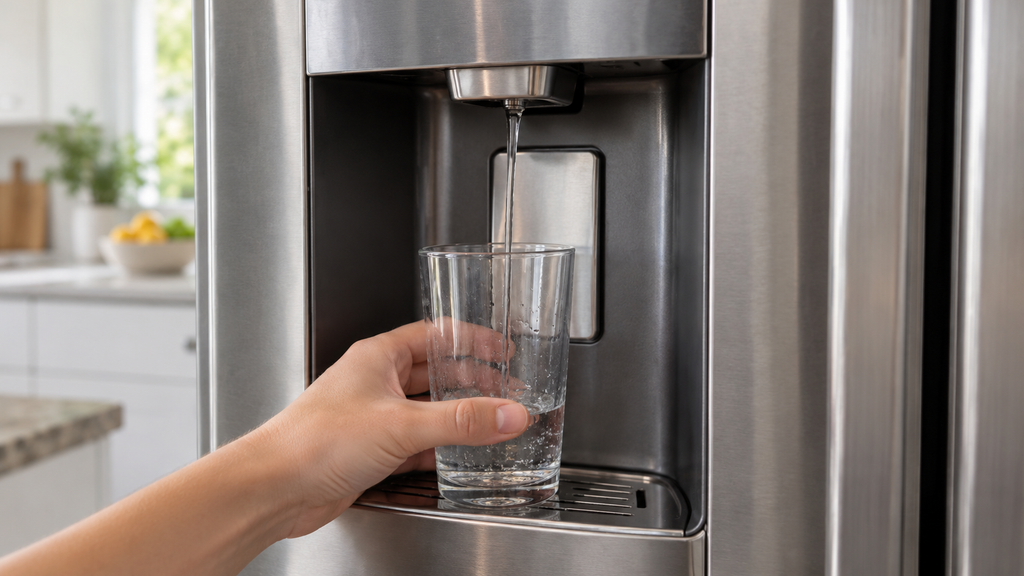
A refrigerator water dispenser slow to fill a glass most often has a clogged or overdue water filter, air trapped in the line after a filter change, or low supply pressure. Time an 8 ounce fill, then repeat with the filter bypass plug installed. If flow recovers, replace the filter and flush 2 to 4 gallons; if not, check for 20 psi or more and inspect the inlet valve.
Weak flow from a refrigerator water dispenser can turn filling a glass into a slow task. A restricted filter, low supply pressure, mineral buildup, a partly frozen line, or a leaking reservoir can reduce delivery for different reasons. This guide works through those possibilities in a practical order, beginning with the supply and filter before moving to less accessible components.
Quick Facts
| Detail | At a Glance |
| Difficulty | Easy to Moderate |
| Time | 10 minutes for the bypass test, 30 to 60 minutes for a valve replacement |
| Tools | Measuring cup, timer, filter bypass plug, hair dryer, multimeter, 1/4 inch nut driver |
| Part Cost | $30 to $60 filter, $30 to $70 inlet valve |
| Skill | Beginner for checks, intermediate for valve swap |
Why Is My Refrigerator Water Dispenser Slow?
A refrigerator water dispenser slow to fill can have a restricted filter, low supply pressure, mineral deposits, or a partly frozen line; a leaking reservoir can also affect delivery.
The following details help narrow the decision.
| Condition or Detail | Meaning or Next Consideration |
| clogged or overdue filter | A flow restriction can remain until the filter path is clear. |
| air trapped after a filter change | A flow restriction can remain until the filter path is clear. |
| low supply pressure or kinked line | Restricted incoming water can mimic a valve or washing fault. |
| partially frozen door line | Ice can restrict airflow or water flow even when other parts work. |
| restricted inlet valve | Both the electrical coil and the mechanical water path matter. |
| mineral buildup at the nozzle | Use this observation to narrow the fault before choosing a replacement. |
A symptom points toward a system, but several parts in that system may cause it; the useful question is which observation separates those parts. Visible damage gives stronger evidence than a guess from age alone. An electrical fault needs a reading made at the right points.
Why Is the Refrigerator Water Dispenser Slow After a Filter Change?
Follow these steps to check this part of the fault.
Check the Specified Test Conditions
- Flush 2 to 4 gallons to purge air.
- Reseat and lock the filter.
- Confirm the correct filter model.
- Compare flow with the bypass plug installed.
A symptom points toward a system, but several parts in that system may cause it; the useful question is which observation separates those parts. Visible damage gives stronger evidence than a guess from age alone. An electrical fault needs a reading made at the right points.
What would make this part a poor choice? A sound test result means you need to consider the other causes before ordering it.
Is a Clogged Filter, Kinked Line, or Low Pressure Causing Slow Flow?
These signs need to be read together; a single symptom can point to more than one cause, so the condition of the related parts matters too.
The following details help narrow the decision.
| Condition or Detail | Meaning or Next Consideration |
| seconds to fill 8 ounces | filter |
| with bypass | Use this observation to narrow the fault before choosing a replacement. |
| and expected result | Use this observation to narrow the fault before choosing a replacement. |
| pressure check at 20 psi minimum | Restricted incoming water can mimic a valve or washing fault. |
| saddle valve fully open | Both the electrical coil and the mechanical water path matter. |
| line kinks behind the fridge | Use this observation to narrow the fault before choosing a replacement. |
A symptom points toward a system, but several parts in that system may cause it; the useful question is which observation separates those parts. Visible damage gives stronger evidence than a guess from age alone. An electrical fault needs a reading made at the right points.
Could a Partially Frozen Water Line Cause Slow Water Flow?
These signs need to be read together; a single symptom can point to more than one cause, so the condition of the related parts matters too.
Keep these points in mind.
- Door line freezes when the fresh food section runs below 34°F or the freezer door seal leaks
- Flow improves after a hair dryer thaw
- Raise the setpoint
A symptom points toward a system, but several parts in that system may cause it; the useful question is which observation separates those parts. Visible damage gives stronger evidence than a guess from age alone. An electrical fault needs a reading made at the right points.
How to Check the Water Inlet Valve and Clear a Slow Dispenser Step by Step
Follow these steps to complete the covered procedure for refrigerator water dispenser slow.
Phase 1: Shut off the Water, Replace or Bypass the Filter, and Clean the Housing
- Locate the filter.
- Shut off the water.
- Remove and inspect the filter.
- Clean debris from the housing with a soft brush.
- Fit the replacement filter firmly.
- Restore water and check flow.
Phase 2: Descale the Dispenser Nozzle and Check the Supply Line for Kinks and Leaks
- Follow a suitable descaler label for mineral buildup.
- Soak a removable nozzle in equal parts water and white vinegar for several hours or overnight.
- Brush off deposits.
- Rinse and dry the nozzle.
- Refit it and check flow.
- Inspect the supply line for blocks, kinks, or leaks.
Phase 3: Test the Inlet Valve for Continuity and Clean the Inlet Screen, Then Check the Reservoir
- Test the inlet valve for continuity.
- Inspect its screen.
- Check the reservoir for leaks or ice.
- Inspect the dispenser switch and solenoid.
- Replace a failed part.
Phase 4: Thaw the Door Line, Check the Line Connection at the Door, and Restore Water
- Shut off the water before thawing a frozen line.
- Warm the door line gently with a hair dryer on low without overheating the plastic.
- Check line connections and kinks.
- Check the door seal.
- Restore water and check flow.
Should You Replace the Filter, the Inlet Valve, or Call a Technician?
Choose the repair that matches the confirmed fault; a cheaper part will not help if it belongs to a different part of the system.
Keep these points in mind.
- Filter $30 to $60
- Inlet valve $30 to $70 when the screen is clean and flow stays low
- Technician for a household pressure problem or a reservoir leak inside the cabinet
A low-cost part is a good choice only when it corrects the confirmed fault; cleaning can solve a blockage, but it cannot repair a cracked housing or an open winding. A control board should come later in the diagnosis because a bad connection can create the same symptom. Parts cost is only part of the decision.
FAQ
When Should You Call a Technician for a Slow Refrigerator Water Dispenser?
Call when a sound filter, open supply, and clear external line do not restore flow. A hidden leak or frozen door line may require service.
How Often Should the Filter Be Changed?
Use the replacement interval for your filter and water conditions. Reduced flow can justify earlier attention.
Does a Reverse Osmosis System Cause Slow Flow?
Yes, reverse osmosis can reduce the pressure reaching the fridge. The supply must still meet the refrigerator pressure requirement.
A Full Glass in Under Ten Seconds Again
You have a clearer path when the symptoms, model, and test results agree; focus on the failed part and keep the nearby wiring, mounts, and seals in view. A sound diagnosis helps the repair solve the original problem.
Check the full model number, then choose the compatible water filter or inlet valve so the dispenser fills a glass quickly again.