Quick answer
Keep vents clear, maintain the correct air filter where fitted, watch normal use, and schedule expert oil-furnace service. Do not apply food-grade oil or general lubricant to the burner, belts, or sealed motors. Any lubrication must be explicitly required for that exact part and done with the stated product and procedure, often during expert service.
Oil furnace maintenance concerns an oil-fired heating system, not a general instruction to lubricate it. That difference matters before you reach for an oil bottle. Which checks can you safely make yourself? Start with visible condition, clear airflow, and service records, then leave fuel-system and internal work to trained help.
This guide covers suitable products, a safe way to plan the work, service timing, and mistakes to avoid. You’ll learn which simple checks belong to the homeowner and which belong to a trained oil-heating service pro. Filter needs, burner equipment, and motor designs vary, so do not assume that an exposed part needs oil or that a generic lubricant is right.
Quick Facts
This is care for an oil-fired heating system, not general lubrication instructions.
- Difficulty: Not stated
- Time: Not stated
- Tools: Correct model-suitable air filter where fitted, service log
- Part cost: Not stated
- Skill level: Not stated; burner and fuel-system work require trained service
Order the part with confidence
- Guaranteed to fit when you search by model number
- Same-day shipping on in-stock parts
- 365-day returns on any part
- Free tech support before and after you buy
Why Your Furnace Maintenance Needs This Care
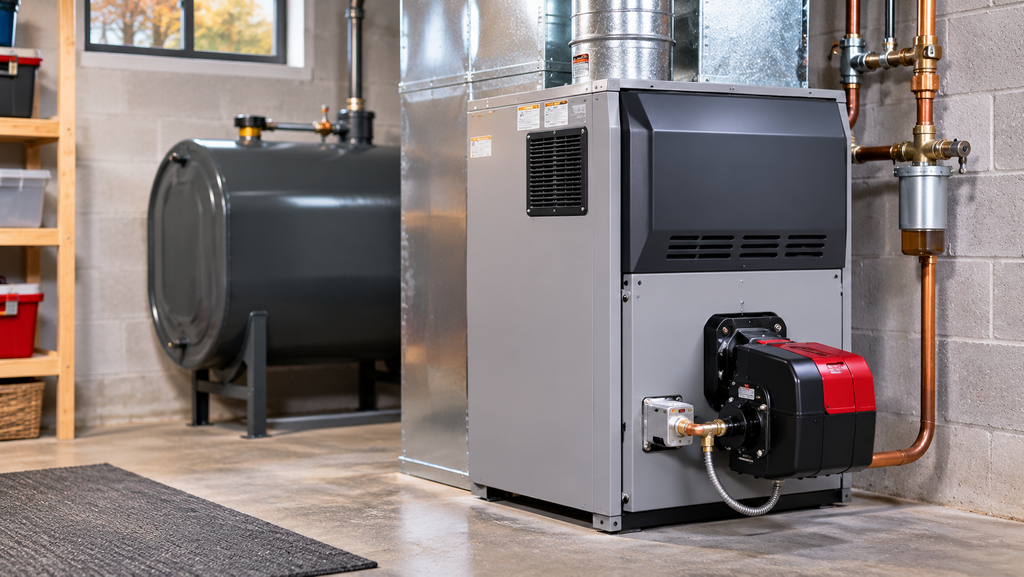
An oil furnace burns heating fuel to produce warmth. The word oil describes that fuel. It does not mean the whole furnace should be oiled. Burner and airflow parts need their own specific care, and many motor bearings are sealed rather than intended for owner lubrication.
Clear air paths and expert burner service both matter. A clean outer cabinet does not establish that the fuel nozzle, ignition, or fuel burning process is sound. Those areas require suitable knowledge and equipment.
When planning oil furnace maintenance, begin by separating ordinary housekeeping from internal service. The distinction keeps a simple filter check from turning into an improvised burner or motor job.
What Product to Use and What to Avoid
Use only a product explicitly stated for the part and task. A lubricant suitable for a kitchen attachment is not automatically suitable for a furnace. The same caution applies to cleaners, filter media, and replacement parts.
Keep these products away from an improvised maintenance job.
- General oils: Do not coat a burner, belt, or sealed motor.
- Food-grade lubricants: Food contact suitability does not establish furnace suitability.
- Spray cleaners: Do not spray into controls or wiring.
- Unmatched parts: Appearance alone does not prove fit.
For an owner-accessible air filter, select the correct type and fit. A fuel filter is a different part and may involve fuel-system service. Do not confuse the two because both are called filters.
How to Oil Your Furnace Maintenance Step by Step
Follow these steps to decide whether lubrication is required before any oil is applied.
Identify the Actual Service Task
- Read the furnace model information and the part’s required care instructions.
- Check whether that exact part is designed for lubrication.
- Leave sealed parts and parts without an explicit lubrication requirement alone.
- Arrange trained service for burner, fuel-system, or unclear motor work.
- Record the service pro’s completed work and any future maintenance requirement.
There is no safe universal instruction to oil a furnace. Do not apply a thin coating and work a mechanism by hand as though the heating system were a small kitchen tool. That approach can put oil where it does not belong and may expose you to moving, hot, or wiring.
Didn't fix it? Ask a technician on the AppliancePartsPros forum.
Post your model number, the symptom, and what you've already tried. Appliance techs and experienced DIYers answer for free, usually the same day.
Ask the forum →80,000+ solved repair threads · no account needed to readHow Often to Repeat It
Use the furnace’s service needs and the service pro’s advice to set timing. A seasonal appointment before heavy heating use gives you time to address concerns. Inspect the allowed air filter regularly and keep a note of changes in use.
Lubrication, if any, follows the part’s actual requirement. It should not be repeated once or twice a year merely because that interval sounds reasonable. Stiff movement is also not a reason to add oil to an unidentified part.
An oil furnace maintenance record can be simple. Note the date and filter type. Add your concerns and the work done. Keep burner and fuel-system service details separate from ordinary room cleaning so the history stays clear.
Mistakes to Avoid
Avoid these mistakes and unsafe methods.
- Do not turn a maintenance visit into a search for parts to oil. Opening a burner or motor housing without the right procedure can create a larger problem.
- Avoid trying to quiet a new noise with spray lubricant before its cause is assessed.
- Keep supply and return grilles clear, and do not store boxes or flammable supplies against the furnace.
- Do not repeatedly reset a burner that fails to run normally. Repeated shutdowns need trained assessment rather than repeated attempts to force use.
- For fuel odor, visible fuel leakage, smoke, or a carbon monoxide alarm, leave the area and seek urgent help. These signs do not belong on a list of chores to finish during routine oil furnace maintenance.
Frequently Asked Questions
These answers clarify the difference between fuel-system care and lubrication.
How do you oil your furnace maintenance?
You do not oil a furnace as a general task. It is an oil-fired heating appliance, and only a part with an explicit lubrication requirement should receive its stated lubricant. Leave burner, fuel-system, and uncertain motor service to a trained oil-heating service pro.
How often should you oil your furnace maintenance?
There is no blanket oiling interval. Follow the exact part’s maintenance requirement if lubrication is stated. Arrange the furnace’s expert seasonal service and review ordinary filter care separately. Do not add oil because a part feels stiff or because a yearly reminder says to do so.
What happens if you skip it?
Skipped furnace care can leave dirty filters, poor airflow, or developing burner concerns unnoticed. That is different from skipping unnecessary lubrication on a sealed motor. The right response is a proper service plan, not adding oil to parts whose care needs are unknown.
What supplies do you need?
For basic owner care, keep the correct air filter where fitted and a simple service log. The service pro brings the equipment and products needed for internal oil-heating service. Confirm replacement parts by the full model number rather than ordering generic igniters or sensors in advance.
Final Thoughts: Keep It Simple and Consistent
Keep the meaning of oil-fired heating clear when you plan care. Sound filters, clear airflow, useful records, and expert service are more valuable than a bottle of general lubricant. A careful plan protects the system from both neglected care and unnecessary work.
Still stuck after this guide?
Two free options: post your model number and symptom on the forum, or search the model number in the shop to see every part that fits.