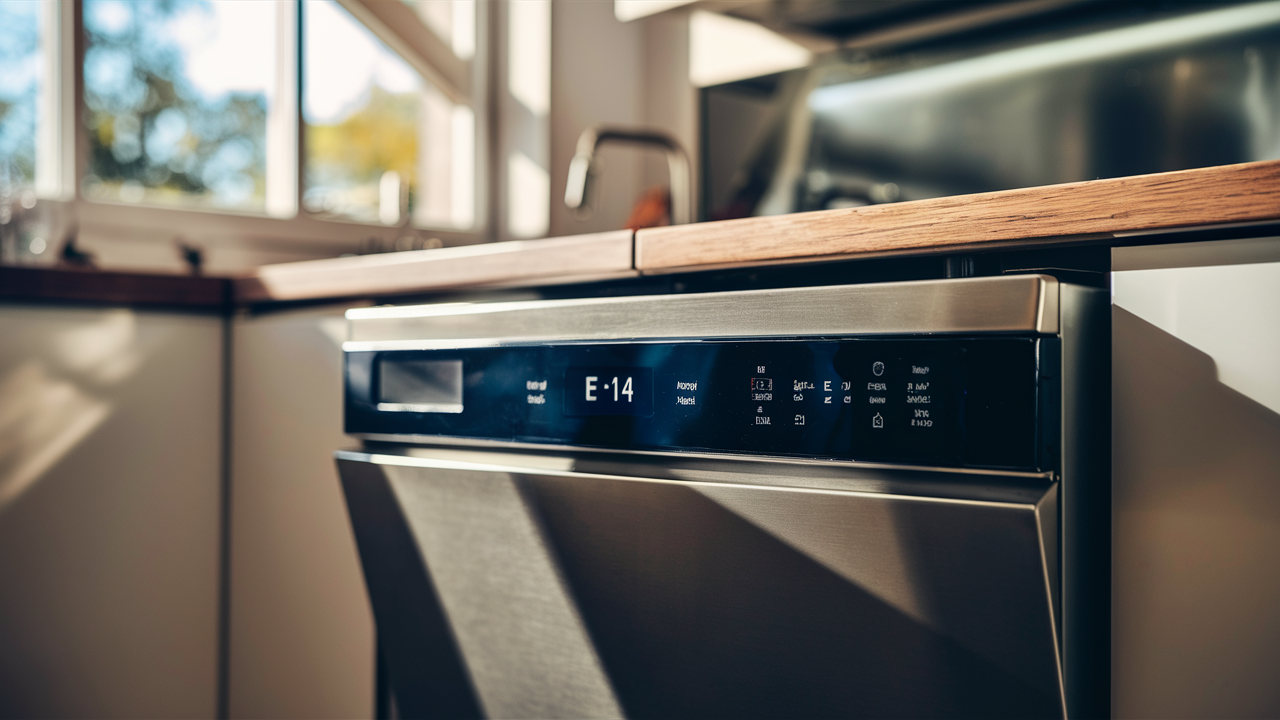
Whether your Bosch dishwasher is stubbornly displaying error code E14 or not properly cleaning dishes, it’s frustrating to have an appliance on the blink. This guide will walk you through common causes for the E14 error, such as issues with the water flow sensor, inlet valve, or supply lines. Learn simple troubleshooting steps like checking the filter, resetting the system, and testing the flow meter to diagnose and resolve the problem. By understanding the E14 code and fixing the underlying issue, you’ll have your Bosch dishwasher back to perfectly clean plates in no time.
What the E14 Error Code Means
The E14 error code on your Bosch dishwasher indicates there is an issue with the appliance’s flow meter or problems with water entering the machine. Let’s break this down step-by-step:
The Flow Meter and What It Does
- The flow meter is responsible for measuring the amount of water that enters your dishwasher during a cycle
- It’s an important component that monitors if enough water is coming in for cleaning and rinsing
- Malfunctions with the flow meter can trigger the E14 error code to display
So what kinds of issues can occur? The flow meter itself may develop faults from normal wear and tear over time as components slowly break down. Or electronic problems can prevent it from reading properly.
Flow Meter Failure
- Components become less efficient
- Readings get thrown off
- Signal sent to display E14 error
You might wonder – how often do these flow meter problems happen? Unfortunately, more often than you’d think!
Water Supply Problems
Issues in your home’s water supply can also be the culprit behind E14 errors:
- Clogged water inlet valve
- Kinked or damaged supply lines
- Low water pressure
Let’s explore these areas more.
Clogged Water Inlet Valve
The water inlet valve is responsible for letting water flow into your dishwasher. But mineral deposits and debris buildup can block water from passing through properly. Just like a clogged pipe, water struggles to squeeze through, and the flow meter reports issues.
Kinked or Damaged Water Lines
Think about the last time you kinked the hose while watering plants. Water flow drops immediately once it hits that tight bend. Same goes for your supply line – any kinks or damage will constrict the water. An E14 error can pop up when flow gets disrupted.
Insufficient Water Pressure
Low pressure from your home’s water supply can mimic flow problems. There simply isn’t enough force for water to enter at the rate your dishwasher expects.
Precautions to Take Before Repairing Your Bosch Dishwasher
When your Bosch dishwasher breaks down and shows an E14 error code, some repair work may be needed. But before you start tinkering around with the appliance, it’s important to take some safety precautions. Rushing into repairs without thinking about safety risks could lead to electric shocks, burns, or even serious injuries. Let’s walk through some smart tips to keep you and your family safe.
Power Off and Unplug the Dishwasher
The first thing you’ll want to do is power off and unplug the dishwasher from the electrical outlet. This cuts off electricity to the appliance and prevents accidental shocks while you’re working on it.
Turn Off the Water Supply
Next, locate the water supply valve, typically found under the sink, and turn off the water to the dishwasher. This prevents water from spraying or leaking out when you remove hoses or parts.
Have Towels Ready
Even with the water turned off, there may be residual water in hoses or the bottom of the dishwasher. So lay some towels down to soak up any leaks or spills.
Allow the Dishwasher to Cool
If the dishwasher was recently running, the interior will be hot. Allow sufficient time for the appliance to cool down before servicing it to avoid burns.
Work in a Well-Lit, Uncluttered Area
Repair work requires attention to detail, so chose a well-lit spot and clear away clutter. This helps you see what you’re doing and prevents accidents.
Keep Children and Pets Away
It’s best to keep kids and animals out of the workspace for their own safety. You don’t want them getting underfoot while you’re carrying or working on heavy appliance parts.
Avoid Working with Wet Hands
Dry hands are less likely to get a shock if you accidentally touch a live wire. So thoroughly dry your hands if they get wet during the repair process.
Consult the User Manual
Your Bosch dishwasher user manual contains specific safety notices and repair instructions for your model. So keep it handy and refer to it before getting started.
Handle Parts Gently
When removing or installing dishwasher parts like hoses, door springs, or plastic parts, handle them gently. Being too forceful can cause cracks or breakage, leading to leaks and other issues.
Wear Insulated Work Gloves
Insulated work gloves provide protection if you accidentally touch live wires or hot parts inside the dishwasher. The insulation helps prevent electric shocks and burns.
Avoid Touching Exposed Wires
If you need to disconnect any wiring, avoid contact with the bare metal wires. Make sure to grip the connectors instead. Accidentally touching exposed wires could give a dangerous shock.
Use Non-Conductive Tools
When working around electrical components, use plastic or rubber tools. Unlike metal tools, non-conductive ones won’t transmit electricity if they accidentally touch a live circuit.
Label Wires Before Disconnecting
Take photos or make notes about wiring locations before disconnecting anything. This makes it easier to reconnect wires correctly later on.
Don’t Test Live Voltage Unless Confident
Using a multimeter to check for live voltage is advanced work. If you’re not 100% sure about the process, don’t attempt it. Getting this wrong could electrocute you.
Troubleshooting the E14 Error Code
Dealing with appliance error codes can be frustrating. Let’s walk through how to diagnose and fix the Bosch dishwasher E14 error step-by-step.
Step 1: Check the Water Supply
The first thing to check is the water supply. Here’s how:
- Make sure the water supply valve behind the dishwasher is fully open. Give the valve a turn to open it completely.
- Examine the water supply line that runs from the valve to the dishwasher. Is it kinked or blocked by debris? Straighten out any kinks. Remove any bits of food, minerals, or other gunk blocking the line.
- If the line looks damaged, replace it. Cracks or holes can prevent proper water flow.
Still seeing the E14 code? The issue might be low water pressure.
Step 2: Test the Water Pressure
- Use a water pressure gauge to measure the pressure at the supply valve.
- Water pressure should be 20-120 PSI. If it’s lower, call a plumber to boost the water pressure before continuing.
Step 3: Inspect the Flow Meter
The flow meter tracks how much water enters the dishwasher. Errors here can cause E14 codes.
- Find the flow meter inside the dishwasher. It’s a small device with a fan and magnets.
- Check if it’s clogged with gunk or looks corroded. If so, replace it.
- Still not working? The flow meter may have internal damage. Replace it.
Step 4: Check the Water Inlet Valve
The inlet valve controls water flowing into the dishwasher. Issues here can trigger E14.
- Unplug the dishwasher and turn off the water supply.
- Find the water inlet valve. It has a solenoid and an electrical connector.
- Use a multimeter to test the voltage at the inlet valve wires. If the voltage is abnormal, replace the valve.
Step 5: Inspect the Float Switch
The float switch turns off the water flow when the dishwasher is full.
- Unplug the dishwasher and locate the float switch assembly inside the tub.
- Watch the float move up and down. Ensure it slides freely without sticking.
- Use a multimeter to test the contacts. If it fails, replace the float.
- Check below for leaks that can interfere with the float operation.
And those are the steps to troubleshoot a Bosch E14 error code! Taking it slow and methodical is key to fixing the issue.
Related guides
- Troubleshooting Guide: How to Fix the F99 Error Code on Your GE Dishwasher
- Troubleshooting Error Code F3 on Whirlpool Dishwashers
Wrapping Up Your Bosch Dishwasher E14 Repair
Hooray – you’ve troubleshot and fixed the E14 error on your Bosch dishwasher! Now it’s time to button everything back up and make sure your repair was a success.
Once you’ve identified and replaced the faulty part causing the E14 code, carefully reassemble the dishwasher. Make sure all screws, brackets, hoses, and electrical connectors are properly fastened.
Double-check that:
- The water supply line is securely connected with no leaks
- All wiring is plugged back in correctly
- All dishwasher panels are reinstalled properly
Before running a test cycle:
- Make sure nothing was left inside the dishwasher tub
- Verify the water supply is turned back ON
- Check all nearby cabinets and walls for any water leaks
Finally, run a quick rinse cycle and open the dishwasher mid-cycle to confirm the water is flowing and draining properly. If the cycle finishes with no issues or error codes, congratulations! You’ve successfully repaired your dishwasher.
Some final tips:
- Consult the user manual if you have any reassembly questions
- Make a note of the issue for future reference
- Properly dispose of any damaged parts you replaced
With the right safety precautions and some perseverance, many dishwasher errors can be fixed DIY. If the E14 code comes up again after your repair, it likely means there is still an underlying issue. Carefully recheck your work, run some diagnostic tests, and contact Bosch support if you need help.
The last step is the part itself: match a dishwasher water inlet valve parts to your model number rather than to a photo or a part name.