Start with the main clue. A bad sensor reads far from about 1,080 ohms at room temperature on most electric ranges, or fails to rise as the oven heats, and the control then runs the oven hot, cold or not at all. This guide explains how to tell if oven temperature sensor is bad with observations first, model-specific checks second, and a part decision only after a repeatable result. That order keeps a free correction from turning into an unnecessary part order and gives a homeowner a clear point to stop when the work moves beyond safe DIY testing.
Symptoms of a Faulty Oven Sensor
These checks help narrow how to tell if oven temperature sensor is bad without buying the first part that seems possible.
- Runs hot.
- Runs cold.
- Preheat never ends.
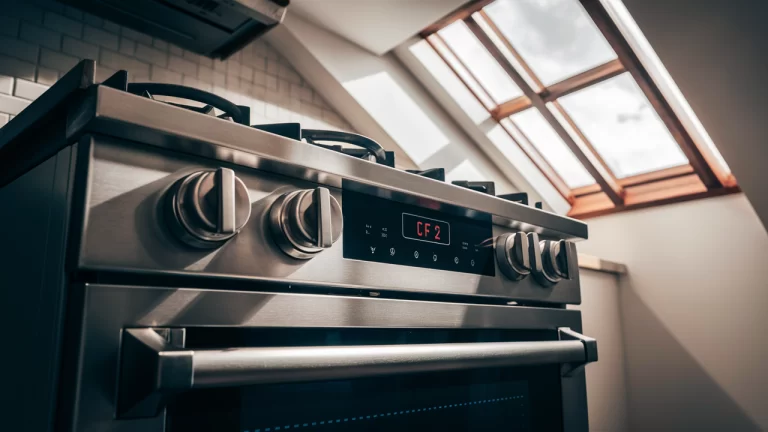
- F2, F3 or similar sensor codes.
- Bake fine one day and wrong the next.
- Food burnt on one bake, raw on the next.
Repeat any surprising result once. Confirm the meter setting, disconnect the required wire, and use clean probe contact before treating the result as final.
Quick Diagnosis Table
| Symptom detail | Likely cause | Part to check | Test |
| Runs hot | Sensor reports too cool or calibration is high | Temperature sensor | Room-temperature resistance |
| Runs cold | Sensor reports too warm or calibration is low | Temperature sensor | Resistance and oven thermometer |
| Sensor error code | Open, shorted, or disconnected circuit | Sensor and harness | Resistance and connector inspection |
| Preheat never finishes | Sensor does not report the target | Sensor or control | Resistance, then model diagnostics |
| Uneven results at the correct average temperature | Airflow, loading, or element cycling | Element and fan | Temperature pattern, not sensor alone |
Use the table as a starting point, not as proof. More than one fault can create the same symptom, so the next section narrows the result with an inspection or meter reading before any part is ordered.
Sensor or Calibration?
These checks help narrow how to tell if oven temperature sensor is bad without buying the first part that seems possible.
- Check with an oven thermometer at 350 F.
- A steady 15 to 25 degree offset is calibration.
- A swing or a code is the sensor.
- How to adjust the offset per the manual.
Repeat any surprising result once. Confirm the meter setting, disconnect the required wire, and use clean probe contact before treating the result as final.
Verify Your Model First
The model tag on a range is under the lift-up cooktop, on the oven door frame, inside the storage drawer, or on the back of the unit; a wall oven carries it on the frame behind the door. The same part name (igniter, bake element, temperature sensor, control board) has several part numbers by model because wattage, bracket shape and connector type change between models.
A matching photo is not enough. Compare the connector, mounting points, electrical rating, and any revision suffix with the model-specific listing.
Safety
- Unplug the range or turn off the double breaker.
- The sensor probe is hot after use.
- Pull the range with a helper.
- Do not bend the probe.
- Photograph the plug.
Tools
- Multimeter
- 1/4 inch nut driver
- Phillips screwdriver
- Oven thermometer
- Flashlight
How to Test Oven Temperature Sensor with Multimeter
Reach the Sensor Plug
- Unplug the range or turn off its circuit breaker.
- Remove the rear panel to reach the oven-temperature-sensor connection.
- Disconnect the plug between the sensor and the range harness.
Read the Resistance
- Set the multimeter to resistance.
- Place one probe on each sensor pin.
- At room temperature, expect about 1,080 ohms on the source brand family.
- Replace the sensor when its reading is far from 1,080 ohms for that family.
- When the sensor reads correctly, continue diagnosing another cause of the heating problem.
Reading far off 1,080 ohms? Find the exact oven temperature sensor for your model number.
Replace If Needed and Reassemble
- Replace the oven temperature sensor when the test identifies it as faulty.
- Reconnect the sensor plug and reinstall the rear panel.
- Plug the range in or restore the circuit breaker.
Oven Temperature Sensor Resistance Chart
This section supports the decision about how to tell if oven temperature sensor is bad. Check the symptom under the same conditions, compare it with the model documentation, and keep a written note of what changed. A consistent result is stronger evidence than age, sound, or appearance alone.
What the Result Means and Which Part to Order
These checks help narrow how to tell if oven temperature sensor is bad without buying the first part that seems possible.
- Far off at room temperature or no rise with heat = oven temperature sensor.
- In range and rises = control board or calibration.
- Open reading = sensor or its harness.
Repeat any surprising result once. Confirm the meter setting, disconnect the required wire, and use clean probe contact before treating the result as final.
How Much Does It Cost to Replace an Oven Sensor
These checks help narrow how to tell if oven temperature sensor is bad without buying the first part that seems possible.
- Part band.
- Service call band.
- DIY time.
Repeat any surprising result once. Confirm the meter setting, disconnect the required wire, and use clean probe contact before treating the result as final.
When to Stop and Call a Professional
- Stop when live-voltage testing is required and safe meter work is unfamiliar.
- Stop when wiring, terminals, or insulation show heat damage.
- Stop when the procedure or connector layout does not match the model documentation.
- Use professional service for sealed-system refrigerant work, repeated breaker trips, or a repair that requires unsafe lifting.
FAQ
How do you test the oven sensor?
Use the checks in this guide for this problem, then compare the result with the model’s technical sheet. Replace a part only after its own test fails.
How much does it cost to replace?
Cost depends on the exact model, part price, access time, and whether labor is hired. Confirm the failed part and full model number before comparing totals.
What is the most common oven problem?
Start with the free observation named in the table, then follow the tests in order. The first clear failed result identifies the next repair decision.
What are the symptoms of a faulty sensor?
Start with the free observation named in the table, then follow the tests in order. The first clear failed result identifies the next repair decision.
Conclusion
A sensor that repeatedly falls outside the model’s resistance chart is a reasonable replacement candidate. The model number should still control the choice because connector style, probe length, and resistance specifications vary.
After the failed reading is repeated with clean probe contact, homeowners can shop oven temperature sensor parts for your model and confirm the fit before ordering. If the sensor follows the chart, attention should move to wiring, calibration, or the control board instead.