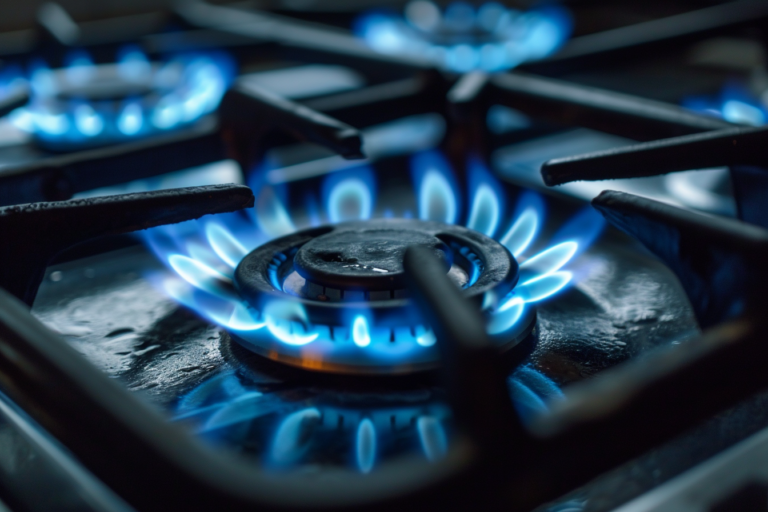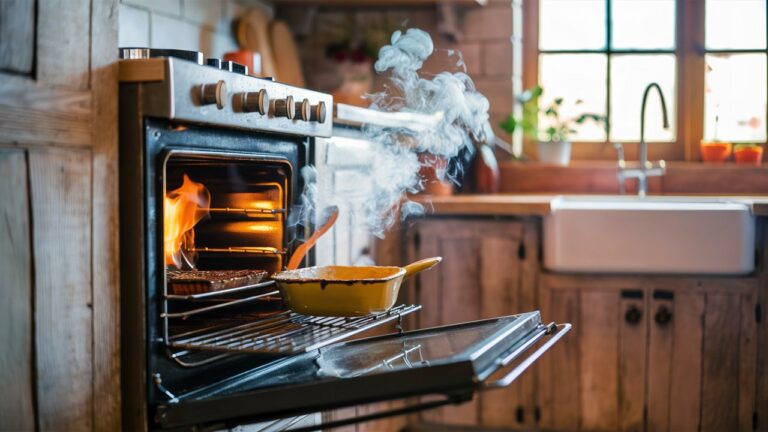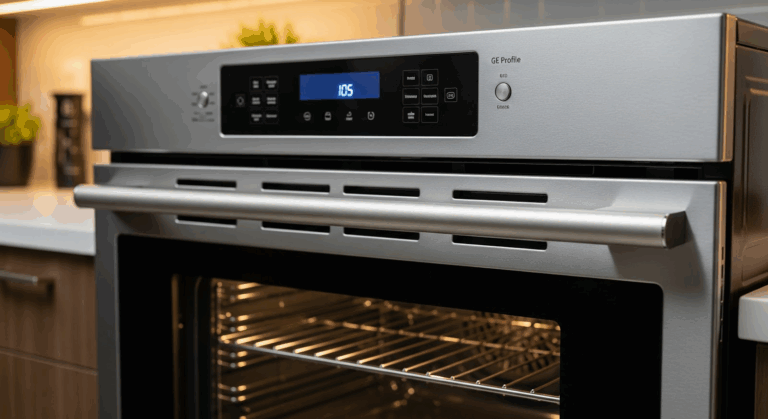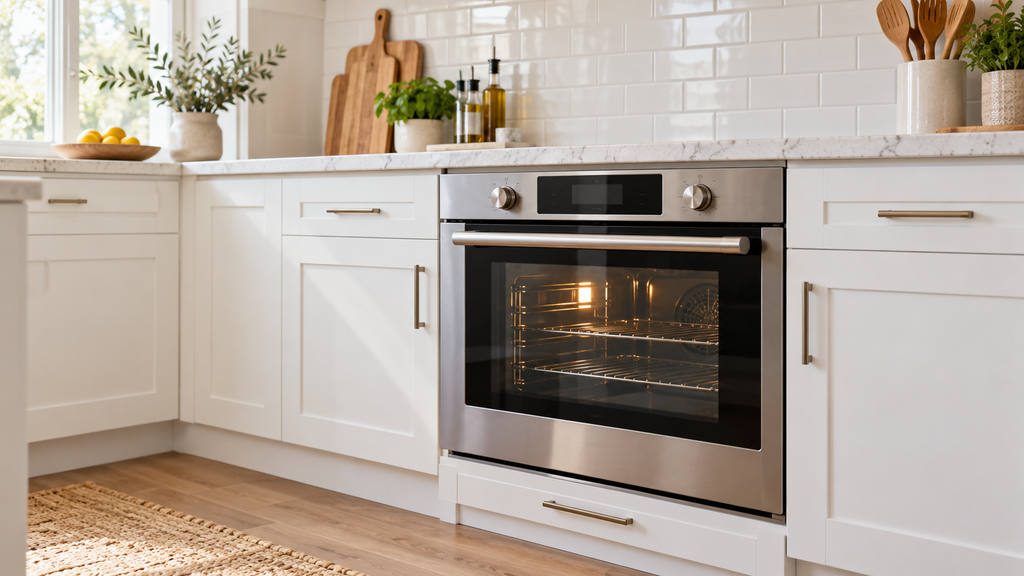
Start with the main clue. A good igniter glows bright and the burner lights within about 90 seconds; a dull glow that never lights is a weak igniter, no glow is the igniter or its circuit, and a bright glow with no flame is the valve. This guide explains how to tell if oven igniter is bad with observations first, model-specific checks second, and a part decision only after a repeatable result. That order keeps a free correction from turning into an unnecessary part order and gives a homeowner a clear point to stop when the work moves beyond safe DIY testing.
Test Oven Igniter Without Multimeter: The Glow Test
These checks help narrow how to tell if oven igniter is bad without buying the first part that seems possible.
- Remove racks and the oven bottom.
- Set bake.
- Watch the color.
- Time it to flame.
- What dull orange means.
- What white-hot with no flame means.
- The smell check and when to stop.
Repeat any surprising result once. Confirm the meter setting, disconnect the required wire, and use clean probe contact before treating the result as final.
Glow-to-Part Table
| What you see | Likely cause | Part to check | Test |
| No glow | Igniter or its circuit | Igniter, wiring, or control | Continuity, then supply |
| Dull red or orange glow, no flame after about 90 seconds | Weak igniter | Bake igniter | Amp draw |
| Bright white glow, no flame | Gas is not reaching the burner | Safety valve or regulator | Valve continuity and regulator position |
| Lights late, then burns normally | Weakening igniter | Bake igniter | Time to flame and amp draw |
| Lights, then goes out | Gas-flow or control fault | Valve, regulator, or control | Model-specific service test |
Found the faulty part? Find the exact bake or broil igniter or safety valve for your model number.
Use the table as a starting point, not as proof. More than one fault can create the same symptom, so the next section narrows the result with an inspection or meter reading before any part is ordered.
Verify Your Model First
The model tag on a range is under the lift-up cooktop, on the oven door frame, inside the storage drawer, or on the back of the unit; a wall oven carries it on the frame behind the door. The same part name (igniter, bake element, temperature sensor, control board) has several part numbers by model because wattage, bracket shape and connector type change between models.
A matching photo is not enough. Compare the connector, mounting points, electrical rating, and any revision suffix with the model-specific listing.
Safety
- Gas off before touching wiring.
- Power off for the continuity test.
- Do not run the oven with the bottom removed longer than the test.
- Ventilate if gas smell.
- Do not touch the igniter element, it is brittle and it is hot after a test.
Tools
- Multimeter
- Clamp meter
- 1/4 inch nut driver
- Phillips screwdriver
- Flashlight
- Needle-nose pliers
How to Test a Gas Oven Igniter, Safety Valve and Regulator
Check the Igniter Glow
- Open the oven door and remove the racks, oven bottom, and flame spreader to reach the igniter.
- Confirm that the igniter is connected and mounted firmly. Reattach it when it is loose.
- Restore electrical power only while leaving the gas supply off.
- Turn on Bake and watch the igniter. A white-hot glow passes this check. A red or orange glow means the igniter is too weak and should be replaced.
Check the Amp Draw and Continuity
- Clamp an amp meter around one igniter wire and start a bake call.
- Confirm at least 2.2 amps for a round or blue igniter and at least 3.0 amps for a square igniter.
- Turn the power off after the amp test. Low current identifies a weak igniter.
- Set the meter to continuity and touch the probes together to confirm the meter works.
- Disconnect the igniter harness and place one probe on each terminal.
- Replace the igniter when it has no continuity.
Low amps or no continuity? Find the exact oven igniter for your model number.
Test the Safety Valve and Check the Regulator
- Set the meter to continuity and remove both wires from the oven safety valve.
- Probe the two valve terminals. Replace the valve when it has no continuity.
- Find the manual shutoff lever on the gas pressure regulator.
- Confirm that the regulator lever is in the open position.
- Treat the regulator as the remaining suspect only when the igniter and safety valve pass and gas still does not reach the burner.
What the Result Means and Which Part to Order
These checks help narrow how to tell if oven igniter is bad without buying the first part that seems possible.
- Dull glow or low amps = igniter.
- No continuity = igniter.
- Bright glow, valve open on the meter = valve or regulator.
- No glow, igniter good = control or wiring.
Repeat any surprising result once. Confirm the meter setting, disconnect the required wire, and use clean probe contact before treating the result as final.
Can You Light a Gas Oven If the Igniter Is Broken
These checks help narrow how to tell if oven igniter is bad without buying the first part that seems possible.
- Hot-surface systems will not open the valve without igniter current.
- The honest answer is no for most modern ranges.
- Why forcing it is unsafe.
Repeat any surprising result once. Confirm the meter setting, disconnect the required wire, and use clean probe contact before treating the result as final.
How Long Does an Oven Igniter Last
These checks help narrow how to tell if oven igniter is bad without buying the first part that seems possible.
- Typical band.
- Weak-igniter symptoms creep in over months.
- Delayed ignition as the warning sign.
Repeat any surprising result once. Confirm the meter setting, disconnect the required wire, and use clean probe contact before treating the result as final.
When to Stop and Call a Professional
- Stop when live-voltage testing is required and safe meter work is unfamiliar.
- Stop when wiring, terminals, or insulation show heat damage.
- Stop when the procedure or connector layout does not match the model documentation.
- Use professional service for sealed-system refrigerant work, repeated breaker trips, or a repair that requires unsafe lifting.
FAQ
How long does an oven igniter last?
Service life varies with use, water quality, airflow, loading, and maintenance. A meter or inspection result is more useful than age by itself.
How do I diagnose a bad igniter?
Start with the free observation named in the table, then follow the tests in order. The first clear failed result identifies the next repair decision.
Is it worth replacing?
It is often worth fixing when testing identifies one ordinary service part and the appliance has no major leak, bearing, cabinet, or control problem.
Can I light the oven if the igniter is broken?
Start with the free observation named in the table, then follow the tests in order. The first clear failed result identifies the next repair decision.
Conclusion
A confirmed weak igniter is a practical repair on many ranges, but the complete model number must decide the replacement. Connector shape, mounting bracket, and electrical rating can vary even when two igniters look alike.
Before ordering, homeowners can shop oven igniter parts for your model and compare those details with the original component. If testing points to the safety valve, wiring, gas supply, or control circuit instead, professional service is the safer next step.