

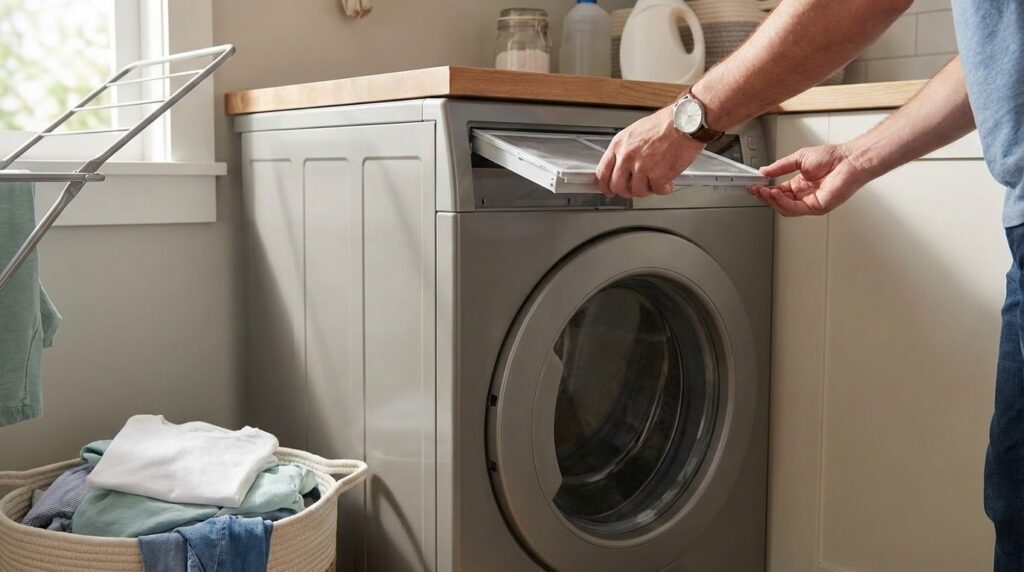
Is your dryer making a loud squealing or grinding noise? Does the drum feel like it is struggling to spin? The problem might be a worn-out dryer belt tensioner pulley. The good news is that this is a repair many homeowners can handle on their own with basic tools and a little patience.
This guide will walk you through everything you need to know, from spotting the symptoms to testing the dryer after the fix. Whether you call it a tensioner pulley or an idler pulley, this dryer tension pulley replacement guide has you covered from start to finish.
What a Dryer Belt Tensioner Pulley Does
The dryer belt tensioner pulley, often called the idler pulley, keeps the dryer belt pulled tight as the drum spins. Think of it like a bike chain tensioner. Without it, the belt would go slack and the drum would stop turning.
The pulley works alongside the motor pulley and the drum belt to keep everything moving smoothly. When the pulley wears out, cracks, or seizes up, the belt can slip or fall off completely. That means your clothes are just sitting in a hot drum, not tumbling at all, which wastes energy and leaves clothes damp.
Tensioner Pulley vs. Idler Pulley
Many people use these two terms to mean the same thing, and in most cases, they are the same part. The name just changes depending on the brand or model. When you are shopping for a replacement, you might see it listed either way. Do not let that confuse you. Just search using your dryer’s model number to find the right match.
Signs Your Dryer Belt Tensioner Pulley Needs Replacement
Before you start taking things apart, check for these common warning signs:
- Squealing or screeching noises: A worn pulley bearing often makes a high-pitched squeal. The sound usually gets louder as the dryer heats up.
- Grinding or rattling sounds: A loose or damaged pulley can wobble and grind against other parts.
- Drum not spinning properly: If the belt loses tension, the drum may turn slowly or stop altogether.
- Belt slipping or feeling loose: Poor belt tension almost always points to a pulley or tension arm problem.
- Visible wear on the pulley: Look for cracks, flat spots, rough rotation, or wobbling when you spin the pulley by hand.
If you notice any of these signs, it is time to open up the dryer and take a closer look.
Safety Tips for Dryer Repairs
Safety always comes first. Before you touch anything inside the dryer, follow these steps:
- Unplug the dryer: Always disconnect the power cord before opening the cabinet. This protects you from electric shock.
- Shut off the gas supply for gas dryers: If you have a gas dryer, turn off the gas valve before you move or open the unit.
- Work in a clear, well-lit space: Pull the dryer away from the wall so you have room to move around. Good lighting makes the job much easier.
- Wear gloves: The metal edges inside a dryer cabinet can be sharp. A pair of work gloves will protect your hands.
Tools Needed to Replace a Dryer Pulley
Gathering your tools before you start saves a lot of time. Here is what you will need:
- Phillips screwdriver
- Flathead screwdriver
- Nut driver set
- Socket wrench set
- Pliers
- Putty knife (for popping top panel clips on some models)
- Work gloves
- Flashlight
- Magnetic tray to hold screws
- Vacuum for cleaning out lint
- Phone or camera to take reference photos during disassembly
- New dryer belt tensioner pulley (matched to your model)
- New dryer belt if the old one shows wear
- Tension arm assembly if the arm itself is damaged
- Any model-specific clips or fasteners
How to Find the Right Replacement Tensioner Pulley
Dryer parts vary a lot from one brand to the next. A pulley from one model may not fit another, even if it looks similar. Before you order any parts, locate the model number tag on your dryer. Common places to find it include:
- Inside the door frame
- On the door jamb
- Behind the control panel
- On the rear panel of the dryer
Once you have the model number, use it to search for the exact replacement part. This step is worth taking seriously. Ordering the wrong part means delays and extra costs.
Step 1: Open the Dryer Cabinet
Cabinet access varies by model, but the general process is similar across most brands. Start by removing the lint screen if your model has screws hidden near the lint filter housing. From there, you will either lift and remove the top panel or take off the front panel.
Use your putty knife or flathead screwdriver to release any spring clips holding the top panel in place. Keep all screws in your magnetic tray so nothing gets lost. If you need to remove the front panel, you may also need to disconnect the door switch wire. Take a photo of how it is connected before you unplug it.
Step 2: Locate the Belt and Tensioner Pulley Assembly
Once the cabinet is open, look near the bottom of the dryer close to the motor. The tensioner pulley sits against the belt and keeps it tight. Before you remove anything, take a clear photo of the belt routing. This picture will save you a lot of frustration when it is time to put the belt back on.
Many dryers have a belt routing diagram printed inside the cabinet. If yours does, great. If not, that photo you just took is your guide.
Step 3: Release Tension from the Dryer Belt
To remove the belt, you need to release the tension first. Push the tensioner arm toward the motor to give the belt some slack. The arm is often spring-loaded, so hold it firmly and move it with control. Do not force it or try to bend it out of the way.
Once you have slack in the belt, slip it off the motor pulley and the tensioner pulley. Set the belt aside somewhere safe where it will not get stepped on or tangled.
Step 4: Remove the Old Tensioner Pulley
This is the core of the dryer idler pulley replacement process. Here is how to do it step by step:
- Inspect how the pulley is mounted. Some pulleys are held by a retaining clip, nut, or axle bolt.
- Remove the retainer or fastener. Use pliers or your nut driver to carefully take it off. Do not lose this small piece.
- Slide the pulley off the shaft. If lint buildup is making it stick, clean around it gently before pulling.
- Check the shaft and tension arm. Look for scoring, warping, or excessive wear. If the arm feels loose or the shaft looks damaged, you may need to replace those parts too.
Step 5: Clean the Area Before Installing the New Pulley
Now that the dryer is open, take a few minutes to vacuum out the lint. Lint builds up around the motor, the belt path, and the blower housing. This buildup is a fire risk, and clearing it out while you are already in there is just smart maintenance.
Step 6: Install the New Dryer Belt Tensioner Pulley
Now for the part you have been working toward. Here is how to install the new dryer belt tensioner:
- Position the new pulley on the shaft. Line it up so it sits flat and centered.
- Reinstall the clip, nut, or retainer. Tighten it securely but do not overtighten, as that can crack the housing.
- Spin the pulley by hand. It should rotate freely and smoothly with no wobble or grinding. If it does not spin freely, check the alignment before moving on.
Step 7: Reinstall the Dryer Belt Correctly
Belt routing is often the trickiest part, especially for first-timers. Here is how to do it:
- Loop the belt around the drum first. The ribbed side of the belt should face inward, toward the drum surface.
- Route the belt around the motor pulley.
- Then stretch it around the tensioner pulley, using the tension arm to apply pressure once the belt is seated.
- Compare what you see with the photo you took earlier.
Check that the belt sits flat and centered. A twisted belt or one that rides unevenly will cause problems right away.
Step 8: Reassemble the Dryer Cabinet
Work backwards through your disassembly steps. Reconnect the door switch if you unplugged it. Reattach the front or top panel and tighten all screws firmly. Before you close everything up, check the floor and your parts tray for any leftover screws or pieces.
Step 9: Test the Dryer After the Repair
You are almost done. Here is how to test your work:
- Plug the dryer back in. For gas dryers, turn the gas back on as well.
- Run a short test cycle and listen carefully.
- What you want to hear: smooth drum rotation, quiet operation, normal startup.
- What to watch for: unusual noise, a burning smell, the drum not turning, or the belt slipping again.
If everything sounds normal, the repair was a success.
Common Mistakes to Avoid During Dryer Pulley Repair DIY
- Ordering the wrong part: Always use the exact model number, not just the appearance of the part.
- Forgetting the belt routing: Photos before removal are essential.
- Reusing a damaged belt: A worn belt may fail shortly after the new pulley is in place.
- Ignoring the tension arm or shaft: Replacing only the pulley will not fix the problem if the arm is bent or the shaft is worn.
- Skipping lint cleanup: An open dryer is a perfect opportunity to remove dangerous lint buildup.
Troubleshooting: Dryer Still Making Noise?
If the noise continues after replacing the pulley, the pulley may not have been the only worn part. Check these areas:
- Drum rollers: Worn rollers can squeak or rumble during operation.
- Dryer belt: A cracked or glazed belt can also cause noise.
- Motor pulley: Damage here can affect how the belt tracks.
- Blower wheel: Rattling or scraping near the back of the drum may point to the blower assembly.
Should You Replace the Dryer Belt at the Same Time?
If your belt shows any of these signs, replace it while the dryer is already open:
- Cracks or fraying along the edges
- A glazed or shiny appearance
- Stretched sections or missing ribs
Doing both repairs at once saves you the trouble of opening the dryer again in a few months.
Looking Ahead
Replacing a dryer belt tensioner pulley is one of the more approachable appliance repairs you can take on at home. The keys to success are simple: match the part to your exact model, photograph the belt routing before removal, clean out the lint while you are in there, and take your time.
Work slowly, stay safe, and inspect related parts while the dryer is open. A little extra time now can save you from another repair down the road.