Quick answer
Use an open microwave-safe bowl of water with lemon where the interior permits this method. Heat cautiously without letting the bowl boil dry, allow hot steam and liquid to settle, then wipe softened residue. Wash the removable turntable separately once cool. Keep water away from vents and controls, and leave the waveguide cover in place.
Dried splashes on the microwave walls can resist a quick wipe. Would softening them first make the job easier? Learning how to clean a microwave with lemon gives you a simple way to approach light food residue while respecting the appliance’s coating and the risks of handling hot water.
This guide covers the supplies, a careful heating and wiping method, and the limits that keep the task safe. You’ll learn why the bowl must stay open, why hot liquid needs care, and which covers should stay in place. A microwave is not a sealed steam cleaner, so never overheat a bowl or leave it running unattended to force more steam.
Quick Facts
Hot water and steam can burn; use an open microwave-safe bowl and let it cool before handling.
- Difficulty: Not specified
- Time: Three to five minutes is a heating range only; power and water amount affect safe use
- Tools: Microwave-safe bowl, water, lemon, soft cloth, suitable hand protection
- Part cost: Not specified
- Skill level: Not specified
Order the part with confidence
- Guaranteed to fit when you search by model number
- Same-day shipping on in-stock parts
- 365-day returns on any part
- Free tech support before and after you buy
Why Lemon Works on Your Microwave
Warm moisture can soften dried splashes so they lift with a cloth. Lemon contributes acid and scent, but it does not replace wiping or proper care of the turntable. It should not be treated as a disinfectant claim or a fix for damaged interior coating.
A lemon method still needs compatibility with the interior. Do not rub lemon directly on controls, damaged paint, or a delicate cover. The safest approach keeps the mixture in a suitable bowl and the wiping gentle.
When learning how to clean microwave with lemon, focus on moistening residue rather than making the oven as steamy as possible. More heat and a longer run do not always make the job safer or better.
What You Need Before You Start
Use a bowl that is clearly microwave-safe and large enough to hold the water without splashing. It must be open, not sealed with a lid. Choose a stable container you can handle after the liquid has cooled.
Gather these items.
- Open microwave-safe bowl
- Fresh water
- Lemon
- Soft cloth or non-scratch sponge
- Suitable protection for handling a warm bowl
No exact lemon-to-water ratio applies to every microwave. Use enough water for the permitted heating method and do not let it run dry. Do not use a metal bowl, foil, or a sealed jar. Keep the bowl away from the edge when you carry it.
How to Clean Your Microwave With Lemon Step by Step
Follow these steps to soften residue with a small open bowl of lemon water.
Warm the Water and Wipe the Interior
- Remove loose food and confirm that the interior is sound.
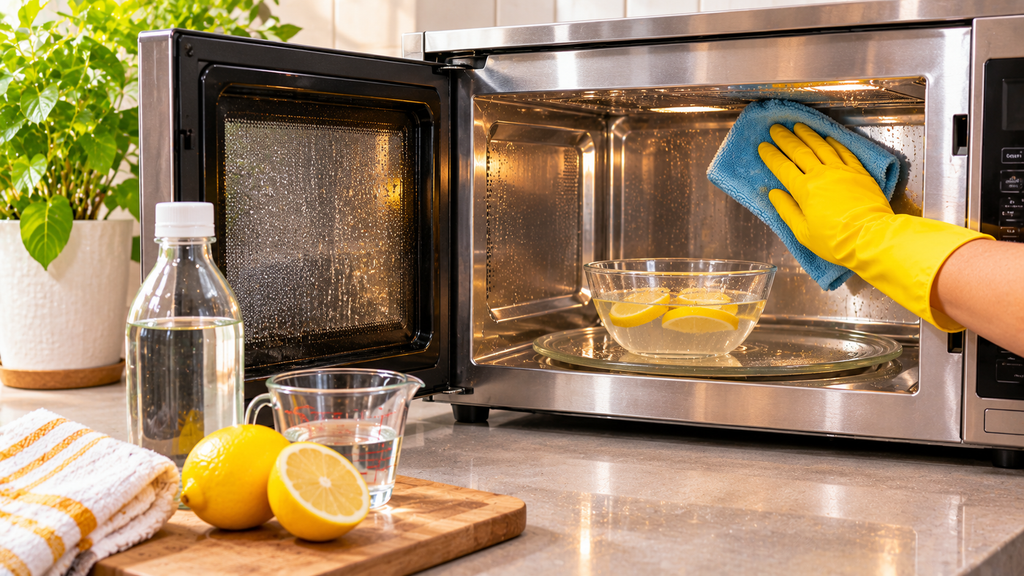
- Place water and lemon in an open microwave-safe bowl.
- Set the bowl securely inside without blocking normal movement.
- Heat cautiously while watching, stopping before the water runs low or boils dry.
- Let the hot liquid and steam settle before opening and handling the bowl.
- Remove the bowl carefully once it is safe to handle.
- Wipe softened residue from accessible interior surfaces with a soft cloth.
- Wash the cool removable turntable separately and dry it before returning it.
- Wipe the door contact surfaces gently without soaking openings.
Keep your face back from hot steam. Do not touch a hot glass turntable with cold water. Leave the waveguide cover, the small protective panel inside many microwaves, in place.
Didn't fix it? Ask a technician on the AppliancePartsPros forum.
Post your model number, the symptom, and what you've already tried. Appliance techs and experienced DIYers answer for free, usually the same day.
Ask the forum →80,000+ solved repair threads · no account needed to readHow Much Lemon to Use and How Long to Wait
A three-to-five-minute heating range can be a starting point for some units, but power and water volume change the result. It is not a command to run every bowl for five minutes. Watch the process and stop earlier when needed.
Let the liquid rest before moving it. Hot water can burn even when it looks still. Do not stir or lift a very hot bowl hurriedly to start wiping sooner.
How much lemon should you add? Use a modest amount in the water rather than trying to coat the microwave in juice. The main goal in how to clean microwave with lemon is gentle steam softening, followed by careful wiping.
Mistakes That Can Damage Your Microwave
Avoid these mistakes and unsafe methods.
- Avoid steel wool, metal scrapers, and strong abrasive powders on the interior coating.
- Do not scrape the waveguide cover or push a tool behind it. Damage there needs proper assessment.
- Keep cleaner and water out of control openings and vents.
- Do not remove the outer cover; a microwave can retain dangerous electrical energy even when unplugged. Interior cleaning does not require access to those parts.
- Over-the-range models may also have grease filters and, in some setups, charcoal filters. Those have separate care rules. A steam bowl does not clean a hidden filter, and not every filter is washable.
- Confirm the type and model before washing or replacing it.
How Often to Repeat This Method
Wipe small splashes once the microwave is cool enough for safe cleaning. Weekly wiping and a fuller monthly review are useful starting habits, with earlier care for visible spills. Cover food with a suitable vented microwave cover during cooking to reduce splatter.
Keep the turntable and roller ring clean by their permitted methods. A spill beneath the turntable is easier to remove before it dries. Do not force the turntable to rotate if a part is out of place.
A fresh smell is not proof that every surface is clean. Look for residue and damage as well as odor, and keep the process gentle.
Frequently Asked Questions
These answers explain the lemon-water method without overstating what it can do.
How do you clean your microwave with lemon?
Warm water with lemon in an open microwave-safe bowl, let it settle, and wipe softened residue gently. Wash the turntable separately once cool. Learning how to clean microwave with lemon starts with safe bowl handling and avoiding excessive heating.
How often should you clean your microwave?
Wipe spills when safe, review the interior weekly, and give it a fuller clean monthly as needed. Heavy use may need more frequent care. A small fresh splash is usually easier to remove than a dried layer left through many heating cycles.
What should you not use when you clean your microwave?
Avoid metal tools, abrasive pads, sealed bowls, and harsh cleaners. Do not overheat the water or let it boil dry. Keep the outer case closed and leave the waveguide cover in place during routine wiping.
Can you clean your microwave without taking it apart?
Yes. Accessible wiping and removable-turntable care handle most routine cleaning. Do not remove fixed covers or open the electrical case. A damaged coating, sparking, or other abnormal operation calls for assessment rather than a stronger cleaning treatment.
Final Thoughts: Keep It Simple and Consistent
Gentle steam and a soft cloth can make dried splashes easier to remove. Keep the heating cautious, let the bowl cool safely, and protect the interior finish. Model-compatible turntable and filter parts help keep later care simple.
Check your model number, then shop microwave maintenance parts to find compatible supplies for your next care task.
Still stuck after this guide?
Two free options: post your model number and symptom on the forum, or search the model number in the shop to see every part that fits.