Quick answer
Disconnect power, clean accessible splash-guard residue with a long-handled brush, and keep hands out of the chamber. Baking soda and vinegar may help with light surface residue where the unit allows them, but their fizz does not prove that a drain is clear. Use a permitted small treatment and rinse; never mix it with bleach or drain cleaner.
An odor at the sink can come from food hidden beneath the disposal’s splash guard. Will a fizzing mixture reach all of it? Knowing how to clean garbage disposal with baking soda and vinegar means keeping safe access and gentle wiping at the center of the job, rather than expecting foam to clear every concern.
This guide explains the limits of the mixture, the supplies to gather, and a cautious cleaning sequence. You’ll learn why a brush matters and why chemical drain cleaner should stay out of the process. A disposal that drains poorly or works abnormally needs separate attention; repeated household cleaning mixtures are not a substitute for that assessment.
Quick Facts
Disconnect power before cleaning near the opening; keep hands out of the grinding chamber.
- Difficulty: Not specified
- Time: Not specified
- Tools: Long-handled brush, soft cloth, baking soda and white vinegar if allowed
- Part cost: Not specified
- Skill level: Not specified; accessible surface cleaning only
Order the part with confidence
- Guaranteed to fit when you search by model number
- Same-day shipping on in-stock parts
- 365-day returns on any part
- Free tech support before and after you buy
Why Baking Soda and Vinegar Works on Your Garbage Disposal
Baking soda and vinegar react and produce fizz. That visible reaction can loosen some light residue, but the two also neutralize each other. More foam does not mean stronger cleaning, and the mixture is not a reliable way to remove grease or clear a blocked pipe.
Much of the odor-causing food may sit on the underside of the splash guard. A brush can lift that residue directly. Do not skip this gentle cleaning because a bubbly mixture seems easier to pour.
The realistic goal in how to clean garbage disposal with baking soda and vinegar is a cleaner accessible opening. It is not a claim that the mixture disinfects the whole unit or repairs drainage.
What You Need Before You Start
Clear the sink of dishes and utensils, and make sure no other cleaner has been used in the drain. If bleach or drain cleaner may be present, do not add vinegar. Keep the cleaning process to one suitable method.
Gather these items.
- Long-handled cleaning brush
- Soft cloth
- Mild soap for accessible guard cleaning
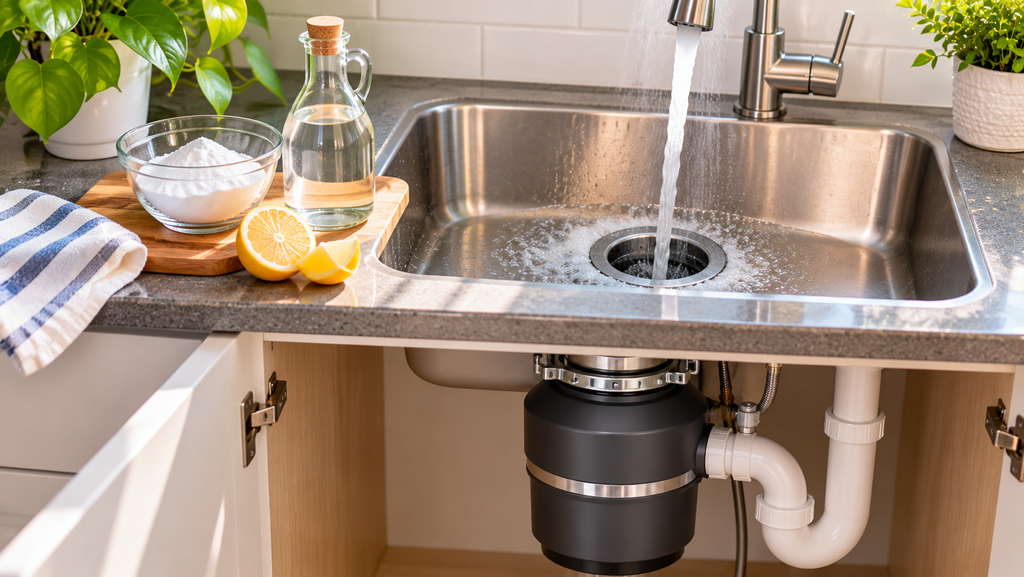
- Baking soda and plain white vinegar only if allowed
- Cold running water for normal rinsing and use
Choose a brush that lets you stay outside the opening. A short sponge held by hand is not a safe way to reach beneath the guard. Do not remove a fixed splash guard or mounting part to make access easier.
How to Clean Your Garbage Disposal With Baking Soda and Vinegar Step by Step
Follow these steps to clean accessible residue while keeping your hands out of the chamber.
Brush and Rinse the Opening
- Turn off the disposal and disconnect its power at the appropriate source.
- Confirm that it cannot start while you clean.
- Use a long-handled brush and mild soapy water on accessible splash-guard folds.
- Wipe the sink flange and upper opening with a soft cloth.
- Use a permitted small baking soda and vinegar treatment only if no incompatible cleaner is present.
- Let the visible reaction settle without covering or sealing the drain.
- Rinse away the loosened residue as the unit’s care method permits.
- Remove all cleaning tools before restoring power.
- Run cold water during any normal disposal operation that follows.
Ice, salt, and citrus are separate optional methods only where the disposal permits them. Do not add every household treatment in one cleaning session or reach inside to spread it around.
Didn't fix it? Ask a technician on the AppliancePartsPros forum.
Post your model number, the symptom, and what you've already tried. Appliance techs and experienced DIYers answer for free, usually the same day.
Ask the forum →80,000+ solved repair threads · no account needed to readHow Much Baking Soda and Vinegar to Use and How Long to Wait
A universal vinegar dose and wait time are not needed to make fizz look stronger. Use the amount allowed for the unit’s care method. Do not pack the chamber with powder or repeatedly top up the mixture as the bubbles fade.
Baking soda and vinegar are not a two-stage drain repair. A slow sink, leak, or repeated odor can have a cause that this surface routine does not address. Stop adding mixtures and arrange proper assessment if the concern continues.
The main lesson in how to clean garbage disposal with baking soda and vinegar is to keep the treatment modest and the claims realistic. Direct cleaning of accessible residue remains the useful part of the routine.
Mistakes That Can Damage Your Garbage Disposal
Avoid these mistakes and unsafe methods.
- Never mix vinegar with bleach or chemical drain cleaners.
- Do not add boiling water, solvents, or strong cleaners to force an odor away.
- Keep the drain open during any permitted reaction rather than trying to build pressure.
- Do not put fingers or a hand into the grinding chamber.
- Disconnect power before brushing near the opening, even if the wall switch is off. A disposal can be switched on by another person unless its power is safely isolated.
- Grease, large bones, and fibrous waste can create problems during ordinary use. Cleaning does not make those items suitable.
- Use an appropriate waste container instead of treating the disposal as a bin for everything from the meal.
How Often to Repeat This Method
A review every one to two weeks is a useful starting routine, with sooner wiping when residue appears. Clean the splash guard and accessible sink area rather than repeating a chemical reaction on a fixed date regardless of condition.
Use cold running water during ordinary disposal use and feed only small suitable amounts. Keep utensils away from the opening. A separate container for bulky scraps reduces the amount of material that can lodge near the guard.
Record persistent odor or drainage changes so they can be assessed. Repeated cleaning may hide a pattern without addressing its cause. Sound parts and sensible waste habits support the routine better than adding more vinegar.
Frequently Asked Questions
These answers explain what the mixture can reasonably do.
How do you clean your garbage disposal with baking soda and vinegar?
Disconnect power, brush accessible guard residue, and use a permitted modest treatment without sealing the drain. Rinse as allowed. Learning how to clean garbage disposal with baking soda and vinegar includes recognizing that fizz is not proof of a clear or disinfected drain.
How often should you clean your garbage disposal?
Check the accessible opening every one to two weeks and clean visible residue sooner. Heavy use may need more frequent wiping. Do not repeat acid cleaning simply because odor persists; seek assessment when a normal cleaning routine does not resolve it.
What should you not use when you clean your garbage disposal?
Avoid bleach, drain cleaner, solvents, and mixtures of products. Keep boiling water and hard cleaning tools out of the routine. Never reach into the chamber or use a sealed reaction to try to push a blockage through.
Can you clean your garbage disposal without taking it apart?
Yes. Accessible guard and flange cleaning usually needs no disassembly. A guard designed for owner removal may be washed separately by its own method. Fixed mounting parts and internal components should stay in place during routine care.
Final Thoughts: Keep It Simple and Consistent
Gentle access and clear limits make disposal cleaning simpler. Remove the residue you can safely reach and avoid chasing more foam. Keep model-compatible splash guards and seals in good condition, and get help for concerns beyond surface cleaning.
Check your model number, then shop garbage disposal maintenance parts to find compatible supplies for your next care task.
Still stuck after this guide?
Two free options: post your model number and symptom on the forum, or search the model number in the shop to see every part that fits.