Quick answer
Gas oven carbon monoxide is a risk when fuel burns without enough air or the burner does not work correctly. Yellow or uneven flames and soot need attention, but flame color alone cannot measure CO or prove the air is safe. If a CO alarm sounds or someone has symptoms, get everyone outside and call emergency services. Have it checked before using it again.
An alarm sounding during cooking calls for a safe exit. Leave the home at once and call emergency services from outside. Do not stay to find the cause or attempt a repair.
Could gas oven carbon monoxide be involved? Gas that does not burn fully can produce CO, and dirty burner ports or faulty parts can affect burning. An alarm is never a cue to test flames yourself.
Once the home has been declared safe, the information below explains warning signs, possible causes, and service work. It also identifies situations needing immediate professional help, with evacuation taking priority over any troubleshooting.
Quick Facts
These details apply to planned service after the home is safe:
- Difficulty: Easy cleaning through professional gas-system work
- Time: About 30 to 90 minutes for basic inspection and service
- Tools: Stiff brush, soft brush, flashlight, working CO alarm
- Part cost: Some cleaning costs nothing; selected parts may cost $20 to $80
- Skill level: Basic care for accessible parts; qualified service for gas flow, shutters, and ignition faults
Order the part with confidence
- Guaranteed to fit when you search by model number
- Same-day shipping on in-stock parts
- 365-day returns on any part
- Free tech support before and after you buy
Can a Gas Oven Produce Carbon Monoxide?
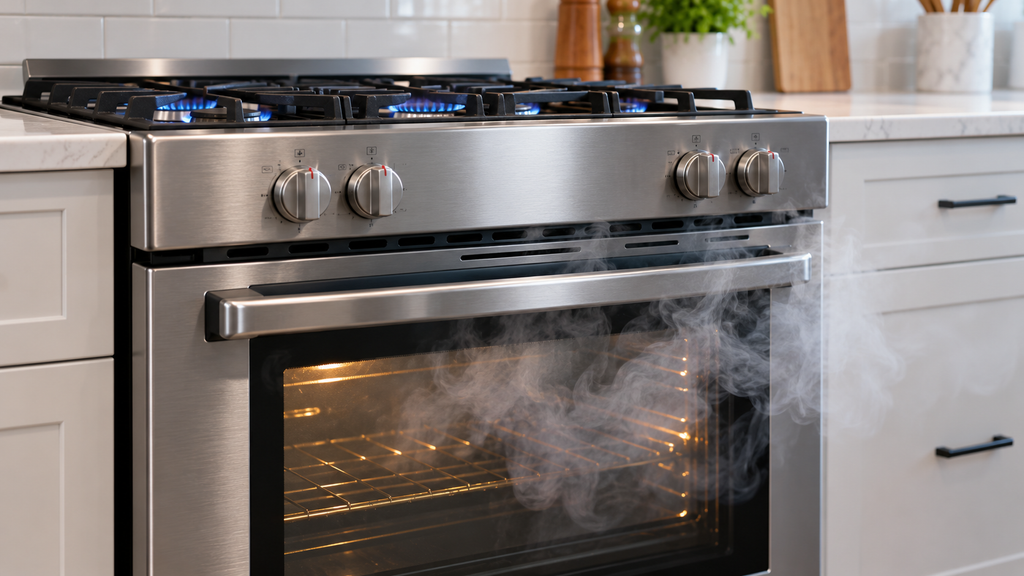
Yes, a gas oven can produce carbon monoxide, called CO, during combustion. Combustion means burning fuel, and incomplete combustion means the fuel has not burned fully.
These facts help explain the risk:
- Gas flames can produce CO: Poor burning can increase the amount.
- Air supply matters: Fuel needs the right amount of air to burn correctly.
- Room ventilation matters: Pollutants can collect in a poorly ventilated space.
- Flame appearance has limits: A blue flame does not replace a working alarm or a professional CO measurement.
Why Is My Carbon Monoxide Alarm Going Off When I Use the Gas Oven?
The alarm may be warning of unsafe gas oven carbon monoxide levels. Treat the alarm as real until emergency responders or a qualified professional determine the cause.
Possible combustion and use problems include:
- Dirty burner ports that disrupt the flame
- A burner cap seated out of place
- An air shutter with the wrong setting
- An orifice that does not match the gas type
- Weak or damaged ignition parts
- Long oven operation in poor ventilation
- Using the oven to heat the room
The orifice is the small opening that meters fuel into the burner. The air shutter controls the air mixed with that fuel. The parts and settings depend on the appliance. They must match natural gas or propane.
Could the alarm be too close to a cooking appliance? Alarm placement can matter, but that is not a reason to silence it and keep cooking. Address an active alarm first; placement and service questions come afterward. Never use the oven as a room heater.
What Are the Signs of Carbon Monoxide Poisoning From a Gas Oven?
Gas oven carbon monoxide exposure can cause symptoms that seem like common illness. Warning signs include:
- Headache
- Dizziness
- Nausea
- Weakness
- Confusion
- Symptoms that improve outdoors
- Similar symptoms in more than one person at home
Get everyone outside if CO exposure is possible, even when no alarm has sounded. Call emergency services from outside and describe the symptoms and possible exposure. Do not go back in until responders say it is safe.
Do not delay leaving in order to shut a valve or ventilate the room. If gas is smelled, avoid switches, plugs, flames, and anything that can spark on the way out. Call the gas utility or emergency services from a safe outdoor location.
What Causes Poor Combustion and High Carbon Monoxide in a Gas Oven?
Poor air mixing, blocked openings, wrong fuel-metering parts, and ignition faults can disturb the flame. The pattern can guide a professional inspection, but it cannot tell you the CO concentration.
Use this table to understand the signs without treating them as a safety test:
| Flame or Surface Sign | Possible Meaning | Service Direction |
|---|---|---|
| Steady blue flame | More normal burning appearance | Confirm the appliance is working correctly; keep the alarm active |
| Persistent yellow flame or large yellow tips | Poor air mixing or dirty ports | Inspect the burner and air supply |
| Orange or tall, uneven flame | Burner or fuel-air issue | Check the cause before further use |
| Flame lifting away from the burner | Incorrect air or gas conditions | Have the settings and parts checked |
| Soot streaks | Incomplete combustion | Stop use and arrange service |
How to Fix Gas Oven Combustion to Lower Carbon Monoxide Step by Step
Follow these steps only as a service outline after the home is safe, with gas-system testing and adjustments handled by a qualified technician.
Phase 1: Shut Off the Gas and Test the Burner and Oven Flames
- Leave and obtain emergency help first if an alarm sounds or symptoms occur.
- Have the technician assess each burner on high for color, shape, height, and unusual sounds.
- Have the technician inspect the oven flame after preheating, then assess uneven browning if safe testing is appropriate.
- Shut off gas and let the appliance cool before cleaning or repair.
Phase 2: Clean Burner Ports, Reseat Caps, and Clean or Replace Orifices
- Remove accessible burner caps and clear the ports with a stiff brush or toothpick.
- Check that the ports are clear.
- Remove loose debris before reassembly.
- Seat the caps flat and correctly aligned.
- Have the technician confirm stable flames afterward.
- Have the technician clean an orifice opening with a soft brush.
- Replace a damaged orifice with the model’s correct size and gas type.
Phase 3: Adjust the Air Shutter and Replace Weak Igniters or Thermocouples
- Have the technician adjust the air shutter for correct combustion.
- Replace faulty igniters, thermocouples, or pilot parts as needed for the model.
Didn't fix it? Ask a technician on the AppliancePartsPros forum.
Post your model number, the symptom, and what you've already tried. Appliance techs and experienced DIYers answer for free, usually the same day.
Ask the forum →80,000+ solved repair threads · no account needed to readWhen Should You Shut Off the Gas Oven and Call a Professional?
Any CO alarm, suspected poisoning, or persistent gas odor needs immediate action. Do not wait for the display to reach a certain reading before leaving.
Stop using the appliance and arrange appropriate help for these conditions:
- An active CO alarm or symptoms of possible exposure
- A strong or persistent gas smell
- Yellow, uneven flames or soot that remain after basic care
- Suspected natural-gas or propane conversion errors
- Damaged gas-metering or ignition parts
Do not enlarge an orifice opening with a needle, wire, or drill. A larger opening changes the fuel flow and can create a serious combustion problem. Gas settings and conversion work need the correct model information and professional tools.
Should You Repair the Oven or Replace It?
A gas oven carbon monoxide service check should come before the cost decision. No low part price makes it reasonable to keep using an oven that has not been cleared for safe operation.
These ranges give a starting point for that discussion:
- Cleaning: May cost nothing in parts.
- Selected orifice or ignition parts: About $20 to $80, before labor.
- Burner assembly: About $60 to $150.
- Older oven with a rusted burner: Compare a full repair quote with replacement, especially beyond 15 years.
FAQ
Is a Yellow Flame Always Dangerous?
A lasting yellow flame needs attention. Poor burning may be the cause. Soot or an alarm adds to the concern. Color alone cannot measure CO, so neither a yellow nor a blue flame is a substitute for proper testing.
How Often Should Burner Ports Be Cleaned?
The right schedule depends on spills, use, and the model’s care needs. Visible blockage or an uneven flame calls for attention, but an active CO warning requires evacuation and professional assessment first.
Does a CO Alarm in the Kitchen Give False Alarms?
Placement may affect an alarm, but you should never assume an active CO warning is false. Leave, obtain help, and have the cause and placement checked before using the oven again.
Keeping the Flame Blue and the Kitchen Air Safe
A working CO alarm has its own job. Gas oven carbon monoxide repairs have a separate purpose. Keep the alarm active, treat warnings promptly, and have combustion faults resolved before the oven returns to use.
Find the correct oven burner or ignition parts after a qualified technician confirms the fault so the repair matches your model and gas type.
Still stuck after this guide?
Two free options: post your model number and symptom on the forum, or search the model number in the shop to see every part that fits.