Quick answer
A French door refrigerator sweating most often has high room humidity meeting cold door surfaces, a worn door gasket letting cold air escape, or a failed mullion heater that leaves the center seal cold. Moisture between the two doors points to the mullion heater or seal; moisture around the door edges points to the gasket. Run the dollar bill test first; a replacement gasket costs $40 to $90.
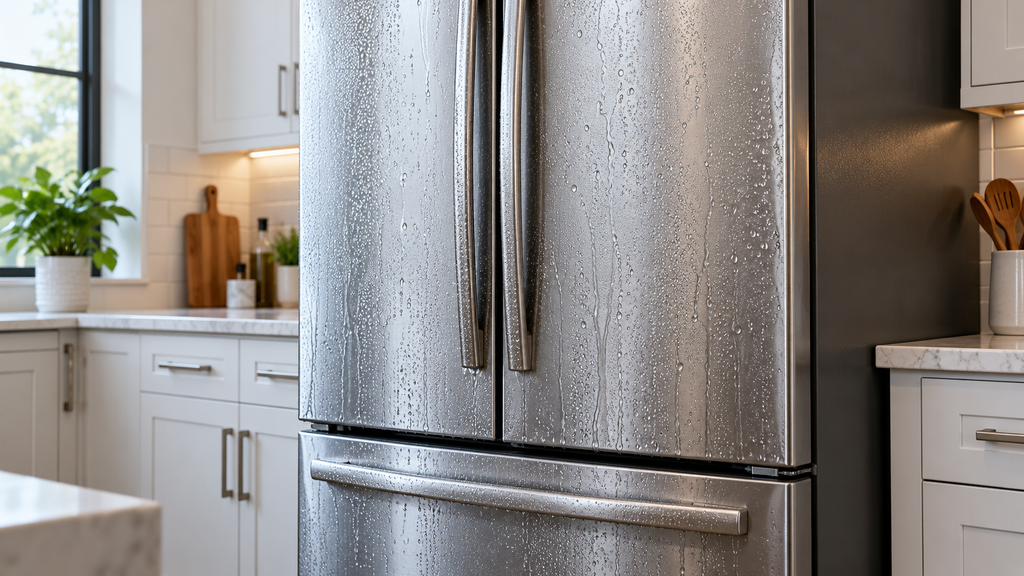
Moisture on a French door refrigerator can be condensation rather than a water leak. Damp room air meeting a cold surface creates droplets, while weak door seals or a cool center strip can make the sweating worse. This guide compares the locations and conditions that cause condensation and explains which adjustments or component checks fit each pattern.
Quick Facts
| Detail | At a Glance |
| Difficulty | Easy to Moderate |
| Time | 10 minutes for the gasket test, 30 to 60 minutes for a gasket or mullion replacement |
| Tools | Dollar bill, flashlight, multimeter, 1/4 inch nut driver, hair dryer for gasket forming |
| Part Cost | $40 to $90 per gasket, $60 to $180 for a flipper mullion |
| Skill | Beginner for checks, intermediate for mullion heater test |
Why Is My French Door Refrigerator Sweating?
French door refrigerator sweating happens when damp air meets a cold surface; weak door seals, a cool center strip, or high indoor humidity can all contribute.
The following details help narrow the decision.
| Condition or Detail | Meaning or Next Consideration |
| between the doors | mullion heater or mullion seal |
| door perimeter | gasket or humidity |
| door face in summer | high humidity and energy-saver mode |
| inside the cabinet | door ajar or blocked drain |
A symptom points toward a system, but several parts in that system may cause it; the useful question is which observation separates those parts. Visible damage gives stronger evidence than a guess from age alone. An electrical fault needs a reading made at the right points.
What Causes Condensation Around French Door Refrigerator Doors?
Moisture on the outside, between the doors, and inside the compartment can point to different air leaks; frequent door opening brings in more damp air. A worn seal lets it enter even when the door appears shut. A heater problem at the center strip needs a separate check.
Keep these points in mind.
- Warm humid air meeting cold door surfaces
- Frequent door openings
- Energy-saver mode turning off door heaters
- Worn gaskets
- Failed mullion heater
- Misaligned mullion seal
- Worn ice dispenser door seal
A symptom points toward a system, but several parts in that system may cause it; the useful question is which observation separates those parts. Visible damage gives stronger evidence than a guess from age alone. An electrical fault needs a reading made at the right points.
What would make this part a poor choice? A sound test result means you need to consider the other causes before ordering it.
Is a Failed Mullion Heater Causing Condensation Between the Doors?
Follow these steps to check this part of the fault.
Check the Specified Test Conditions
- Feel the center mullion for warmth after 30 minutes.
- Check that it flips fully closed.
- Measure the heater for about 20 to 30 ohms on Whirlpool-built models.
A symptom points toward a system, but several parts in that system may cause it; the useful question is which observation separates those parts. Visible damage gives stronger evidence than a guess from age alone. An electrical fault needs a reading made at the right points.
Is a Worn Door Gasket Causing the French Door Fridge to Sweat?
These signs need to be read together; a single symptom can point to more than one cause, so the condition of the related parts matters too.
Keep these points in mind.
- Cracks
- Flat spots
- Mold
- Stiff sections
- Gasket pulling away at corners
- How a leaking gasket also raises run time
A symptom points toward a system, but several parts in that system may cause it; the useful question is which observation separates those parts. Visible damage gives stronger evidence than a guess from age alone. An electrical fault needs a reading made at the right points.
How to Test the Door Gasket Seal on a French Door Refrigerator Step by Step
Follow these steps to complete the covered procedure for french door refrigerator sweating.
Phase 1: Inspect Every Gasket for Cracks, Flat Spots, Mold, and Stiffness
- Inspect each gasket for cracks, flat spots, mold, and stiff areas.
Phase 2: Run the Dollar Bill Test at Several Points Around Each Door
- Close a dollar bill in the seal at several points.
- Compare its grip around each door.
Phase 3: Inspect and Realign the Mullion Seal and the Ice Dispenser Door Seal
- Inspect the center mullion seal.
- Realign or replace a damaged seal.
- Inspect the ice dispenser door seal.
Phase 4: Set the Fresh Food Section to 36 to 40°F and Reduce Humidity Sources
- Set the fresh food section to 36 to 40°F.
- Reduce frequent door openings.
- Use room cooling or a dehumidifier when indoor air is damp.
- Leave room for air to move inside the fridge.
- Keep food organized and avoid overfilling it.
Should You Replace the Gasket, the Mullion, or Call a Technician?
Choose the repair that matches the confirmed fault; a cheaper part will not help if it belongs to a different part of the system.
Keep these points in mind.
- Gasket $40 to $90 and 30 minutes
- Flipper mullion $60 to $180
- Technician for a sealed-system or defrost fault causing interior sweating
- Fridge over 12 years old
A low-cost part is a good choice only when it corrects the confirmed fault; cleaning can solve a blockage, but it cannot repair a cracked housing or an open winding. A control board should come later in the diagnosis because a bad connection can create the same symptom. Parts cost is only part of the decision.
FAQ
When Should You Call a Technician for Refrigerator Condensation?
Call when moisture continues with sound seals and controlled room humidity. A mullion heater or door alignment fault may need repair.
Does Energy-saver Mode Cause Sweating?
On models where energy saving reduces seal heat, sweating can increase in damp weather. The control function depends on the model.
Can Condensation Damage the Doors?
Repeated moisture can affect trim and encourage mold at seals. Persistent sweating deserves attention even when the fridge still cools.
Dry Doors in Any Season
You have a clearer path when the symptoms, model, and test results agree; focus on the failed part and keep the nearby wiring, mounts, and seals in view. A sound diagnosis helps the repair solve the original problem.
Check the full model number, then choose the compatible door gasket or mullion assembly to restore normal operation.