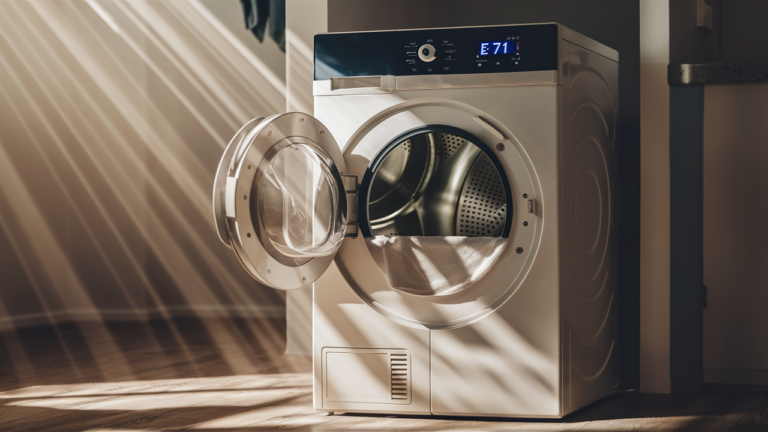
Pull a load out and find it scorching hot, or notice the dryer keeps heating even after the cycle should have cooled down? A dryer that will not stop heating is more than an annoyance. Excess heat can damage clothes and become a safety concern, so it is worth fixing quickly.
Here is why a dryer overheats and how to bring the temperature back under control.
This article will teach you:
- What controls dryer heat
- Why it can get stuck on
- The parts to test
- When to stop and get help
Why the Heat Won’t Shut Off
Your dryer’s heat is switched on and off by thermostats and a relay working together. When heat will not stop, the usual causes are:
- A stuck cycling thermostat that no longer opens to cut power to the heat source.
- A welded heat relay on the control board that stays closed.
- A shorted heating element that keeps drawing power even when it should be off.
- Restricted airflow that traps heat and drives temperatures up.
What You’ll Need
- Your owner’s manual
- A multimeter
- A screwdriver and nut driver
How to Diagnose Constant Heat
Take these steps carefully, with the dryer unplugged when testing.
- Check airflow first. Clean the lint screen and clear the vent so trapped heat is not the real cause.
- Test the cycling thermostat. With power off, check it for continuity; a thermostat stuck closed keeps the heat on.
- Inspect the heating element. A shorted element can heat continuously even when the control tries to shut it off.
- Consider the relay. On electronic models, a welded heat relay on the board keeps power flowing to the element.
Pro Tip: Constant heat with weak airflow can push a dryer into a real hazard. If the cabinet is very hot to the touch, stop using it until you have found and fixed the cause.
When to Look a Little Deeper
Because overheating and heat loss share the same thermostats and element, comparing symptoms helps, and reviewing a Kenmore dryer that is not heating or a GE dryer that is not heating shows how the same parts fail in the opposite direction. Runaway heat can also trip protection and mimic a dryer that shuts off after starting.
When a safety part is at fault, you can replace a high-limit thermostat, or confirm whether a thermal fuse has blown.
When to Call a Pro
If the thermostats test fine and the dryer still overheats, a welded control-board relay is likely. Because overheating is a safety issue, having a technician diagnose the board is the safe move.
Related guides
- GE Electric Dryer Drum Bearing Slides: WE1M1067 Replacement Guide
- GE Electric Dryer Low Heat: What to Check and Repair
Wrapping Up
A dryer that will not stop heating needs prompt attention. Here’s the recap:
- Clear the lint screen and vent first.
- Test the cycling thermostat for a stuck-closed condition.
- Inspect the heating element for a short.
- Suspect a welded relay if parts test good.
Find the stuck part and your dryer will cycle heat safely again. Stay safe and take your time.
With the cause confirmed, order the dryer heating element parts for your exact model and keep the old part until the repair has passed a full cycle.