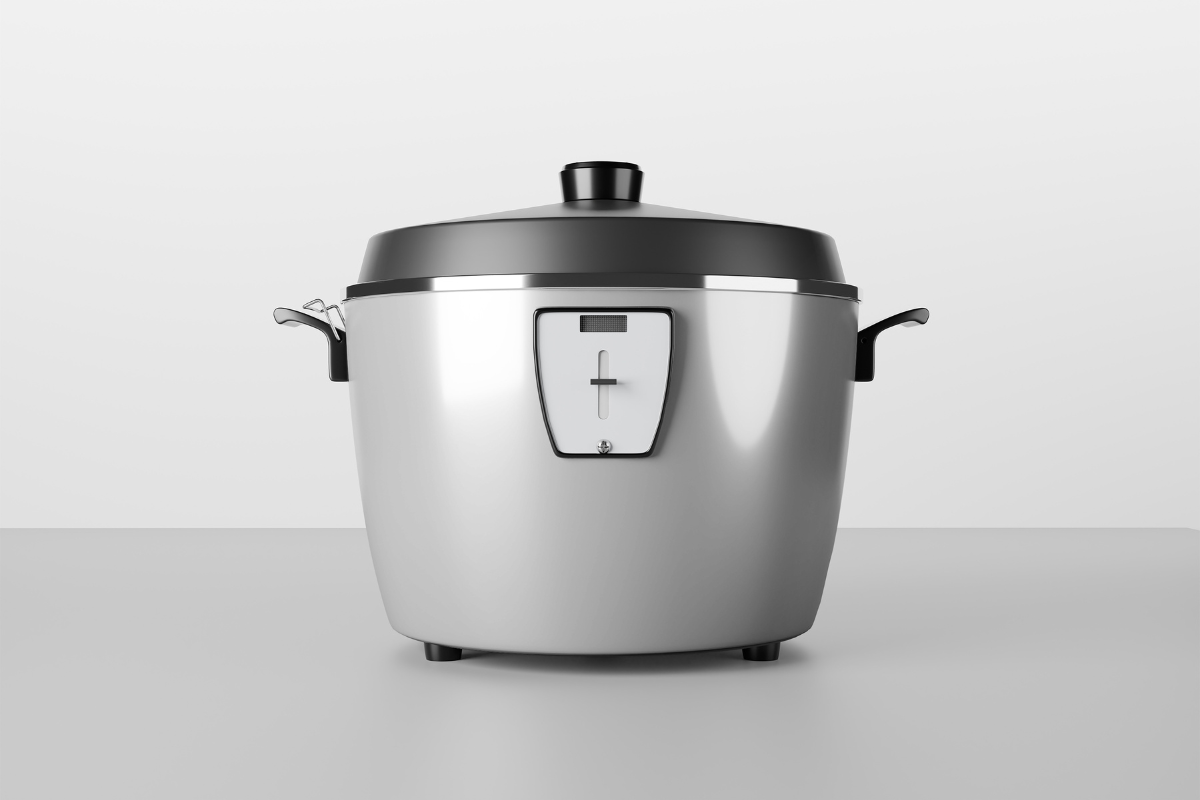
Notice a chalky white crust on the inner pot or heating plate of your rice cooker? That is limescale, and it is a sign your cooker is overdue for a descale.
Hard water leaves mineral deposits every time your cooker heats up. Over time that scale slows cooking, makes rice stick, and can leave an off taste. The fix is simple: descaling a rice cooker with a little white vinegar takes about twenty minutes and brings back fluffy, evenly cooked rice.
This article will teach you:
- What limescale is and why it builds up
- The supplies you need
- How to descale the inner pot and heating plate step by step
- How often to descale to keep rice cooking evenly
Quick diagnosis table
A vinegar soak handles nearly every row here, the rest is about how hard your water is.
| Symptom detail | Likely cause | What to check | Fix or part |
|---|---|---|---|
| White crust on pot or plate | Limescale from hard water | Look for chalky film on heating plate | Soak in vinegar, scrub |
| Rice sticks or cooks slowly | Scale insulating the heating plate | Wipe plate, check for buildup | Descale pot and plate |
| Off taste in rice | Mineral deposits in pot | Inspect inner pot for scale | Descale, run plain water cycle |
| Scale will not lift after soak | Heavy buildup | Check if crust remains after 20 minutes | Run one heat cycle, soak again |
| Vinegar smell after cleaning | Leftover vinegar | Sniff pot after rinsing | Rinse well, run water cycle |
| Scale keeps returning fast | Very hard water | Note how quickly crust forms | Use filtered water, descale monthly |
What Causes Scale in a Rice Cooker?
Ever wonder where that white film comes from? It is minerals, mostly calcium and magnesium, left behind when hard water evaporates. Each batch of rice adds a little more.
A thin layer of scale on the heating plate acts like insulation, so your cooker works harder and heats less evenly. That is when rice starts to stick or cook slowly. Clearing the scale lets the plate transfer heat the way it should. A rice cooker is more versatile than most people think, and keeping it clean protects all the many uses of a rice cooker.
What You’ll Need
- White vinegar
- Water
- A soft cloth or sponge
- A soft brush or old toothbrush
- A dry towel
Warning: Never submerge the cooker’s base or pour liquid into the body of the unit. That is where the electrical parts live. Only the removable inner pot should ever hold the vinegar solution.
How to Descale a Rice Cooker
Ready? Unplug the cooker first, then follow these steps.
- Unplug the rice cooker and let it cool completely.
- Remove the inner pot and any accessories like the steam tray.
- Mix the solution. Fill the inner pot with equal parts water and white vinegar, enough to cover the scaled areas.
- Let it soak for 15 to 20 minutes to loosen the mineral buildup. For heavy scale, place the pot back in and run one heat cycle, then unplug and let it sit.
- Scrub gently with the soft brush or sponge until the deposits lift away.
- Wipe the heating plate. Dampen a cloth with the vinegar solution and wipe the metal plate inside the base. Do not pour liquid in, and never submerge the base.
- Rinse the inner pot well until the vinegar smell is gone.
- Dry everything with a towel, then reassemble the cooker.
Pro Tip: Run one cycle of plain water after descaling. It clears any leftover vinegar so your next batch of rice tastes fresh.
Keep Scale From Coming Back
A little prevention saves you from heavy buildup later. Wipe the inner pot and heating plate dry after each use, and descale on a regular schedule. If you have very hard water, using filtered water for cooking slows scale down a lot. The same approach to hard water stains and mineral buildup works across the house, and limescale is not unique to rice cookers, which is why you would also descale a steam oven in much the same way.
If your cooker still struggles after a good descale, the issue may be elsewhere. These common rice cooker problems and how to fix them can help you pin it down.
How Often Should You Descale?
- Light users – descale every 2 to 3 months.
- Daily users or hard water – descale monthly.
- Anytime you see white crust – descale right away.
Related guides
Wrapping Up
Descaling a rice cooker is quick, cheap, and makes a real difference in how your rice turns out. Here’s the short version:
- Unplug and remove the inner pot.
- Soak it in equal parts water and white vinegar.
- Scrub the pot and wipe the heating plate.
- Rinse, dry, and run a plain water cycle.
Keep up with it and every pot of rice comes out fluffy and fresh. You’ve got this.