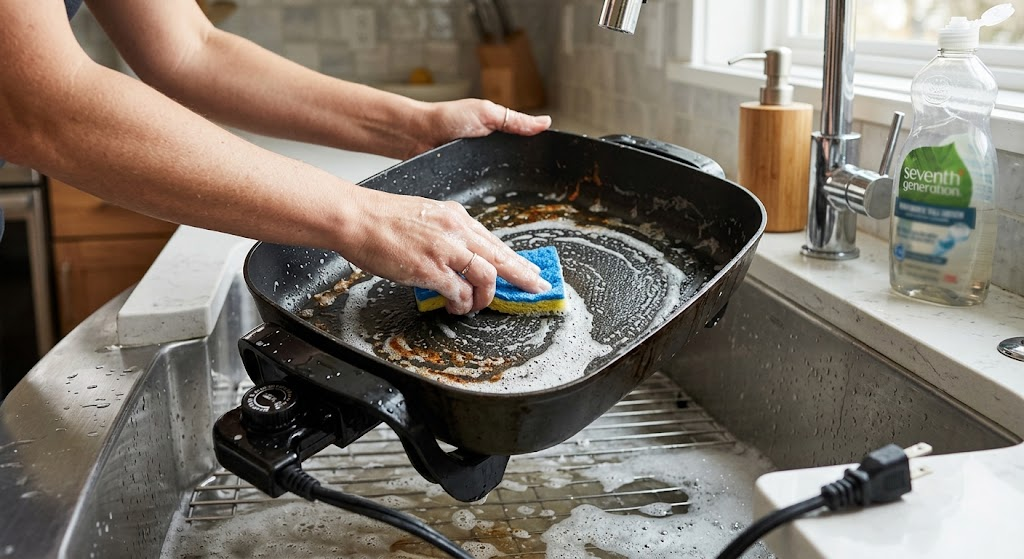
Is your electric skillet sticky with baked-on grease or losing its nonstick glide? A good clean brings it back, but an electric skillet is not like a regular pan. It has a heat probe and electrical connection that must stay dry, so a few simple rules keep it working and safe.
Here is how to clean an electric skillet thoroughly without ruining the part that powers it.
This article will teach you:
- Why proper cleaning matters for an electric skillet
- The supplies to gather first
- How to clean the pan and base safely
- How to lift stuck-on food and keep the surface in good shape
Why Careful Cleaning Matters
Ever notice food sticking more than it used to? Leftover grease and residue break down a skillet’s nonstick surface and can smoke the next time you cook. Cleaning after each use keeps the surface slick and the food tasting clean.
The bigger reason for care is the heat-control probe. It carries electricity, and getting water into it can damage the skillet or create a shock hazard. Knowing what to wash and what to keep dry is the whole job.
What You’ll Need
- Mild dish soap
- A soft sponge or cloth
- Baking soda for stuck-on spots
- A dry towel
Warning: Never submerge the heat-control probe or the spot where it plugs into the skillet. Those parts must stay completely dry.
How to Clean an Electric Skillet
Ready? Always start by removing the power.
- Unplug the skillet and let it cool fully.
- Remove the heat-control probe. Pull it straight out and set it aside, away from water.
- Wash the pan. If your manual says the pan is immersible with the probe removed, wash it in warm, soapy water. If not, wipe it with a damp, soapy sponge instead.
- Lift stuck-on food. Make a paste of baking soda and a little water, spread it on the spots, let it sit a few minutes, then gently scrub.
- Wipe the probe and socket with only a dry or barely damp cloth, never running water.
- Rinse and dry the pan completely, paying extra attention to the probe socket.
- Reassemble only once every part is fully dry.
Pro Tip: Skip steel wool and harsh scouring pads. They scratch the nonstick coating, which makes food stick worse and shortens the skillet’s life. Baking soda does the heavy lifting without the damage.
Keep the Surface in Good Shape
A little routine care goes a long way. Wipe the skillet after each use and deep-clean stuck-on residue before it bakes harder. The same gentle approach helps with other countertop cookers, like an electric griddle that heats unevenly or a slow cooker acting up.
If you are weighing which small cooking appliance to add next, our sandwich maker buying guide covers what to look for in an easy-clean design.
How Often Should You Clean It?
- After every use – wipe down the cooking surface.
- Deep clean – tackle stuck-on spots with baking soda as they appear.
- Before storage – make sure every part is bone dry.
Related guides
Wrapping Up
Cleaning an electric skillet is easy once you protect the probe. Here’s the short version:
- Unplug, cool, and remove the heat-control probe.
- Wash or wipe the pan, and use baking soda on stuck-on food.
- Keep the probe and socket dry.
- Dry every part fully before reassembling.
Treat the probe right and your skillet will cook clean for years. You’ve got this.