

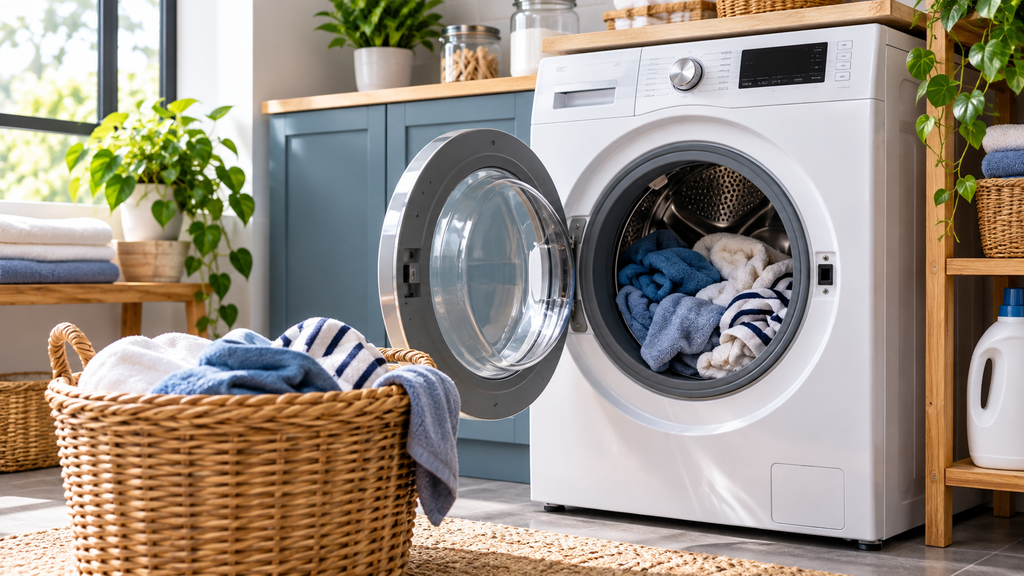
Washing machine maintenance in a home with pets needs extra attention to hair, sand, bedding, and odor. Loose fur can collect in the door gasket, filter, drain pump, and household drain. Mud and grit can wear surfaces or settle below the drum. A simple routine keeps pet laundry from affecting later loads.
Pet bedding should be washed according to its care label and the washer limits. Large beds may become too heavy when wet, so a commercial machine can be safer for bulky items.
Problems Pet Laundry Can Create
Hair and outdoor soil move through the washer in different ways.
Common trouble includes:
- Fur clings to the drum and transfers to clean clothing.
- Hair mats collect in the drain filter.
- Sand settles in the gasket or tub.
- Thick bedding creates an unbalanced load.
- Pet oils leave odor in the dispenser and drum.
- Rubber-backed mats break down and shed material.
- Small tags or fasteners catch near the door seal.
Does the washer shake only with pet bedding? The load size and balance may be the main issue.
Safety First
- Unplug the washer before cleaning the filter or reaching into the drum.
- Keep pets away from the open appliance.
- Check the empty drum before every load.
- Wear gloves when handling heavily soiled bedding.
- Never mix chlorine bleach with vinegar, ammonia, or pet stain products.
- Stop using the washer if the drum scrapes, the seal tears, or water leaks.
- Do not wash items with loose foam, cracked rubber, or flammable residue.
Washing Machine Maintenance Steps for Pet Laundry
Remove loose material before washing, then clean the machine after the load.
Prepare Pet Items
- Take bedding and blankets outdoors.
- Shake off loose hair, dirt, and plant material.
- Vacuum both sides of the item.
- Close zippers and fasten loose straps.
- Check seams for exposed foam or stuffing.
- Read the care label and washer load limit.
- Divide the laundry into balanced loads.
Run the Pet Laundry Load
- Wipe visible hair from the empty drum.
- Load items loosely around the basket.
- Add measured detergent for the soil level.
- Choose the cycle and water temperature allowed by the care labels.
- Add an extra rinse when residue or hair remains.
- Remove the load when the cycle ends.
- Check that the drum drained fully.
Clean the Washer Afterward
- Unplug the washer.
- Wipe hair from the drum, door glass, and gasket.
- Remove debris from the dispenser.
- Clean the user-accessible drain filter when the manual calls for it.
- Dry the door and gasket.
- Leave the door or lid open in a pet-safe area.
- Run the approved tub-clean cycle on schedule.
Control Hair Before It Reaches the Drain
The washer cannot dissolve pet hair. Most hair must be removed before the item enters the drum.
Useful hair-control steps include:
- Vacuum fabric with an upholstery tool.
- Use a lint roller on small beds and covers.
- Brush pets regularly in an easy-to-clean area.
- Wash removable covers separately from foam inserts.
- Clean the dryer’s lint filter before and after drying pet items.
- Wipe the washer drum after each heavy hair load.
- Check the drain filter more often during shedding season.
Laundry balls and hair-catching products should be used only when the washer and item directions allow them.
Prevent Unbalanced Loads
Pet beds, crate pads, and waterproof covers can hold a large amount of water. One heavy item may collect on one side of the drum.
Balance the washer with these habits:
- Wash two similar items together when the manual permits it.
- Avoid pairing one heavy bed with thin clothing.
- Stop the cycle if the machine begins to strike the cabinet.
- Redistribute a load only after the drum stops.
- Use a lower spin speed for bulky items when allowed.
- Take oversized beds to a large commercial washer.
- Replace bedding that has loose heavy filling.
Repeated shaking with ordinary loads may signal a leveling or suspension problem rather than pet laundry.
Keep Odor From Building Up
Pet oils and damp fabric can create odor when they remain in the washer.
Odor control includes:
- Remove wet bedding as soon as the cycle ends.
- Dry the gasket and dispenser after the final load.
- Measure detergent instead of adding extra for odor.
- Use an approved oxygen product only when the fabric and washer allow it.
- Run the full rinse step.
- Clean the drain filter before odor grows.
- Store dirty pet bedding in a ventilated washable bin.
Strong sewer odor or standing water points to a drain issue. A burning smell needs immediate service.
Inspect the Washer Each Month
A short monthly check can catch wear before a leak or clog appears.
- Inspect the door gasket for hair, cuts, and small objects.
- Clean dispenser channels.
- Check inlet hoses for bulges and moisture.
- Look under the washer for drips.
- Confirm that the machine sits level.
- Spin the empty drum by hand and listen for scraping.
- Clean the filter on the model schedule.
- Run the approved maintenance cycle.
Know What Should Stay Out of the Washer
Some pet items can damage the machine or create a safety risk.
- Beds with torn foam filling.
- Rubber mats with cracking backs.
- Items contaminated with fuel, solvent, or oily chemicals.
- Hard toys with electronic parts.
- Collars with heavy metal hardware.
- Bedding above the washer’s wet-load limit.
- Items labeled for hand cleaning only.
Keep Pet Laundry Separate
Separate storage and wash timing can reduce hair transfer to household clothing. Use a washable bin for pet items and clean the bin often. Run pet bedding before a washer-cleaning cycle rather than before delicate clothes. Wipe the drum and gasket after the pet load, then check that no hair remains around the door.
Household members with allergies may need stronger separation. Their health professional can advise on fabric handling and wash temperatures. The washer manual and fabric care labels still set the safe limits for the machine and item.
What to Remember
Washing machine maintenance for homes with pets starts before the load. Removing hair, checking bedding, balancing the drum, and cleaning the gasket and filter protect the washer. Correct detergent and good drying habits control odor without leaving more residue. A leak, scrape, or repeated imbalance needs attention before another bulky pet load.