

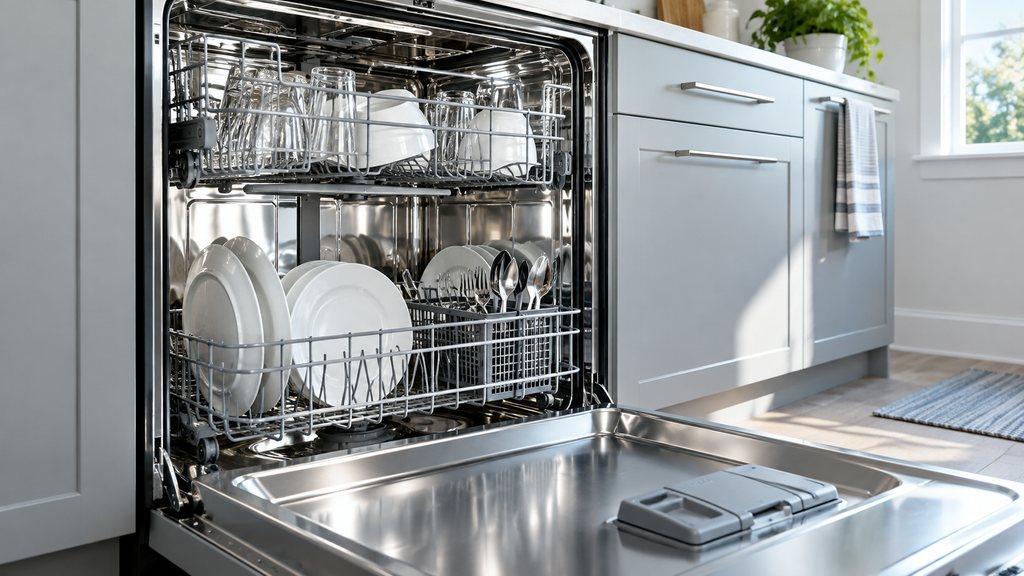
When a dishwasher smells like wet dog, damp food soil and residue may have remained inside long enough to produce a strong odor. The filter, sump, door gasket, spray arms, or drain connection may hold the source. Dishes left in a closed machine can add more moisture and food particles.
This dishwasher odor after cycle use often improves after a full filter and interior cleaning. The smell should not be covered with perfume or a random chemical. Finding the damp residue gives a longer-lasting result and helps the dishwasher clean better.
Why a Dishwasher Smells Like Wet Dog
Warm water loosens food from dishes, but small particles can collect in hidden or low areas. A wet filter or drain area gives odor-producing microbes time to grow between cycles. Poor drainage can make the smell stronger.
Common sources include:
- Food debris trapped in a removable filter.
- Grease or residue under the lower spray arm.
- Soil along the bottom edge of the door.
- Moisture and grime in gasket folds.
- A blocked or slow drain path.
- A dirty sink air gap or garbage disposer connection.
- Dishes left for several days before a full cycle.
- A cycle that did not heat, wash, or drain as expected.
A small amount of clean water in the filter well can be normal on some models because it keeps seals from drying. Water spread across the tub floor or water with visible soil points toward a drainage problem.
Check Whether the Odor Comes from the Dishwasher
The sink and dishwasher often share part of the drain system. Check the nearby plumbing before taking the machine apart.
- Smell the empty dishwasher after it has cooled.
- Check the sink drain and garbage disposer separately.
- Look for standing water above the dishwasher filter.
- Inspect the door gasket for slime or food.
- Check whether the last load contained eggs, dairy, fish, or pet dishes.
- Note whether dishes also feel gritty or greasy.
- Watch for a drain or heating error code.
An odor that resembles burning plastic or hot wiring needs a different response. Stop the cycle, cut power, and arrange qualified service.
Safety Before Removing Dishwasher Odor
- Turn off power at the circuit breaker before working near the sump or wiring.
- Let the tub, water, and heating area cool.
- Wear gloves when handling old food and possible glass.
- Keep fingers out of the pump opening.
- Do not mix vinegar, bleach, ammonia, or commercial cleaners.
- Do not use bleach in a stainless-steel tub unless the manual permits it.
- Do not pour chemical drain opener into the dishwasher.
- Reinstall the filter before running a cycle.
How to Clean a Dishwasher That Smells Like Wet Dog
Remove the physical source first. A maintenance cycle works better after food, grease, and drain debris are cleared.
Empty and Inspect the Tub
- Remove all dishes and utensils.
- Pull out the lower rack.
- Pick up loose labels, bones, seeds, and food pieces with gloved hands.
- Look for water covering the tub floor.
- Check the lower spray arm for blocked holes or trapped debris.
- Turn off power before continuing with filter removal.
Remove and Wash the Filter
- Find the filter instructions for the dishwasher model.
- Unlock and lift out each removable filter part.
- Empty loose debris into the trash.
- Rinse the filter under warm running water.
- Wash stubborn soil with mild dish soap and a soft brush.
- Rinse away all soap.
- Inspect the filter for cracks or damaged mesh.
- Reinstall the lower filter and lock the upper assembly firmly.
Clean the Door, Gasket, and Spray Arms
- Wipe the lower door edge with warm water and mild dish soap.
- Clean accessible gasket folds with a soft cloth.
- Wipe the detergent dispenser and the area around its lid.
- Spin each spray arm and remove visible debris from its path.
- Clean accessible spray holes using the method in the manual.
- Wipe the tub walls and rack tracks.
- Dry the door edge and gasket before restoring power.
Run an Approved Maintenance Cycle
- Read the cleaning section of the owner’s manual.
- Choose one approved dishwasher cleaner or the manufacturer’s approved vinegar method.
- Keep the machine empty unless the product directions state otherwise.
- Place the cleaner in the location directed by its label.
- Run the listed hot or cleaning cycle.
- Open the door after the cycle and let the interior dry.
- Check for odor again after the tub has cooled.
Fix Drain Odors and Standing Water
Cleaning will not last when dirty water returns to the tub. The drain path may need attention when water or odor appears again soon after a cycle.
Drain checks include:
- Run the garbage disposer before starting the dishwasher.
- Clean the sink air gap when the home has one.
- Look under the sink for a kinked drain hose.
- Confirm that the hose follows the high-loop or air-gap arrangement in the installation guide.
- Check the sink drain for slow flow.
- Listen for the drain pump near the end of a cycle.
- Arrange service when water remains after visible obstructions are removed.
Do not disconnect a drain hose until power and water are off and a shallow pan is ready. Wastewater can spill from the hose.
Habits That Keep the Smell Away
Regular care removes food before it can become a strong dishwasher filter smell.
- Scrape large food pieces from dishes.
- Run a rinse cycle when a partial load will sit for more than a day.
- Clean a manual filter at the interval in the owner’s manual.
- Leave the door slightly open after unloading when the manual allows it.
- Keep the gasket and lower door edge free of residue.
- Use fresh automatic dishwasher detergent.
- Avoid crowding dishes so wash water reaches every surface.
- Run a maintenance cycle with an approved product at the recommended interval.
Do not leave a wet towel hanging over a closed dishwasher door. It can keep the gasket area damp and may transfer its own odor.
When the Smell Needs Professional Help
Stop routine cleaning and seek service when the odor comes with signs of an appliance or plumbing fault.
- Water remains across the tub floor.
- The drain pump hums without removing water.
- The odor returns after every cycle.
- A burning or electrical smell appears.
- The dishwasher leaks under the cabinet.
- The drain hose contains a blockage that cannot be reached safely.
- The machine shows repeated drain or heat errors.
A plumber may be the right choice when the sink and disposer also drain slowly. An appliance technician can inspect the pump, internal hoses, heater, and controls.
Final Thoughts
A wet-dog odor usually comes from damp food residue rather than the clean dishes themselves. Washing the filter, wiping the gasket and door edge, clearing the spray area, and running one approved maintenance cycle can remove the source. Good drainage and a dry tub help the fresh result last. If standing water, leaks, or burning odors appear, stop and get the right professional help. A short cleaning routine can keep the dishwasher ready for the next load.