

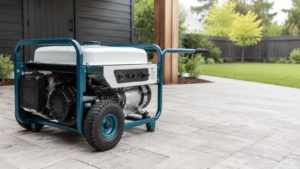
Generator will not start cold, or only runs with the choke on? The choke enriches the fuel mix for cold starts, and a sticky or misadjusted choke causes hard starts and stalling.
Here is how the choke works and how to fix it.
This article will teach you:
- What the choke does
- Why it sticks
- What to check first
- When a part has failed
Why the Choke Fails
- A sticky choke plate from varnish.
- A bent or loose choke linkage.
- Dirt holding the choke open or closed.
- A worn auto-choke on some models.
What You’ll Need
- Carburetor cleaner
- A screwdriver
- Your owner’s manual
How to Fix a Generator Choke
- Watch the plate. With the air filter off, confirm the choke plate opens and closes.
- Clean it. Spray carburetor cleaner to free a sticky choke plate.
- Check the linkage. Make sure the lever actually moves the choke.
- Start correctly. Use full choke cold, then ease it off as it warms.
Pro Tip: Take the air filter off and watch the choke plate as you move the lever. If the plate does not fully open and close with the lever, the linkage is stuck or bent and needs freeing.
When to Look a Little Deeper
Because the choke works with the carburetor, it helps to check related parts, and reviewing a clogged carburetor, a generator that will not stay running, or a generator with no spark can reveal the cause.
Because choke and carburetor work go together, guidance on cleaning and adjusting a small-engine carburetor and understanding how generator types work both help.
When to Call a Pro
If the choke plate and linkage are clean and free but starting is still poor, an auto-choke or carburetor fault may need a technician.
Wrapping Up
Choke trouble is usually varnish or linkage. Here’s the recap:
- Watch the choke plate move.
- Clean a sticky plate.
- Check the linkage.
- Use full choke cold, then ease off.
Free the choke and start it right, and cold starts get easy. Stay safe.