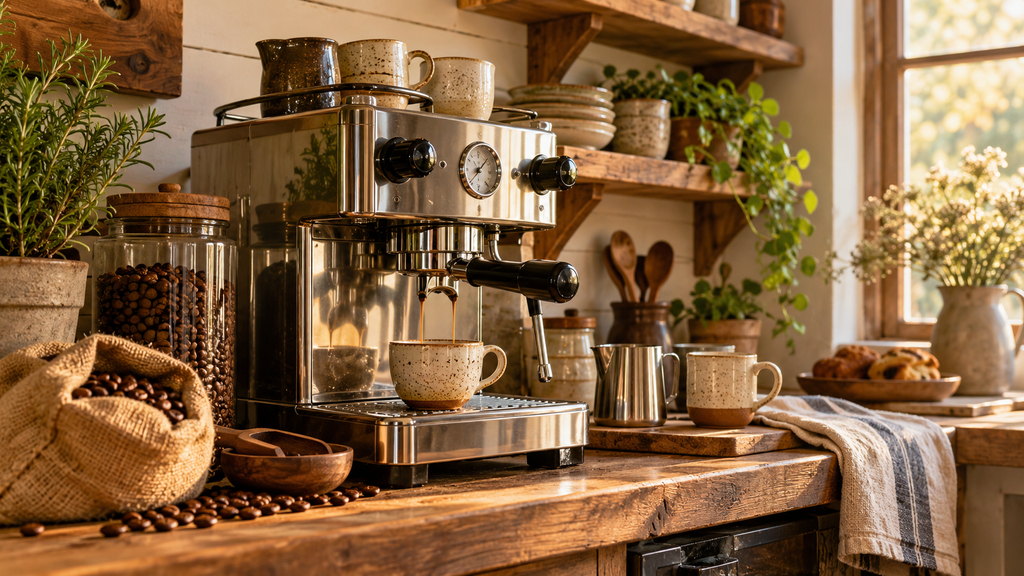
Are your shots pouring fast, pale, and watery? Low pressure is the usual reason, and it often comes down to the grind, a clogged path, or scale rather than a broken pump.
Here is what causes low pressure and how to build it back up.
This article will teach you:
- What builds espresso pressure
- Why it drops
- What to adjust first
- When a part has failed
Why the Pressure Is Low
- A grind too coarse letting water rush through.
- Too little coffee or a weak tamp.
- Scale restricting the boiler and lines.
- A clogged group head or worn pump.
What You’ll Need
- A grinder and scale
- Descaling solution
- Your owner’s manual
Order the part with confidence
- Guaranteed to fit when you search by model number
- Same-day shipping on in-stock parts
- 365-day returns on any part
- Free tech support before and after you buy
How to Fix Low Espresso Pressure
- Grind finer. Tighten the grind so water meets more resistance.
- Dose and tamp. Use enough coffee and a firm, level tamp.
- Descale. Clear scale from the boiler and lines.
- Clean the group. Backflush and clean the group head and screen.
Pro Tip: Before blaming the machine, adjust your grind. A grind that is even slightly too coarse is the most common cause of weak, low-pressure shots, and it costs nothing to correct.
Didn't fix it? Ask a technician on the AppliancePartsPros forum.
Post your model number, the symptom, and what you've already tried. Appliance techs and experienced DIYers answer for free, usually the same day.
Ask the forum →80,000+ solved repair threads · no account needed to readWhen to Look a Little Deeper
Because pressure ties to flow and grind, it helps to check related issues, and reviewing a machine that will not pump, shots with no crema, or a pressure gauge reading can pinpoint the cause.
When to Call a Pro
If the grind, dose, and descaling are right but pressure stays low, the pump or a pressure valve is worn. A technician can test the pump before you replace the machine.
Related guides
Wrapping Up
Low pressure is usually grind or scale. Here’s the recap:
- Grind finer.
- Dose and tamp firmly.
- Descale the machine.
- Clean the group head.
Dial in the grind first, and rich shots usually return. You’ve got this.
When the test points to the part, shop coffee maker parts for your model and confirm the fit with the full model number before ordering.
Still stuck after this guide?
Two free options: post your model number and symptom on the forum, or search the model number in the shop to see every part that fits.