

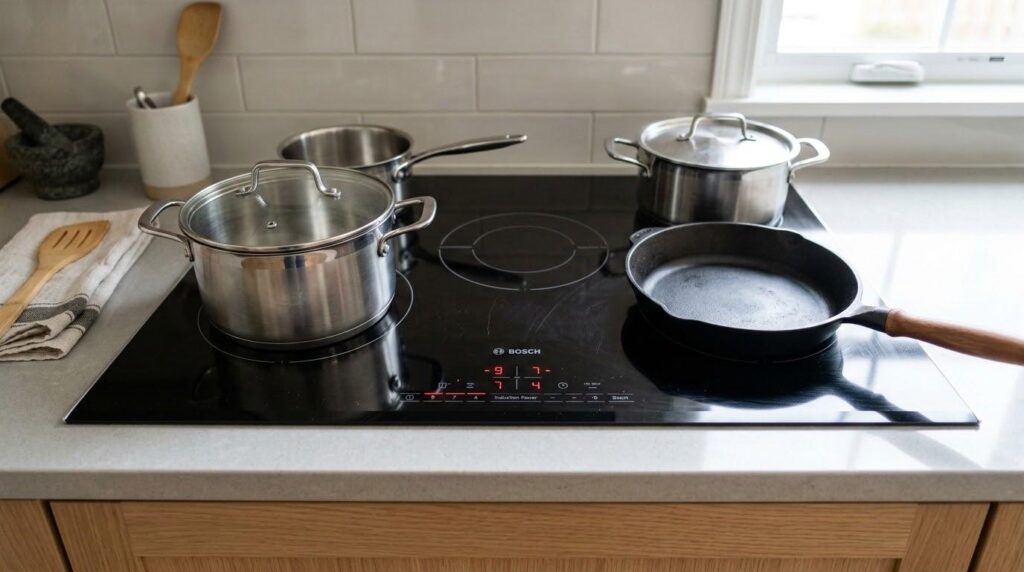
Cleaning an induction cooktop may seem simple. It has a flat, smooth surface, so you can just wipe it, right? Yes, but there is more to it than that.
Induction cooktops look strong, but the top layer is usually made of glass or ceramic. This surface can scratch, stain, or turn cloudy if you clean it the wrong way. Many people damage their cooktop not while cooking, but while cleaning.
That is why learning the right habits matters. In this guide, you will learn what to avoid when cleaning induction cooktop surfaces. You will also see simple and safe ways to keep your cooktop clean and shiny.
Why Proper Cleaning Matters for an Induction Cooktop
An induction cooktop uses heat that works under a smooth glass surface. This design makes it modern and easy to clean. But it also means the surface needs care.
If you use the wrong tools or products, you may:
- Scratch the surface
- Leave dull or cloudy spots
- Cause discoloration over time
Have you ever seen a cooktop that looks worn out even when it is new? That often comes from poor cleaning habits.
Good cleaning keeps your cooktop looking new and helps it last longer. It also makes cooking more enjoyable.
Using Abrasive Scrubbers and Pads
It can be tempting to grab a rough scrubber when you see a tough stain. But this is one of the biggest mistakes.
Avoid using:
- Steel wool
- Hard scrubbing pads
- Rough brushes
These tools can leave tiny scratches on the surface. You may not see them right away, but they build up over time. Soon, your cooktop may look dull and worn.
Scratches can also trap grease and dirt. That makes future cleaning harder.
So what should you use instead?
Safer options
- Soft microfiber cloths
- Non-scratch sponges
- Cooktop-safe pads
Use gentle pressure. Let the cleaner do the work, not your force.
Cleaning While the Surface Is Too Hot
Have you ever tried to clean your cooktop right after cooking? It may seem like a good idea, but it can cause problems.
Cleaning a hot surface can:
- Burn your hands
- Dry the cleaner too fast
- Leave streaks or marks
Also, when a cold cloth touches a hot surface, it may stress the glass. Over time, this can weaken it.
It is better to wait until the cooktop is cool or just slightly warm. This makes cleaning safer and more effective.
Using Harsh Chemical Cleaners
Not all cleaning products are safe for your cooktop. Some are too strong and can damage the surface.
Avoid:
- Bleach-based cleaners
- Oven cleaners
- Strong degreasers
- Ammonia-heavy sprays
These products can dull the shine or cause discoloration. They may also leave a film that creates streaks.
So what should you use?
Better choices
- Cleaners made for induction or glass cooktops
- Mild dish soap and warm water
- A light mix of vinegar and water
Always check the label before using any cleaner. A small step like this can save your cooktop.
Letting Spills Sit Too Long
Spills happen all the time. But what do you do after?
If you leave spills on the cooktop, they can dry and stick. This makes them much harder to clean later.
Some spills are worse than others. For example:
- Sugary liquids can burn and stick
- Grease can leave stains
- Sauces can create cloudy marks
When spills sit too long, you may need to scrub harder. This increases the risk of damage.
Try to wipe spills as soon as the surface is safe to touch. A quick wipe now saves effort later.
Using the Wrong Scraper or Using It the Wrong Way
Sometimes, soft cleaning is not enough. You may need a scraper for stuck food.
But be careful. Not all tools are safe.
Never use:
- Knives
- Metal spatulas
- Sharp household tools
These can scratch or damage the surface.
Even a proper cooktop scraper must be used with care.
Safe scraper tips
- Use a scraper made for glass cooktops
- Hold it at a low angle
- Move slowly and gently
- Do not press too hard
After scraping, wipe the area with a soft cloth and cleaner.
Spraying Cleaner Directly Onto the Cooktop
It may feel easy to spray cleaner straight on the surface. But this can lead to problems.
Too much liquid can:
- Leave streaks
- Build up over time
- Spread into the edges
Have you noticed cloudy marks after cleaning? This may be the reason.
Instead, try this:
- Spray the cleaner on a cloth first
- Or use a small amount on the surface
Less product often works better.
Using Too Much Water During Cleaning
Water is helpful, but too much can cause issues.
A soaked cloth can:
- Leave puddles
- Create water spots
- Spread dirt instead of removing it
Water can also move toward the edges of the cooktop. This is not ideal.
A better way is to use a damp cloth, not a wet one. Then dry the surface with a clean cloth.
Simple steps can give better results.
Sliding Heavy or Dirty Cookware Across the Surface
Cleaning an induction cooktop is not only about cleaning. Daily habits matter too.
Do you slide your pots and pans across the surface? This can cause scratches.
Also, if the bottom of the cookware is dirty, it can act like sandpaper.
Better habits
- Lift cookware instead of sliding it
- Check the bottom before use
- Keep cookware clean and dry
- Avoid rough or damaged pans
Small changes like these protect your cooktop every day.
Ignoring Hard Water Spots and Cleaner Residue
Have you seen cloudy spots that do not go away? These are often caused by water or cleaner residue.
Hard water has minerals that can leave marks. Cleaning products can also leave a film.
These spots can make your cooktop look damaged even when it is not.
To fix this:
- Wipe with a clean damp cloth
- Dry with a microfiber cloth
- Gently buff the surface
A quick polish can bring back the shine.
Using DIY Cleaning Tips Without Checking If They Are Safe
Online tips can be helpful, but not all are safe.
Some methods may suggest:
- Strong powders
- Heavy scrubbing
- Mixing chemicals
These ideas may work on other surfaces but not on a cooktop.
Before trying a new method, ask yourself:
Is this safe for glass or ceramic surfaces?
It is always better to follow trusted advice and product guides.
Signs Your Induction Cooktop Is Being Cleaned the Wrong Way
Not sure if your cleaning method is working? Look for these signs:
- Dull or faded surface
- Fine scratches
- Rainbow or heat stains
- Cloudy patches
- Sticky feel after cleaning
- Streaks that keep coming back
These signs mean something is not right. It may be time to change your cleaning habits.
Safe Daily Cleaning Routine for Induction Cooktops
Want a simple routine that works? Try this:
- Let the surface cool
- Wipe away crumbs with a dry cloth
- Use a damp microfiber cloth to clean
- Add a small amount of cooktop cleaner if needed
- Dry and buff with a clean cloth
This routine is quick and safe. It keeps your cooktop looking fresh every day.
When Stains or Discoloration Do Not Come Off
Sometimes, stains do not go away easily. This can be frustrating.
Before you scrub harder, stop and think. More force can cause more damage.
Instead:
- Use a cooktop-safe cleaner
- Repeat the gentle cleaning steps
- Use a proper scraper if needed
If the mark still does not go away, it may be a deeper stain. In this case, you may need help from a professional.
The Bottom Line
Taking care of your cooktop does not have to be hard. The key is knowing what to avoid. Most problems come from simple mistakes like using rough tools or strong cleaners. When you change these habits, you protect your cooktop. Remember, cleaning induction cooktop surfaces the right way means being gentle, patient, and consistent. With the right approach, your cooktop can stay clean, shiny, and in great shape for years.