

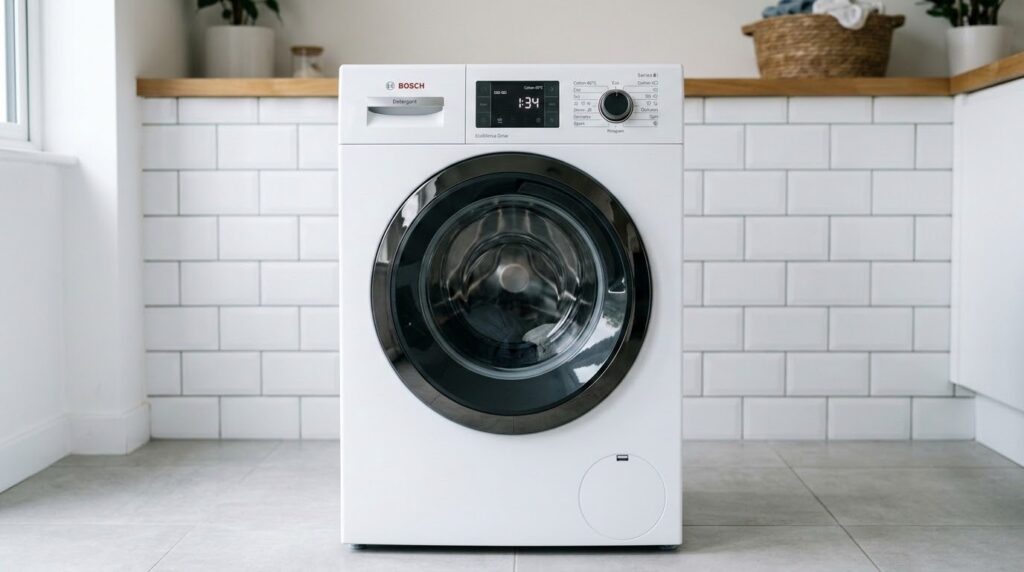
A washer that will not spin or agitate often points to a worn drive belt. This repair is simple to handle at home with basic tools and a steady approach.
What the Drive Belt Does and Why It Fails
The drive belt is a rubber loop that connects the motor to the gearcase and tub. As the motor turns, the belt transfers that motion to spin the basket or move the agitator during a wash cycle.
Over time, the belt wears down from constant movement and friction. It can stretch, crack, or slip out of place. When this happens, the washer may stop spinning, struggle to agitate, or make unusual noises.
A broken belt often causes a loud sound, followed by a washer that no longer moves as expected.
Common Signs of a Worn Drive Belt
Spotting the issue early helps prevent bigger problems with your washer.
- Washer does not spin during the cycle
- Agitator does not move or works inconsistently
- Burning rubber smell during operation
- Squealing or slipping noise from underneath the washer
- Washer runs but the drum stays still
- Spin cycle starts but quickly stops
- Clothes come out soaking wet after a full cycle
- Washer struggles to handle heavier loads
- Drum turns slowly or unevenly
- Unusual vibration during agitation
What You Need Before You Start
Gather your tools and parts before beginning the repair.
- Replacement drive belt W11239857 that matches your washer model
- 5/16 inch nut driver
Safety Tips Before You Begin
Working on appliances requires attention and care. Follow these simple safety tips before starting.
- Unplug the washer from the power source or switch off the breaker
- Turn off the water supply to the unit
- Let the washer cool down if it was recently used
- Keep towels nearby to catch any leftover water
- Work in a clean and well-lit space
- Keep children and pets away from the area
- Keep your hands dry while working
- Wear gloves to protect against sharp edges
- Handle parts carefully to avoid damage
- Take photos before disconnecting parts so reassembly is easier
How to Replace Whirlpool/KitchenAid/Maytag Washer Drive Belt
Follow these steps to install a new drive belt and restore proper washer function.
Preparation and Access
- Unplug the washer from the power outlet
- Tilt the washer back slightly and lean it against a wall to access the underside
- Locate the belt cover at the bottom of the washer behind the front panel
- Use a 5/16 inch nut driver to remove the two screws holding the belt cover
- Set the screws aside in a safe place
- Pull the belt cover straight off and set it aside
Remove the Old Drive Belt
- Find the old drive belt around the motor pulley and gear case pulley
- Hold the belt at one pulley and turn the other pulley to loosen it
- Pull downward on the belt to remove it from both pulleys
- Remove the old belt completely
Clean and Prepare the Area
- Inspect the pulley area for debris or belt residue
- Wipe the area clean if needed
- Let the area dry before installing the new belt
Install the New Drive Belt
- Place the new belt over the motor pulley and seat it in the groove
- Stretch the belt around the gear case pulley while turning the pulley
- Keep tension on the belt as it slides into place
- Check that the belt is centered and properly seated on both pulleys
Reassemble and Test
- Position the belt cover back in place and align it with the locator pin
- Reinstall the two screws using the 5/16 inch nut driver
- Carefully return the washer to the upright position
- Plug the washer back into the power outlet
- Run a short test cycle to confirm the new belt is working correctly
When to Replace Instead of Repair
Some situations call for a full replacement instead of trying to reuse the belt.
- Visible cracks or fraying along the belt surface
- Belt has stretched and no longer fits tightly
- Repeated slipping even after adjustment
- Burn marks or melted spots on the belt
- Loud squealing that does not go away
- Washer stops spinning even after repositioning the belt
- Belt comes off the pulley repeatedly
- Previous temporary fixes no longer work
- Washer performance continues to drop
- Belt has been in use for many years without replacement
Final Thoughts
A washer that stops spinning can feel like a major problem, but this fix is often straightforward once you know what to look for. A worn drive belt is a common cause, and taking the time to replace it can bring your machine back to normal without much hassle.
The steps are simple when you stay organized and work carefully. Paying attention to early signs like slipping, noise, or weak spinning helps you act before the issue gets worse. A new belt can make a big difference in how your washer runs, especially during heavy loads.
This kind of repair is a practical way to keep your appliance in good shape and avoid bigger costs later. With the right part and a bit of patience, your washer can get back to doing its job smoothly again.