Most people remember to clean the lint trap after every load. But when was the last time you actually looked inside the drum itself? If you are like most homeowners, the answer is probably never or not recently enough.
The dryer drum is the large rotating compartment where your clothes tumble during every cycle. It touches your fabrics directly, cycle after cycle, load after load. That makes keeping it clean more important than most people realize.
Taking a few minutes to wipe your dryer drum regularly can help prevent odors, protect your clothes from stains, and keep your appliance in better shape over time. And the good news? It is one of the easiest home maintenance tasks you can do.
This article will walk you through why it matters, how often to do it, what to use, and exactly how to get it done.
What the Dryer Drum Does
The drum is the part of your dryer that spins and tumbles your clothes as hot air moves through. Your fabrics rub against the drum surface dozens of times in a single cycle.
Over time, a lot of things can build up inside that space:
- Lint dust that settles on the surface after many loads
- Fabric softener and dryer sheet residue that coats the drum in a thin film
- Dirt, body oils, and detergent residue from heavily soiled laundry
- Pet hair that sticks to the drum walls
- Melted or broken items from pockets, like crayons, gum, ink pens, or lip balm
You might not notice it at first. But slowly, that buildup adds up, and it can start causing real problems.
Why You Should Wipe Your Dryer Drum Regularly
It is easy to overlook the inside of your dryer since it looks clean enough at a glance. But there are several good reasons why making drum cleaning a regular habit is worth your time.
1. It Helps Prevent Odors
Have you ever opened your dryer and noticed a musty or stale smell? That odor usually comes from residue that has been sitting inside the drum. Damp clothes, heavily soiled items, or leftover debris can all contribute to unpleasant smells over time.
When you wipe your dryer drum on a regular schedule, you remove the buildup that causes those odors before they get worse. The result is a fresher-smelling interior and cleaner laundry overall.
2. It Reduces the Risk of Stains on Clean Clothes
This is one of the biggest reasons to stay on top of drum cleaning. Imagine pulling a clean white shirt out of the dryer and finding a mystery stain on it. That stain likely came from residue inside the drum.
Ink from a leaky pen, wax from a crayon, grease from work clothes, or gum from a forgotten pocket can all leave marks on the drum surface. Once that residue is there, it can transfer onto the next load of laundry. Regular cleaning breaks that cycle and protect your clothes.
3. It Removes Dryer Sheet and Fabric Softener Buildup
Dryer sheets and liquid fabric softener are great for keeping clothes soft and static-free. But they leave behind a thin film inside your dryer drum. Over time, that film attracts more lint and dust, making the inside of your dryer feel slightly coated or greasy.
Wiping the drum regularly removes that buildup and keeps the drying environment cleaner.
4. It Supports Overall Dryer Performance
Cleaning the drum is not the main factor in how fast or well your dryer works. But it is still part of smart dryer maintenance. A clean interior means fewer contaminants near your clothes and a better overall environment for drying. Think of it as one small piece of a larger routine that keeps your appliance running well.
5. It Helps You Spot Damage Early
Here is something most people do not think about: cleaning the drum also gives you a chance to inspect it. When you are wiping the inside, you might notice:
- Scratches or chips in the drum surface
- Rust spots forming
- Peeling drum coating
- Loose baffles (the fins inside the drum that help tumble clothes)
- Unusual residue or discoloration
Catching these issues early can save you from bigger repair bills later on.
How Often Should You Wipe Your Dryer Drum?
For most households, wiping the dryer drum about once a month is a good target. This works well as part of a routine appliance maintenance schedule and takes only a few minutes.
When to Clean It More Often
Some situations call for more frequent cleaning:
- Large households doing many loads of laundry each week
- Homes with pets that shed heavily
- Drying heavily soiled work clothes with grease or strong odors
- After drying oily or greasy items like rags or shop towels
- After any spill or melt inside the drum
When to Clean It Right Away
Some messes should not wait until the next scheduled cleaning. Clean the drum immediately if:
- A pen leaked ink inside the drum
- Crayons melted during a hot cycle
- Gum, candy, lipstick, or adhesive got stuck to the drum
- Your clothes come out with unexplained marks or smudges
- The inside of the dryer smells bad after a cycle
Add It to a Seasonal Checklist
If you tend to forget routine tasks, try pairing drum cleaning with other home maintenance habits. Once a month, you can clean the drum, clear the lint trap housing, inspect the dryer vent, and wipe down the exterior. Making it a package deal means nothing gets skipped.
Signs Your Dryer Drum Needs to Be Wiped
Not sure if it is time to clean? Look for these warning signs:
- Visible stains or residue: Dark streaks, sticky spots, waxy smears, or lint clinging to the drum walls
- Unpleasant smells: Musty odors, a burnt smell, or lingering scents from previous loads
- Marks on clean clothes: Dmudges, sticky patches, or streaking on freshly dried items
- The drum feels sticky or coated: the inside should feel smooth and clean, not greasy or tacky
What to Use to Wipe a Dryer Drum Safely
For routine cleaning, you do not need anything fancy:
- Soft microfiber cloth
- Mild dish soap
- Warm water
- Soft sponge
- Dry towel for drying the drum after
If you are dealing with stubborn buildup, these options can help:
- White vinegar: Good for cutting through residue and mild odors
- Baking soda paste: Gentle abrasive that can lift stuck-on grime
- Non-abrasive cleaner: Approved for appliance interiors
- Rubbing alcohol: Useful for certain stain types, but use carefully and follow your appliance manual
Some cleaning products can damage the drum or leave behind harmful residue:
- Harsh chemical cleaners
- Steel wool or abrasive scrubbers
- Bleach (unless specifically allowed by the manufacturer)
- Excessive water that could drip into electrical components
- Flammable cleaners of any kind
Using the wrong products can scratch the drum coating or leave chemical residue that later transfers to your clothes. Always keep it gentle.
How to Wipe Your Dryer Drum Step by Step
Ready to clean? Here is the full process:
- Turn off and unplug the dryer. Safety comes first. Never clean the inside of an appliance while it is plugged in.
- Make sure the drum is cool. Do not clean right after a hot cycle. Let it cool down completely.
- Remove loose lint and debris. Use a dry cloth to wipe out any visible dust, hair, or particles.
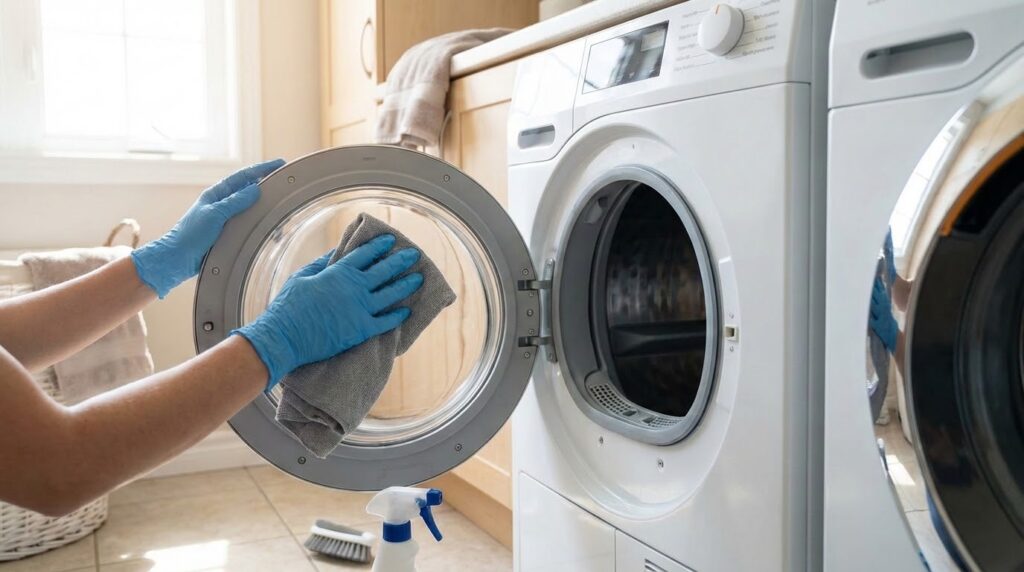
- Wipe the drum with a damp cloth and mild cleaner. Work your way around the entire interior surface, paying extra attention to areas with visible buildup. Do not soak the cloth.
- Treat stubborn spots gently. For sticky or stained areas, use a soft sponge and a little more cleaner. Repeat as needed until the residue lifts.
- Wipe again with a clean, damp cloth. This removes any leftover soap or cleaner from the surface.
- Dry the drum completely. Use a dry towel and leave the door open for a few minutes if needed.
- Run a short empty cycle if needed. Some people like to run a brief air-fluff or no-heat cycle after cleaning to help remove any remaining moisture.
Common Mistakes to Avoid
Even a simple task like this can go wrong. Watch out for these errors:
- Using too much liquid: Excess water can drip into electrical parts inside the dryer.
- Scrubbing with rough tools: Abrasive scrubbers leave scratches that trap even more residue later.
- Forgetting to rinse: Leftover cleaner can transfer onto your clothes in the next load.
- Cleaning only the drum: Good dryer care also includes the lint trap, vent, door seal, and moisture sensor.
- Waiting after a known spill: Clean up melted or spilled items right away. Waiting makes stains harder to remove.
Other Dryer Maintenance Tasks to Pair With Drum Cleaning
While you are in maintenance mode, take care of these as well:
- Clean the lint trap after every single load. This is the most basic and important dryer habit.
- Check the lint trap housing. Lint can collect in the slot beyond the screen.
- Inspect the dryer vent regularly. Blocked vents reduce efficiency and can be a fire hazard.
- Wipe around the door and seal area. Lint and residue collect near the door opening too.
- Watch for warning signs of bigger problems: unusual noises, longer drying times, overheating, or burning smells.
Related guides
What’s Next?
Taking a few minutes to wipe your dryer drum each month is one of the simplest and smartest things you can do for your home. It helps prevent odors, protects your clothes from unexpected stains, removes product buildup, and gives you a regular chance to check the condition of your appliance.
For most households, once a month is enough. But if you have a busy laundry schedule, pets, or a recent mess inside the drum, clean it sooner.
A clean dryer drum means fresher laundry, fewer surprise stains, and better peace of mind. Set a reminder, add it to your monthly checklist, and make it a habit. A small effort now can save you from bigger headaches later.
With the cause confirmed, order the dryer parts for your exact model and keep the old part until the repair has passed a full cycle.