

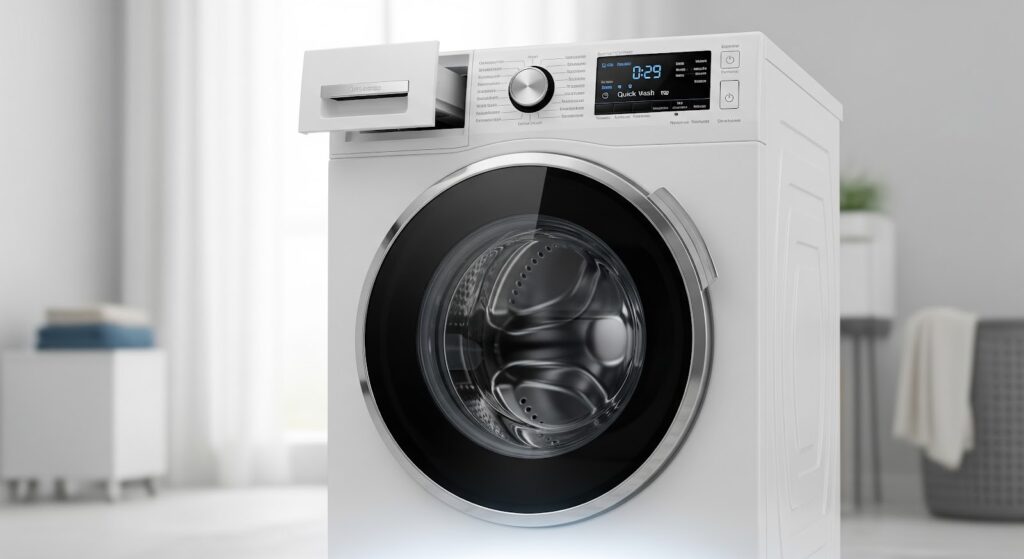
Is your washer suddenly refusing to run or acting strangely mid-cycle? One likely cause is a failed rotor position sensor switch, a small but important component that helps the washer’s motor operate correctly. The good news is that replacing it is easier than it sounds. With just a few basic tools and some simple steps, you can get your machine working again without calling a technician.
What Is a Rotor Position Sensor Switch
The rotor position sensor switch, also known as an RPS or hall sensor, is a monitoring device attached to the stator on the back of a front-load washer’s motor assembly. It detects the rotor’s speed and position while the machine is running and sends that information to the control board.
If the sensor fails because of corrosion or a leak near the tub seal, the control board stops receiving what it needs, and the washer usually shuts down.
Signs Your Rotor Position Sensor Switch Is Bad
When the RPS stops working entirely, most washers refuse to run. Many brands also show an error code that hints at the issue
- LG washers show an LE code
- Whirlpool and Maytag washers show an F51 code
If the sensor is only beginning to fail, you might see other symptoms
- The washer does not fill with enough water
- The drum fills but will not spin
- The washer becomes unusually loud during a cycle
- The appliance knocks around while running
- The machine shuts off before the cycle is complete
These problems can point to other issues as well. If you are not certain the sensor is the problem, you can access it and test it with a multimeter.
Because the RPS sits close to the tub seal and bearings, take a moment to inspect these parts while the washer is open. Worn seals or bearings can leak soapy water into the motor area and cause corrosion.
Common Causes of Rotor Position Sensor Failure
Understanding why these sensors fail can help prevent another breakdown later. Several factors often contribute to damage
- Water leaks from a worn tub seal
- Corrosion that forms after long term moisture exposure
- Loose wiring connections near the motor assembly
- Cracked or bent mounting points on the stator
- Sudden power surges that affect electronic components
- Heavy vibration from unbalanced loads
- Build up of detergent residue around the motor area
Any of these issues can interrupt the signal between the motor and the control board, which causes the washer to stop working.
Tools You Will Need
Gather these simple tools before you begin
- A compatible replacement rotor position sensor
- Phillips and flathead screwdrivers
- 17mm ratchet
- 10mm socket wrench
- Blue thread locker optional
- Work gloves
How to Replace a Washer’s Rotor Position Sensor Switch
Below are the steps to remove the faulty sensor and install the new one.
Preparation
- Unplug the washer and turn off the water supply.
- Remove the screws on the rear access panel using a Phillips screwdriver.
- Pull the top of the rear panel outward and lift the bottom out of its tabs to remove it.
Rotor Removal
- Loosen and remove the rotor bolt using a 17mm ratchet.
- Hold the rotor or have someone steady the tub to prevent it from spinning while removing the bolt.
- Pull the motor rotor off by wiggling it free from the magnetic grip.
- Inspect the rear of the wash tub for rust, corrosion, or bearing damage.
Stator Disassembly
- Remove the ground wire screw below the stator using a Phillips screwdriver.
- Remove the screw holding the stator wiring bracket.
- Remove all stator bolts using a 10mm socket while supporting the stator with your hand.
- Lower the stator and flip it over for access to the wire harnesses.
- Disconnect both wire harnesses from the stator by releasing their locking tabs.
Sensor Replacement
- Use a flathead screwdriver to pry the rotor position sensor from its interior locking tab.
- Rotate and lift the sensor to remove it from the exterior locking tabs.
- Install the new sensor by aligning the exterior tabs and snapping it into place.
Stator Reinstallation
- Reconnect both wire harnesses to the stator until they click.
- Reseat the stator and hand-thread the top bolt to stabilize it.
- Reinstall the remaining stator bolts and tighten them with the 10mm socket.
- Reinstall the ground wire screw and the wire harness bracket. Make sure the wires are not pinched.
Rotor Reinstallation
- Place the motor rotor back onto the shaft, allowing the magnets to seat it.
- Apply blue thread locker to the rotor bolt if available.
- Hand-thread the rotor bolt and tighten it with the 17mm ratchet while keeping the tub steady.
Final Steps
- Reinstall the rear access panel by aligning the bottom tabs, seating the top, and reinstalling the screws.
- Plug the washer in, turn the water supply on, and run an empty wash cycle to verify operation.
Tips to Prevent Future Sensor Damage
A few simple habits can help the new sensor last longer
- Avoid overloading the washer which places extra stress on the drum and bearings
- Use the correct amount of detergent to reduce residue build up
- Inspect the rear of the washer for moisture every few months
- Replace worn tub seals or bearings at the first sign of leaking
- Keep the washer level to reduce vibration during heavy cycles
- Run a cleaning cycle regularly to maintain internal components
- Check the wiring harness during routine maintenance
These small actions help protect the motor area from moisture and vibration, two of the most common causes of sensor failure.
Final Thoughts
A washer that stops mid cycle or refuses to spin can feel like a huge headache, yet a bad rotor position sensor is often an easy fix once you know what to look for. Now you have a clear picture of the signs, the common causes, and the steps to swap in a new sensor with basic tools. A little attention to leaks, vibration, and detergent use goes a long way toward keeping the motor area dry and healthy. A few quick habits can save you from another surprise shutdown and keep your washer running smoothly for years.