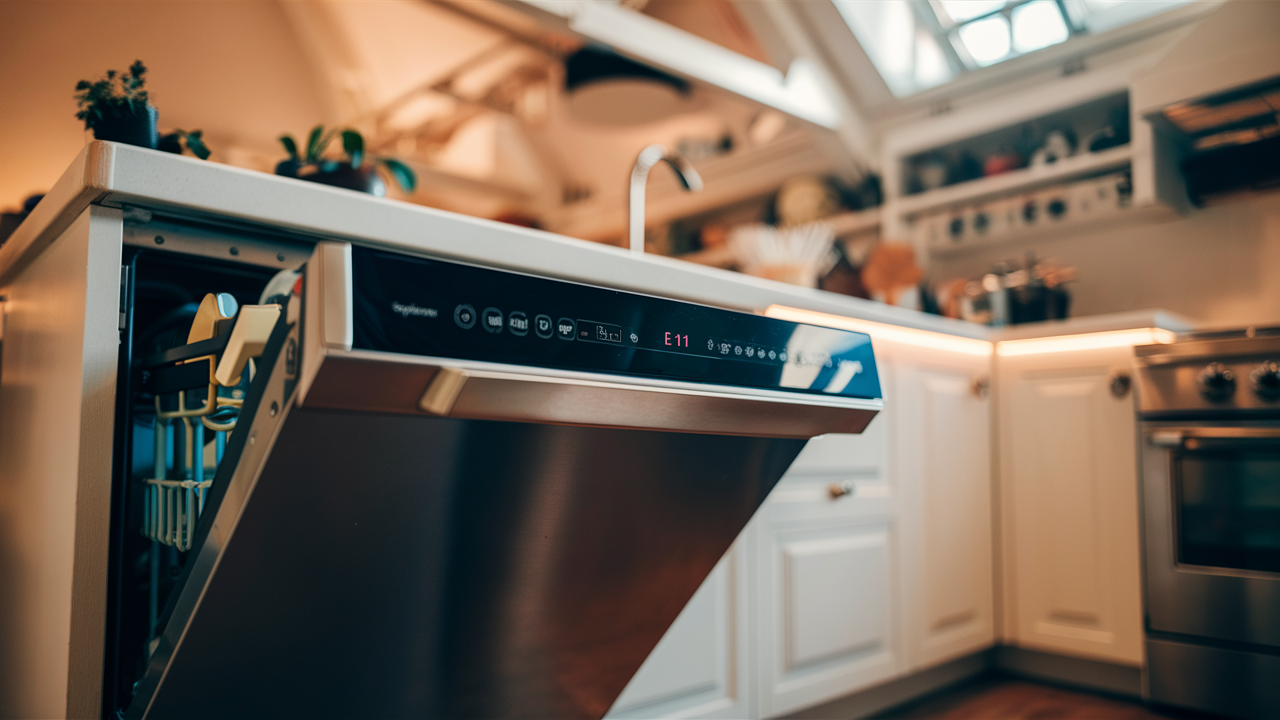
For many Bosch dishwasher owners, one of the most frustrating error code to see is “E11”. This vague code usually signals a temperature sensor issue, but tracking down the specific cause can be challenging. Whether it’s limescale buildup interfering with circuits, worn-out heating components, or faulty temperature probes, the E11 error prevents your dishes from getting nicely sanitized. Let’s break down the most common E11 culprits and provide a step-by-step troubleshooting guide to resolve this issue and get your Bosch dishwasher back in washing action.
Causes of the E11 Error Code
What leads to the frustrating E11 error code on your Bosch dishwasher? Understanding why it happens is the first step to fixing it. Let’s break down the most common reasons you might see this code.
Limescale Build-up Due to Hard Water
Have you noticed white powdery deposits or scale accumulating in your dishwasher? That’s limescale, which comes from high mineral content in hard water. As the water evaporates, it leaves the minerals behind on dishwasher parts. Over time, thick limescale layers can interfere with heat sensors and water circulation. The sensors send error codes when they can’t accurately read temperatures. Removing limescale could be the simple solution!
Lack of or Malfunctioning Water Softening System
Do you use a water softener? Water softeners replace hard minerals like calcium and magnesium with softer salts. If your softener runs out of salt or stops working properly, that’s a recipe for limescale! Make sure to check, clean, and maintain the softener as directed. Installing one can also prevent scale if you have very hard water.
Failure to Maintain and Clean the Dishwasher
When was the last time you gave your dishwasher some TLC? Food residue, dirt, grease, and debris build up surprisingly fast. If not cleaned out regularly, they clog filters, spray arms, and drains. The dishwasher has more trouble circulating water and getting hot enough to function well. Following manufacturer cleaning recommendations helps avoid unpredictable error codes!
Using the Wrong Type or Amount of Dishwasher Detergent
Are you using special dishwasher detergent rather than hand-washing soap or very harsh chemical cleaners? Dishwashers require a specific detergent otherwise, minerals and chemicals can build up over time. Make sure to also follow the dishwasher manual and detergent package for the correct amount of detergent. Using too little could make your dishes come out dirty. But using too much can lead to excess suds and overflows that interfere with sensor operation. Reading product labels closely prevents avoidable errors!
High Water Temperatures in the Dishwasher
Have you noticed that the water feels extra hot when unloading the dishes on some days? Excessively high water temperatures can be problematic over months or years. Dishwasher parts withstand high but still safe heat thresholds. But consistent water temperatures above 140-150°F have a risk of gradually damaging rubber hoses and plastic components. The weakened parts eventually fail and lead to error codes. Adjusting your household’s water heater to under 140°F helps prevent overheating in the long run.
Safety Precautions
Working on appliances can seem scary if you’ve never done it before. But with some simple preparation and care, you can safely troubleshoot your dishwasher. Let’s go over key safety tips to avoid accidents or injuries.
1. Power Off and Unplug the Appliance Before Maintenance or Repairs
This first step is crucial! Make sure the dishwasher is powered completely off and disconnected from the outlet before working on it. Even with the controls turned off, internal parts can still be energized until unplugged. No one wants surprised jolts from live wires!
2. Allow the Appliance to Cool Down Before Working on It
Ever cautiously sipped hot soup straight from the pot? The inside of a running dishwasher gets extremely hot! After powering down, give it several hours to cool off. Attempting service calls on a hot appliance risks getting burned by hot water or heated components. Patience prevents pain!
3. Turn Off the Water Supply and Keep Towels Ready
Better safe than soaked! Water and electricity are a dangerous mix. Shut off the hot water valve or line to the dishwasher before repairs. And keep some old towels or a bucket handy, just in case. Even with the lines closed, expect lingering water to leak out when you open it up.
4. Work Slowly and Carefully to Prevent Accidents and Injuries
There’s no rush when safety is key! Avoid hurried mistakes by taking your time. Handle parts gently to prevent breaking fragile plastic bits. Move cautiously in the awkward, tight space under the dishwasher to avoid banged heads or scraped knuckles. Careful focus means you only have to do the repair once!
5. Work in a Well-Lit, Clutter-Free Area
Good lighting and a clear workspace make working easier and safer. Ensure the area has ample overhead or task lighting with no shadows. Remove objects and cords from the work zone to avoid bumping them. You’ll have full visibility and range of motion without obstacles in the way.
6. Keep Hands Dry and Avoid Touching Exposed Wires or Terminals
Dry hands have a lower risk of electric shock if an exposed live wire is touched accidentally. Avoid wearing wet gloves that can transmit current. Also, refrain from unnecessarily handling any visible electrical cables or connectors when possible. Assume they could be sources of dangerous voltage.
7. Wear Insulated Work Gloves and Use Non-Conductive Tools
Thick rubber gloves add insulation if you must handle Questionable wires. Opt for wood, plastic, or rubber-handled tools as well. Metal tools carry current if they ever bridge a live power source. Pliers with plastic-coated handles offer the strength of metal with reduced conduction risk.
8. Take Photos or Notes of Wiring Connections Before Disconnecting
The appliance wires are color-coded, but keeping track of what cable goes where gets confusing once it is detached. Snapping pics with your phone or jotting down notes helps you reconnect them properly later. You avoid the headache of miswired parts that then won’t function.
9. Avoid Testing Live Voltage if Unfamiliar with the Process
Warning! Never directly probe for hot electricity unless trained in electrical safety. If voltage testing is required, consult an appliance repair specialist unless you really know the proper procedures. Accidental contact with live current can result in severe burns or electrocution. Safety first if you lack the skills.
Troubleshooting Steps for E11 Error Code
Here are the steps to take when troubleshooting the E11 error on your Bosch dishwasher. Following these steps can help you fix the problem yourself without calling a repair person.
Step 1: Power Cycle the Dishwasher
First, try power cycling your dishwasher:
- Unplug the dishwasher from the power outlet.
- Leave it unplugged for 2-3 minutes. This gives time for the control board to reset.
- Plug the dishwasher back in and check if the E11 error comes back.
Power cycling can fix simple software errors causing the E11 code. Did the error go away after power cycling? If yes, you fixed it! If not, move on to the next steps.
Step 2: Check for Limescale Deposits
Hard water can leave limescale deposits that cause problems. To check:
- Unplug the dishwasher again. Safety first!
- Look inside the dishwasher for any limescale deposits. Check the heat pump carefully.
- Remove any loose deposits or debris you find.
Limescale blocks sensors and sprays arms. Removing it may fix the E11 error. Did this solve the problem for you? If not, continue to the next step.
Step 3: Test the NTCs
NTC stands for negative temperature coefficient. NTCs measure the temperature in the dishwasher. If they malfunction, the E11 code can appear.
To test the NTCs:
- The NTCs connect to the heat pump and power module.
- Unplug the dishwasher and find the power module.
- Set a multimeter to measure resistance, shown as Ω.
- Measure resistance between terminals 4 & 5, 5 & 6, and 4 & 6.
- Compare values to the table below:
| From Terminal | To Terminal | Normal resistance range |
| 4 | 5 | 1000 – 3000 Ω |
| 5 | 6 | 1000 – 3000 Ω |
| 4 | 6 | 500 – 1500 Ω |
- If resistance values are way off, the heat pump may be bad.
- If values are normal, the power module likely needs replacement.
Testing the NTCs this way narrows down where the real problem lies. Replace faulty parts, and the E11 should be cleared for good!
Related guides
Conclusion
We covered a lot of information! Let’s review the key points:
- The E11 error code means there is a temperature sensor issue in your Bosch dishwasher.
- Causes can include limescale buildup, problems with the heat pump or NTC sensors, and more.
- Safety always comes first when doing repairs. Unplug the dishwasher, work carefully, and use protective gear.
- Troubleshooting starts with easy steps like power cycling and inspecting for limescale.
- Testing the NTC sensors with a multimeter can confirm if they are faulty.
- Replacing the heat pump or power module will likely fix the E11 if they are causing it.
We hope these troubleshooting steps give you the knowledge to tackle an E11 error yourself. Fixing it on your own saves money on repair bills.
The last step is the part itself: match a dishwasher parts to your model number rather than to a photo or a part name.