Quick answer
Start one to two weeks ahead. Clean the cool cooktop and user-removable grates and burner caps, dry them fully, and refit each piece correctly. Check normal burner operation using the stove’s directions. Keep gas ports, igniters, and controls within their care limits. Never enlarge burner openings, adjust gas fittings, or continue using a stove when you smell gas.
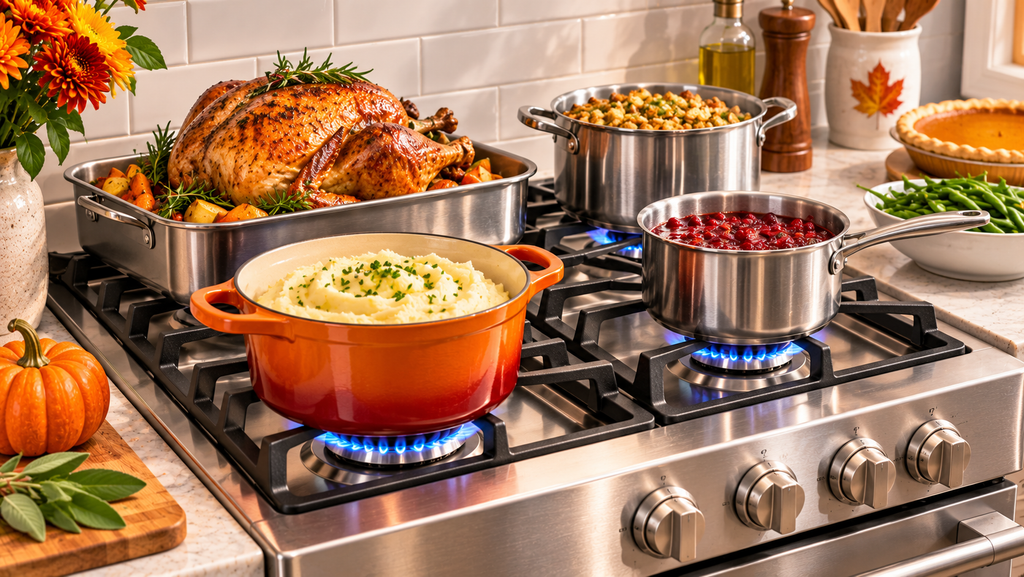
Thanksgiving can put several pans on the gas stove at the same time. Does each burner work normally, with its cap and grate correctly seated? Planning how to prepare your gas stove for Thanksgiving cooking leaves time for cleaning and ordinary checks before a crowded kitchen makes those jobs awkward.
Preparation should focus on safe household care rather than gas adjustments or internal repairs. This guide covers the parts to inspect, gentle cleaning, and a sensible readiness check. You will also learn how to plan cookware positions and when an unusual odor or ignition problem means it is time to stop using the stove.
Quick Facts
Keep flames off during cleaning and leave gas connections and adjustments to qualified service.
- Difficulty: Not specified; burner designs differ
- Time: Begin one to two weeks ahead; cleaning and drying time varies
- Tools: Soft cloth, soft brush, suitable cooktop cleaner
- Part cost: Not specified
- Skill level: Basic approved surface care; gas and internal repairs need training
Order the part with confidence
- Guaranteed to fit when you search by model number
- Same-day shipping on in-stock parts
- 365-day returns on any part
- Free tech support before and after you buy
Why Prepare Your Gas Stove Before Thanksgiving
Holiday cooking can reveal small issues that were easy to ignore with one pan. A grate that rocks or a burner cap that sits incorrectly can affect cookware stability or normal operation. Food spills can also remain around the burner area after everyday cleaning.
Early preparation lets you make those observations while there is time to arrange help. It also gives washed burner parts time to dry. Rushing wet pieces back onto the stove is not a useful holiday shortcut.
What about a different cleaning method used on an electric stove or glass top stove? Gas burner parts have their own limits. Use only the method suitable for your surface and burner design, rather than applying one strong cleaner to everything.
A Pre-Holiday Checklist for Your Gas Stove
Check the following before the holiday:
- Grates: Look for cracks, poor seating, or an unstable cooking surface.
- Burner caps: Confirm that each one is intact and in the correct position.
- Cooktop: Remove residue with a cleaner suited to its finish.
- Controls: Keep knobs readable, clean, and correctly fitted.
- Ignition: Note any change from normal lighting behavior.
- Cookware: Choose pans that fit the burner and do not crowd the controls.
- Ventilation: Keep the hood and kitchen airflow arrangement ready for cooking.
Do not pull the range away from the wall to inspect a gas connection as part of routine prep. Moving it can affect its connection and anti-tip arrangement. Leave that work to the correct service procedure.
How to Deep Clean Your Gas Stove Before Guests Arrive
Follow these steps for the stove’s permitted surface and removable-part care.
Cool and Remove Routine-Care Parts
- Turn every burner off and let the stove cool fully.
- Isolate electrical power where required for cleaning around ignition components.
- Remove grates and burner caps only as designed for normal care.
- Keep each part identified so it returns to the correct burner.
- Clear loose food from the accessible cooktop without pushing it into openings.
Wash and Refit the Parts
- Wash water-safe removable parts with a suitable cleaner.
- Wipe the cooktop using the method allowed for its finish.
- Clean around igniters and burner openings only as directed for the model.
- Rinse permitted washed parts and dry them fully.
- Refit burner caps and grates in their correct positions.
- Restore power only after cleaning is complete and parts are dry and secure.
Avoid flooding the burner area. Do not force wire, needles, or other tools into gas openings unless the specific care procedure expressly requires a suitable tool. Never enlarge an opening to make it appear cleaner.
How to Test Your Gas Stove Ahead of Time
Follow these steps to check normal burner operation before holiday cooking.
Check the Burners and Cookware Supports
- Keep the test area clear of paper, towels, packaging, and loose clothing.
- Use the normal lighting procedure for each burner and observe whether it behaves as expected.
- Follow the stove’s stated response if a burner does not light.
- Do not keep releasing gas while making repeated guesses.
- Check that cookware sits firmly on the fitted grates.
- Do not use an unusually large pan merely to see whether the stove can handle it.
One part of how to prepare your gas stove for Thanksgiving cooking is planning for a failed check. Arrange service for persistent ignition trouble or abnormal operation before relying on that burner.
For a gas odor, leave the area and contact the gas emergency service from a safe place. Avoid switches and ignition sources. Do not investigate fittings or keep trying to light the stove.
Didn't fix it? Ask a technician on the AppliancePartsPros forum.
Post your model number, the symptom, and what you've already tried. Appliance techs and experienced DIYers answer for free, usually the same day.
Ask the forum →80,000+ solved repair threads · no account needed to readDay-of Tips to Keep Your Gas Stove Running Smoothly
Keep these habits in mind during routine use.
- Match cookware to the burner and keep handles out of traffic.
- Leave enough space to reach controls without leaning over a flame.
- Use the flame setting suited to the pan and food rather than letting flames extend around its sides.
- Keep spills under control after surfaces cool. A boil-over can affect the burner area and leave a slippery floor.
- Do not wipe around an active flame with a wet cloth or remove hot burner parts to clean mid-meal.
Can the stove help heat a cold kitchen? Never use a gas stove or oven as a room heater. Keep its role limited to the cooking tasks it was designed to perform, with the required ventilation.
Frequently Asked Questions
How do you get your gas stove ready for Thanksgiving?
Clean permitted parts, refit them dry, and check normal operation early. A plan for how to prepare your gas stove for Thanksgiving cooking should also include cookware space and an alternative if a burner needs service.
How far ahead should you prepare your gas stove?
Begin one to two weeks ahead. This leaves time for drying, obtaining a compatible part, or arranging professional help instead of rushing repairs on cooking day.
What should you clean on your gas stove before guests arrive?
Clean the cooktop, grates, burner caps, and accessible control surfaces using their care directions. Do not open gas fittings or internal assemblies for holiday surface cleaning.
How do you keep your gas stove running during heavy use?
Use suitable cookware, keep burner parts correctly seated, maintain ventilation, and supervise cooking. Stop for gas odor, persistent ignition failure, or other abnormal operation.
Final Thoughts: Keep It Simple and Consistent
The best approach to how to prepare your gas stove for Thanksgiving cooking starts early. Clean gently, refit dry parts correctly, and make a normal readiness check. Leave gas adjustments and internal faults to qualified help.
For compatible burner grates, drip pans where fitted, burner caps, and knobs, shop stove maintenance parts to prepare your cooking area.
Still stuck after this guide?
Two free options: post your model number and symptom on the forum, or search the model number in the shop to see every part that fits.