Quick answer
Use vinegar only if the dishwasher permits that cleaning method. Empty the tub, rinse an owner-removable filter, wipe accessible gasket residue, and run the allowed empty hot cycle with vinegar held in a secure dishwasher-safe container on the top rack. Use the model-approved amount and rinse as required. Never mix vinegar with bleach.
Clean dishes do not always mean a clean dishwasher. Food can remain in the filter, and mineral film can collect around the tub. Can vinegar help without harming the machine? Learning how to clean a dishwasher with vinegar begins with checking that the method is permitted and clearing accessible food residue first.
This guide explains what vinegar can do, the supplies to gather, and a cautious cleaning order. You’ll also learn why there is no universal dose for every dishwasher and when an approved dishwasher cleaner is the better choice. Keep this routine separate from drain repairs or internal disassembly. A clean tub cannot correct every cause of poor washing or odor.
Quick Facts
Check vinegar compatibility first and keep bleach out of the same cleaning process.
- Difficulty: Not specified
- Time: Not specified; cycle duration varies
- Tools: White vinegar if approved, dishwasher-safe container, soft cloth, soft brush
- Part cost: Not specified
- Skill level: Not specified; owner-removable parts only
Order the part with confidence
- Guaranteed to fit when you search by model number
- Same-day shipping on in-stock parts
- 365-day returns on any part
- Free tech support before and after you buy
Why Vinegar Works on Your Dishwasher
Vinegar is acidic, which can help loosen some mineral film. It does not replace the hand cleaning needed for food caught in a filter or a sticky edge around a gasket. The visible tub and the filter need different kinds of attention.
Acid is not suitable for every surface, seal, or care method. A machine may require a specific dishwasher cleaner instead. That is why the first question in how to clean a dishwasher with vinegar is whether the appliance allows it.
Do not judge a stronger mix as a better clean. A suitable method at the required dose is more useful than extra acid left in contact with parts that should not receive it.
What You Need Before You Start
Empty all dishes and clear the sink area before beginning. Find the instructions for the owner-removable filter, if one is fitted. Some dishwasher filters are not intended to lift out for routine hand cleaning.
Gather these supplies.
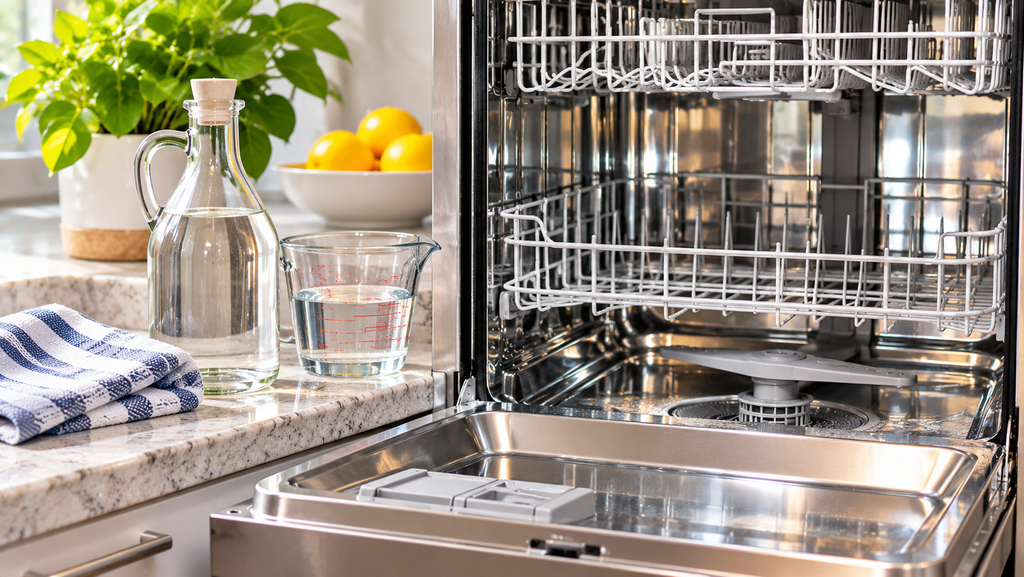
- Plain white vinegar if approved
- Secure dishwasher-safe container
- Soft cloth
- Soft brush for an approved removable filter
- Fresh water for rinsing parts
Do not add dishwashing liquid to the tub as a cleaning substitute. Excess foam can cause a mess and affect operation. Keep bleach cleaners out of the area so they cannot be mixed with vinegar by mistake. A product specifically approved for the machine may be the better choice.
How to Clean Your Dishwasher With Vinegar Step by Step
Follow these steps only when the machine permits this vinegar cleaning method.
Clear Food Residue First
- Remove all dishes and utensils from the dishwasher.
- Let hot parts cool and stop power as required for permitted hand cleaning.
- Remove and rinse the filter only if it is designed for owner removal.
- Wipe accessible door-gasket residue gently with a soft damp cloth.
- Return the clean filter and all permitted parts to their correct positions.
Run the Allowed Cleaning Cycle
- Set a secure dishwasher-safe container on the top rack.
- Add the model-approved amount of plain white vinegar to the container.
- Run the allowed empty hot cycle without mixing in other cleaning chemicals.
- Complete any rinse required by the cleaning method.
- Wipe remaining accessible residue once the tub has cooled.
Do not pour vinegar into the rinse-aid dispenser unless the appliance explicitly calls for that use.
Didn't fix it? Ask a technician on the AppliancePartsPros forum.
Post your model number, the symptom, and what you've already tried. Appliance techs and experienced DIYers answer for free, usually the same day.
Ask the forum →80,000+ solved repair threads · no account needed to readHow Much Vinegar to Use and How Long to Wait
There is no single vinegar amount that fits every dishwasher. Use the amount and cycle required for your model’s allowed method. The top-rack container must sit securely and leave room for normal spray action.
Do not add a long soak or pause because you think scale needs more time. Use the designed cycle and contact time. Extra vinegar or repeated cycles may expose seals and metals to acid without improving the cause of a problem.
The right answer to how to clean a dishwasher with vinegar may be to choose an approved cleaner instead. That is still a complete cleaning plan when vinegar is not suitable for the unit.
Mistakes That Can Damage Your Dishwasher
Avoid these mistakes and unsafe methods.
- Avoid bleach on stainless interiors, abrasive pads on gaskets, and sharp tools forced into spray-arm holes.
- Never combine bleach and vinegar.
- Keep cleaners separate from ordinary dishes and do not leave a cleaning container in the machine for the next load.
- Do not dismantle a pump, disconnect a drain hose, or open a dispenser simply to remove a smell. A persistent odor or drainage problem needs assessment beyond a tub-cleaning routine.
Is vinegar safe for your dishwasher? It depends on the model and method. A household product is not automatically safe for every appliance part, and repeated strong use should not replace a permitted care process.
How Often to Repeat This Method
A monthly tub-cleaning review and a weekly filter check are useful starting points for ordinary care. Clean visible food sooner. Follow the machine’s actual schedule and the filter’s access rules if they differ.
Scrape large food scraps into the appropriate waste container before loading. Keep spray paths clear and avoid blocking the detergent dispenser with a large dish. Those habits reduce the residue the next cleaning routine must handle.
Keep a simple date note so you do not repeat acid cleaning merely because you cannot remember the last cycle. Condition and approved care needs should guide the next clean.
Frequently Asked Questions
These answers focus on a permitted vinegar method and its limits.
How do you clean your dishwasher with vinegar?
Check that vinegar is allowed, clear the filter and gasket residue, and use a secure top-rack container during the approved empty hot cycle. Use the required amount. Learning how to clean a dishwasher with vinegar does not mean adding it to every wash or dispenser.
How often should you clean your dishwasher?
Review tub cleaning monthly and an owner-removable filter weekly as a starting routine. Usage and food residue may call for earlier attention. The appliance’s care instructions and any approved cleaner’s schedule take priority over a generic calendar interval.
What should you not use when you clean your dishwasher?
Do not mix bleach and vinegar, use abrasive pads on seals, or add ordinary dish soap to the tub. Avoid unapproved acid doses and prolonged soaking. Keep internal pump and drain work separate from routine cleaning.
Can you clean your dishwasher without taking it apart?
Most routine tub cleaning uses the normal cycle and accessible wiping. A filter may be designed for removal, but fixed internal parts should stay in place. Persistent poor drainage, leaks, or odors may need service rather than more cleaning cycles.
Final Thoughts: Keep It Simple and Consistent
A suitable product and a clear cleaning order matter more than extra vinegar. Remove food residue, respect the model’s method, and rinse as required. Keep compatible filters and seals in good shape so later care is easy to repeat.
Check your model number, then shop dishwasher maintenance parts to find compatible supplies for your next care task.
Still stuck after this guide?
Two free options: post your model number and symptom on the forum, or search the model number in the shop to see every part that fits.