Quick answer
Keep supply and return vents clear, inspect and replace the correct filter on its required schedule, and arrange a expert tune-up before winter. Note changes in sound, heating, or cycling. Leave burners, the flame sensor, blower motor, heat exchanger, gas controls, and internal electrical checks to trained service rather than a generic DIY cleaning routine.
Clear vents and a clean filter are useful starting points, but what else belongs in gas furnace maintenance? Some care is suitable for an owner, while burner, fuel, and internal wiring work needs trained help. Setting those limits before the heating season helps you plan service without turning a visual check into a risky repair.
This guide explains daily habits, regular filter checks, seasonal service, and signs that need prompt attention. You’ll learn what you can watch safely and what to leave for a trained service pro. Filters and access points vary. Use the full model number to choose parts. Keep cleaning within the care needs of that model.
Quick Facts
Gas and fuel burning parts require trained service; leave the area for fuel odor or a carbon monoxide alarm.
- Difficulty: Not stated
- Time: Not stated
- Tools: Correct model-suitable filter, service log, soft cloth for cool exterior
- Part cost: Not stated
- Skill level: Not stated; owner care is limited to allowed accessible tasks
Order the part with confidence
- Guaranteed to fit when you search by model number
- Same-day shipping on in-stock parts
- 365-day returns on any part
- Free tech support before and after you buy
What Shortens the Life of Your Gas Furnace
Poor airflow can make the furnace work poorly. A loaded filter, blocked return grille, or furniture covering supply vents may affect how heat moves through the home. These are useful owner checks because they can be observed without touching fuel parts.
Skipped expert service leaves other concerns outside that view. Burners and the heat exchanger handle fuel burning and heat transfer. The outer case may look clean. That does not show the state of the parts inside.
Gas furnace maintenance also suffers when the wrong filter is fitted. A filter that appears close in size may not be suitable. Use the required dimensions and type, including any airflow needs, rather than choosing only the thickest or highest-rated product on the shelf.
Daily Habits That Protect It
Keep these habits in mind during routine use.
- Keep the space around the furnace clear and avoid using it as a storage shelf.
- Leave required air vents and service access unobstructed. Household cleaners, paint, and stored fabric do not belong against the appliance.
- Watch how the home heats during ordinary use. Are rooms warming as usual? Has a new noise appeared? A short note about when a change occurs can help later service.
- Do not use repeated thermostat changes to hide a heating problem.
- Keep normal controls at suitable settings and investigate a repeated concern through trained help. A thermostat shows a set point. It does not prove that fuel burns as it should. It does not prove the airflow is right.
Weekly and Monthly Care Tasks
Review the filter on the schedule required for its type and your home’s conditions. Dust, pets, and frequent use can change how quickly it loads. A monthly reminder can help you check. It does not mean you need a new filter each month.
Check these routine items.
- Filter: Correct type, fit, condition, and indicated airflow direction
- Grilles: Clear supply and return paths
- Exterior: New stains, damage, or unusual moisture
- Record: Changes in heat, sound, or operating pattern
Shut the furnace down as required before opening a allowed filter compartment. Do not remove unrelated panels or reach toward wiring. A washable filter and a disposable filter need different care, so do not rinse one unless washing is allowed.
Seasonal Checks
Book expert service before winter’s heavy demand. Mention repeated shutdowns, unusual odors, rooms that heat poorly, or a filter that becomes dirty unusually fast. Keep the model and service history available.
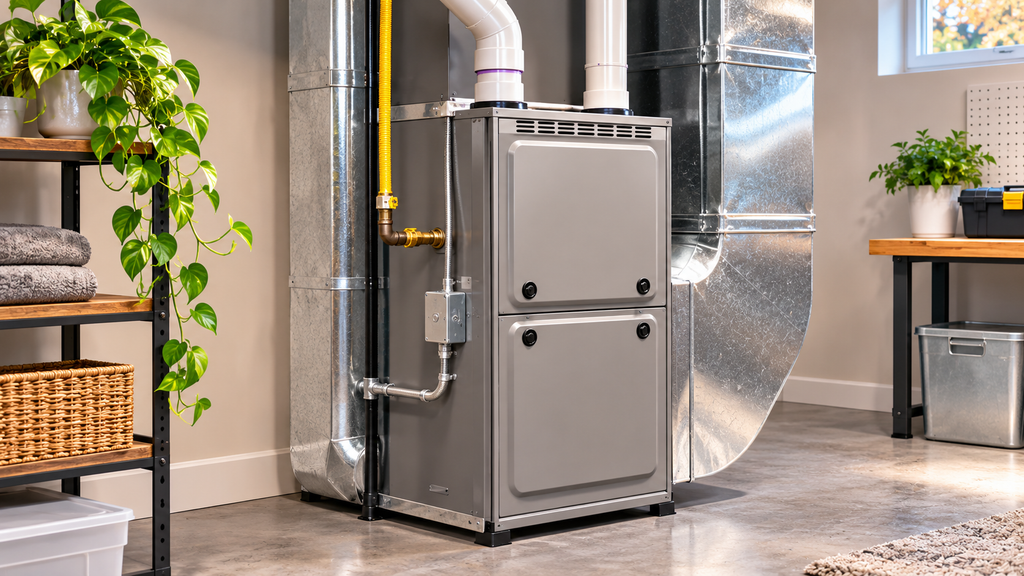
The flame sensor helps the furnace monitor burner use. A blower motor moves air, while the heat exchanger separates fuel burning gases from the air being heated. These plain descriptions explain why the parts matter; they are not instructions to remove or clean them yourself.
A seasonal gas furnace maintenance visit covers checks inside the unit. Leave those checks to the expert. Do not adjust gas pressure, clean burners by trial and error, or bypass a safety control to keep the system running.
Signs It Needs Attention
Stop normal use and seek service for these concerns.
- Repeated shutdowns
- Unusual overheating
- Visible damage
- New persistent noise
A filter change is not a cure for every heating concern. Record what you observed without opening the fuel burning section to search for a cause.
Fuel odor or a carbon monoxide alarm needs urgent action. Leave the area and get right emergency assistance. Do not remain beside the furnace to finish a checklist or try to identify a leak yourself.
What can you safely service yourself? Usually the allowed filter task, clear grilles, and accessible exterior housekeeping. The exact owner tasks come from the furnace’s design. Gas furnace maintenance is not improved by expanding that list into internal repair.
Frequently Asked Questions
These answers distinguish routine owner care from expert furnace service.
What does gas furnace maintenance involve?
It includes clear airflow paths, correct filter care, observation of normal use, and scheduled expert service. Internal burner, flame-sensor, blower, and heat-exchanger work belongs with trained help. The useful goal is sound use and early attention to changes, rather than a clean cabinet alone.
How often should you maintain your gas furnace?
Inspect on the model’s required schedule and review filter condition regularly, with a monthly reminder if useful. Arrange expert service before the heating season or as required. New abnormal use needs attention sooner than the next planned visit.
What happens if you skip maintenance on your gas furnace?
Airflow can become restricted and developing problems may go unnoticed. Poor heating, excess wear, or unsafe fuel burning concerns cannot be ruled out by appearance. Skipping care also makes it harder to describe when a change began and what service has already been done.
What supplies do you need to maintain your gas furnace?
Keep the correct filter, a service record, and basic supplies for allowed cool exterior cleaning. Confirm fit with the complete model number. Igniters and flame sensors should not be bought or changed as routine cleaning supplies when no service assessment calls for them.
Final Thoughts: Keep It Simple and Consistent
A clear filter routine and an early service appointment make winter preparation manageable. Keep the airflow paths open and take changes seriously. The right parts and records help you support expert care without guessing at internal work.
Still stuck after this guide?
Two free options: post your model number and symptom on the forum, or search the model number in the shop to see every part that fits.