Quick answer
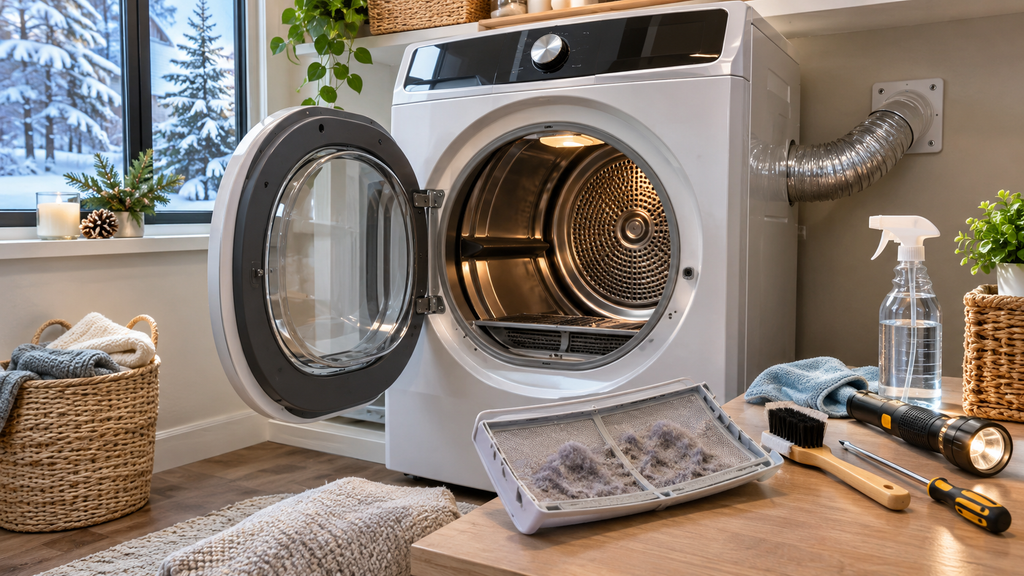
Clean the lint screen, inspect the accessible vent connection, and check that the exterior exhaust outlet is clear where it can be viewed safely. Keep the laundry area tidy and observe a normal drying cycle. Arrange proper duct cleaning or service for restricted airflow, unusual heat, or long drying times. Do not vent the dryer indoors.
Heavy bedding and winter clothes can add to the dryer’s workload just as the weather turns cold. Is its lint screen and exhaust path ready? Knowing how to prepare your dryer for winter helps you review the parts you can safely reach before bigger laundry loads become part of the weekly routine.
This guide covers a seasonal checklist, accessible cleaning, a normal-cycle check, and habits for busy laundry days. You’ll learn when a duct or exterior outlet needs professional attention and why a dryer should not be used to heat the room. Start one to two weeks before heavy seasonal use, with enough time to address a concern rather than running repeated cycles.
Quick Facts
Disconnect power before accessible cleaning; gas connections and internal service need qualified care.
- Difficulty: Not specified
- Time: Not specified
- Tools: Soft brush, vacuum attachment suitable for accessible lint areas, soft cloth
- Part cost: Not specified
- Skill level: Not specified; duct access and appliance type affect scope
Order the part with confidence
- Guaranteed to fit when you search by model number
- Same-day shipping on in-stock parts
- 365-day returns on any part
- Free tech support before and after you buy
Why Prepare Your Dryer Before Winter
Winter often adds bulkier laundry and makes outdoor vent checks easier to forget. Snow or debris can affect an exterior outlet, while lint can collect in the screen and exhaust path. The dryer needs a clear route to move damp air out.
Long drying times are a common sign to notice, but they do not identify one single cause. Load size, fabric type, screen condition, and exhaust restrictions can all matter. Do not keep adding time without checking the basics.
Dryer holiday prep is useful even when no guests are staying. A clear laundry area and early airflow review help you avoid rushing a cleaning job when every towel is already in use.
A Pre-Holiday Checklist for Your Dryer
Include these points in your seasonal review.
- Lint screen: Remove lint and look for damage.
- Vent connection: Check for visible crushing, looseness, or damage.
- Exterior outlet: Look for an obstruction from a safe ground-level position.
- Laundry area: Clear stored items and loose lint around the appliance.
- Use record: Note longer drying, unusual noise, or excess heat.
Do not pull a gas dryer away from the wall if it strains the gas connector. Avoid climbing or leaning from a window to reach an exhaust outlet. A hidden or high duct run may need a professional cleaning visit. Confirm the model and allowed vent materials before buying a hose or clamp.
How to Deep Clean Your Dryer Before Guests Arrive
Follow these steps to clean accessible areas without opening the dryer cabinet.
Remove Lint and Wipe Surfaces
- Turn off the dryer, disconnect power, and let it cool.
- Remove the lint screen and lift off the lint.
- Clean the screen only by a method allowed for its design.
- Use a suitable gentle attachment to collect loose lint from accessible areas.
- Wipe the drum and exterior with a soft cloth where routine cleaning is allowed.
- Dry any washed screen completely before returning it.
- Confirm that the screen is seated correctly before use.
Do not push a long tool blindly into a lint passage or disconnect internal wiring. The exhaust duct needs its own proper cleaning method. Gas lines, electrical connections, and enclosed drum rollers are outside this simple cleaning routine.
How to Test Your Dryer Ahead of Time
Follow these steps after cleaning and any required duct work are complete.
Observe a Normal Drying Cycle
- Confirm that the lint screen and vent connection are properly in place.
- Load a suitable ordinary laundry load within the dryer’s limits.
- Select the appropriate normal settings for those fabrics.
- Observe drying time, sound, and any unusual heat or odor.
- Stop and arrange attention if the dryer behaves abnormally.
Do not run repeated hot cycles to clear a suspected obstruction. A burning smell, visible damage, or unusual overheating is a reason to stop. For a gas odor, leave the area and get urgent help rather than continuing checks. A normal-use check does not measure every internal safety component.
Didn't fix it? Ask a technician on the AppliancePartsPros forum.
Post your model number, the symptom, and what you've already tried. Appliance techs and experienced DIYers answer for free, usually the same day.
Ask the forum →80,000+ solved repair threads · no account needed to readDay-of Tips to Keep Your Dryer Running Smoothly
Keep these habits in mind during routine use.
- Clean the lint screen as required for each load and avoid overfilling the drum.
- Sort heavy fabrics from light items when their drying needs differ.
- Follow garment care labels rather than choosing more heat to finish every load faster.
- Keep the exhaust outlet clear of snow and debris where you can inspect it safely.
- Do not block the outlet with a winter cover or route the hose into the room for warmth. The vent carries moisture, and gas dryers also have combustion exhaust.
Once you know how to prepare your dryer for winter, keep the routine visible near the laundry supplies. A quick screen check is easier to remember than an occasional large cleanup after drying performance drops.
Frequently Asked Questions
These answers cover routine seasonal dryer care.
How do you get your dryer ready for winter?
Clean the lint screen, review the accessible exhaust connection and exterior outlet, and check normal drying behavior. Arrange duct cleaning or service where needed. Learning how to prepare your dryer for winter includes allowing time for those jobs before bulky seasonal laundry builds up.
How far ahead should you prepare your dryer?
Begin one to two weeks before heavier winter use. Check the outdoor outlet again after snow or other conditions that could block it. Internal service or a difficult duct route may need an appointment, so do not leave the first inspection until laundry is urgent.
What should you clean on your dryer before guests arrive?
Focus on the lint screen, accessible lint areas, drum surfaces approved for cleaning, and the surrounding floor. The exhaust path also needs routine care through the correct access method. Do not remove panels or disturb a gas connection merely to reach hidden dust.
How do you keep your dryer running during heavy use?
Use suitable load sizes and settings, clear the lint screen, and keep the exhaust path open. Long drying times are a common concern, but there is no single most common cause that fits every dryer. Stop for abnormal heat or odor rather than adding more cycles.
Final Thoughts: Keep It Simple and Consistent
A simple lint and airflow routine helps the dryer handle winter laundry more steadily. Finish larger vent work early and keep the daily checks short. Sound screens and compatible vent parts make future care easier to plan.
Check your model number, then shop dryer maintenance parts to find compatible supplies for your next care task.
Still stuck after this guide?
Two free options: post your model number and symptom on the forum, or search the model number in the shop to see every part that fits.