Quick answer
Check the chain’s condition and tension, confirm the bar-oil supply, keep accessible debris clear, and maintain the filter on models that have one. Isolate the power source before care and wear suitable hand protection around the chain. Use the correct sharpening and storage procedure for your model; fuel-storage needs are not identical across gas saws.
Before the saw starts, take a moment to check the chain and the tool around it. Does anything look loose, worn, or dry? Chainsaw maintenance covers these small checks as well as care after cutting. A steady routine is easier to manage than discovering a concern with the tool already running.
This guide walks through everyday care, regular cleaning, seasonal storage, and signs that mean you should stop. It covers the bar and chain, tension, bar oil, and air-filter care where those parts apply. Gas, corded, and battery saws differ, so keep adjustment details tied to your exact model rather than using a single setting for every saw.
Quick Facts
Protect your hands and isolate the power source before touching the chain.
- Difficulty: Not specified
- Time: Not specified
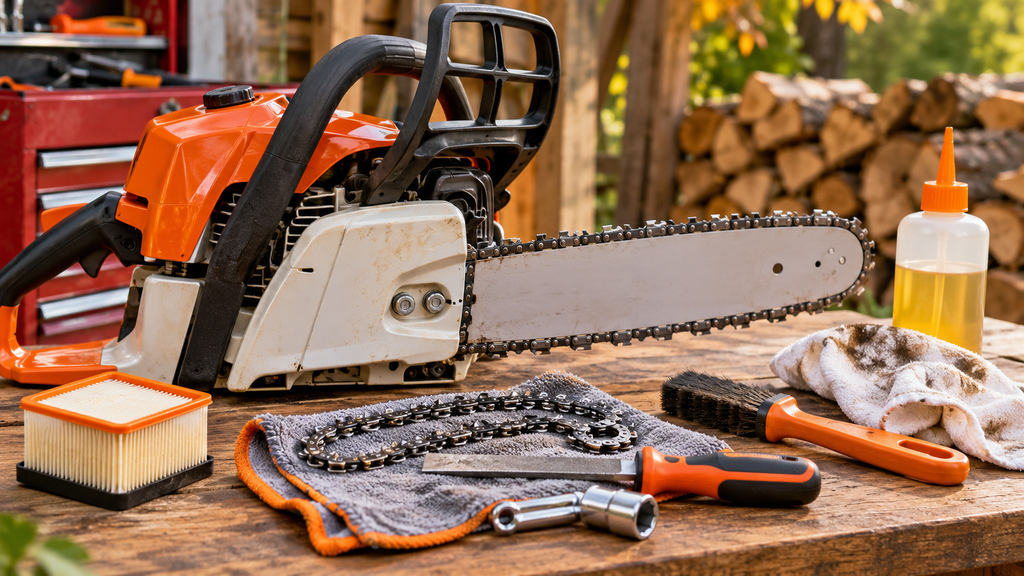
- Tools: Model-specified adjustment tool, cleaning brush, cloth, suitable gloves
- Part cost: Not specified
- Skill level: Not specified; sharpening and adjustments depend on the saw
Order the part with confidence
- Guaranteed to fit when you search by model number
- Same-day shipping on in-stock parts
- 365-day returns on any part
- Free tech support before and after you buy
What Shortens the Life of Your Chainsaw
A dull chain makes cutting harder and can encourage unsafe force. Incorrect tension, poor oiling, and packed debris add wear to the bar and chain. A saw that is run with a known problem may suffer more damage than one stopped for an early check.
Dirty air filters matter on saws that use them, while battery saws need clean cooling openings and sound battery connections. Gas saws also need proper fuel care. These differences are why care is a routine built around a model, not a single list of products poured into every tool.
Do not treat sharpness alone as proof that the saw is ready. Handles, guards, controls, and the chain brake all need to remain in sound condition.
Daily Habits That Protect It
Inspect the saw before use while the motor is off and the power source is isolated. Look for visible damage, loose hardware, a damaged bar, and chain defects. Check tension and lubrication through the model’s normal owner checks.
Use these habits during each work session.
- Cutting: Stop when the chain no longer cuts normally.
- Oil: Monitor the bar-oil supply where fitted.
- Debris: Keep accessible cooling areas free of packed chips.
- Handling: Carry the stopped saw with the bar covered.
Chain tension can change as parts warm and cool. Use the specified check and adjustment process instead of guessing at a universal gap. Never reach toward a moving chain, and do not attempt a check with the saw idling.
Weekly and Monthly Care Tasks
Include these items in your regular care checks.
- Let use guide the cleaning schedule. A saw used daily in dusty wood needs attention sooner than one stored most of the month.
- Clean loose debris from accessible areas after work so chips do not hide damage.
- Review the bar and chain for wear and arrange sharpening with the correct file size and angles. Those details vary with the chain. A new chain must match the saw and bar specification; length alone is not enough to establish fit.
Inspect an air filter if your model has one. Some filters can be cleaned in a specified way, while others must be replaced. Do not soak a filter or blow dirt into its housing without confirming that method is allowed. Keep a simple note of service dates and heavy-use sessions.
Seasonal Checks
Include these items in your seasonal checks.
- Storage condition: Before long storage, clean and inspect the stopped saw. Fit its bar cover and choose a dry, secure place away from children and ignition sources. Store the tool so the sharp chain cannot be brushed accidentally.
- Fuel and battery care: Gas-saw fuel care needs the engine’s specific storage instructions. An empty tank may be part of a plan, but it is not a universal substitute for the full fuel-system procedure. Do not drain fuel near a flame or into an unsuitable container. Battery saws need their own battery-storage conditions.
Before returning to work, review chainsaw maintenance again rather than assuming a clean stored saw is ready. Check the condition of the chain, bar, controls, cord or battery, and any signs of leakage before starting.
Signs It Needs Attention
Stop using the saw if you notice these concerns.
- Smoke
- Unusual vibration
- Damage
- Poor oil delivery
- A chain that will not hold its correct tension
- A saw that pulls oddly or needs heavy pressure
Do not keep cutting to finish one more section.
A damaged chain or bar calls for assessment and proper replacement, not an improvised repair. A faulty guard or control is a reason to keep the saw out of use. Internal engine, electrical, and safety-device work belongs with qualified service.
What happens when small changes are ignored? Wear can spread and control can get worse. Consistent care helps you notice changes early, but no care routine replaces safe cutting skills and proper protective equipment.
Frequently Asked Questions
These answers help you plan care without guessing at model-specific adjustments.
What does chainsaw maintenance involve?
It includes chain inspection and sharpening, correct tension, bar lubrication, accessible cleaning, filter care where fitted, and safe storage. Chainsaw maintenance also includes checking handles, guards, and controls. The aim is a sound, clean tool with the correct parts, not simply a sharp chain.
How often should you maintain your chainsaw?
Check the saw before each use and clean it after the work session. Review wear and filter needs more often during heavy use. Schedule seasonal storage and return-to-use checks around your actual cutting season rather than relying only on a monthly reminder.
What happens if you skip maintenance on your chainsaw?
A dull, dry, or incorrectly tensioned chain can cause poor cutting and added wear. Debris can hide damage or block cooling openings. Skipped checks may also leave a faulty guard or control unnoticed, so stop when operation changes rather than trying to work around it.
What supplies do you need to maintain your chainsaw?
Use the model-specified adjustment tool, suitable gloves, a cleaning brush, and the proper bar oil. Sharpening needs the correct equipment for the chain. Confirm all bar, chain, filter, and oil requirements with the full saw model and chain specification before buying supplies.
Final Thoughts: Keep It Simple and Consistent
A short care routine is easier to keep when the tools are ready and the saw is cool. Record wear, use the right parts, and stop when a check raises doubt. Good preparation supports safer work every time you take the saw out.
Check your model number, then shop chainsaw maintenance parts to find compatible supplies for your next care task.
Still stuck after this guide?
Two free options: post your model number and symptom on the forum, or search the model number in the shop to see every part that fits.