Quick answer
A dishwasher making noise most often has debris such as glass or fruit pits caught in the sump or drain pump, a spray arm hitting dishes, or a worn circulation pump bearing. Clear the filter and sump first, which takes about 15 minutes, then check the drain pump impeller. A replacement drain pump costs $30 to $80 and a circulation pump and motor $90 to $180.
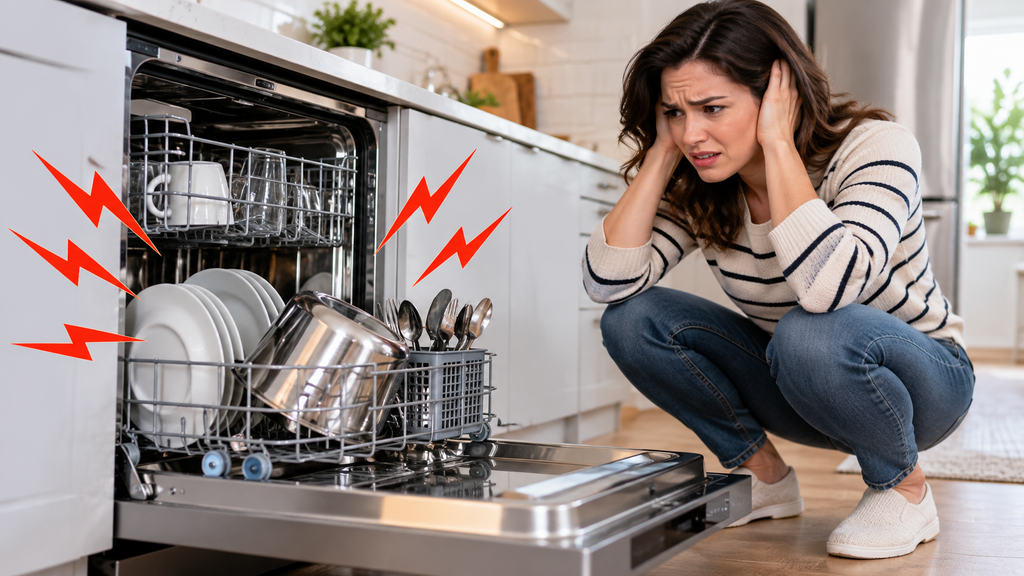
Which sound has taken over your kitchen: grinding, knocking, or a steady hum? A dishwasher making noise may have a spray arm striking a plate, glass in a pump, or a worn motor bearing. The sound’s timing helps distinguish those possibilities before you choose a repair.
Listen for whether it begins during filling, washing, draining, or door movement. Each stage uses different parts, so the same description of a noise can lead to different checks.
The sound comparisons and inspection steps below help you find debris, assess the pumps, and weigh replacement costs. They also explain when a technician should inspect the machine.
Quick Facts
Use these details to plan the work:
- Difficulty: Easy to Moderate
- Time: 15 minutes for a debris check, 60 to 90 minutes for a pump swap
- Tools: Phillips and Torx screwdrivers, nut driver, flashlight, towel, multimeter
- Part cost: $20 to $180
- Skill level: Beginner for cleaning, intermediate for pump replacement
Why Is My Dishwasher Making Noise?
Debris, a spray arm striking dishes, or a worn pump can make the dishwasher loud. The sound and cycle stage help separate the likely causes.
Use this table to narrow the area before taking anything apart.
| Sound or Pattern | Likely Cause | Useful Clue |
|---|---|---|
| Grinding during wash | Debris in the sump or chopper | Weak or uneven spray |
| Repeated knocking | Spray arm hitting a dish | Noise follows each rotation |
| Grinding during drain | Debris or wear in the drain pump | Noise starts as water exits |
| Squealing during wash | Circulation motor bearing | Continues while water sprays |
| Buzzing during fill | Inlet valve or loose mount | Appears before the wash |
| Cabinet rattle | Loose mounting | Noise comes from the frame |
The sump is the low part of the tub where water collects. An impeller is the small rotating part that moves water through a pump. Glass or a fruit pit near it can cause a loud noise without a failed motor.
Why Is My Dishwasher Making Noise but Not Washing?
A hum without spray can point toward a seized circulation pump or wash motor. Grinding with weak spray can mean debris is stopping the impeller from moving water well.
These patterns help you describe the fault.
- Humming with still water: The motor may be unable to turn.
- Grinding with weak cleaning: Debris may be caught in the wash path.
- Normal fill followed by noise: The problem may begin when circulation starts.
- Noise only during drain: Focus on the drain pump rather than the wash motor.
The circulation pump supplies the spray arms, while the drain pump removes used water. Their different jobs require different repairs.
Why Is My Dishwasher Making Noise but Not Running?
A machine that seems idle may still be draining or trying to fill. Repeated drain-pump operation, valve buzzing, or a control stuck in drain can make noise without a normal wash starting.
Note which action accompanies the sound.
- Water moving into the sink drain points toward drain operation.
- Buzzing during a fill attempt points toward the inlet valve.
- Repeated draining without wash action needs further diagnosis.
- Noise only when the door moves points toward rollers or hinges.
A dishwasher making noise but not running needs diagnosis of the fill, wash, or drain action before a circulation motor is ordered.
Is the Circulation Pump, Drain Pump, or Spray Arm Making the Noise?
Match the noise with the part’s job and location.
- Circulation pump: Sits at the sump beneath the tub and moves wash water through the spray system. A worn bearing can squeal during washing.
- Drain pump: Sits beneath the dishwasher and sends used water into the drain hose. A jam or worn impeller can become noisy during drain.
- Spray arm: Rotates inside the tub. A dish in its path can cause repeated knocking.
Door creaks involve separate parts. The door cable rollers guide the balance cable, while the hinges carry the door as it opens. Neither diagnosis calls for a wash-pump purchase.
How to Check for Debris in the Dishwasher Pump
Follow these steps to check the wash area for trapped debris.
Clear the Accessible Wash Path
- Unplug the dishwasher or switch off its breaker.
- Remove the lower rack and lower spray arm.
- Lift the filter and sump cover as the model allows.
- Remove visible glass, seeds, or other debris from the chopper and impeller area without reaching blindly.
- Reassemble the cover, filter, spray arm, and rack before restoring power.
Glass can hide under cloudy water or food residue. Gloves and a flashlight help you work carefully, but they do not make a blind reach safe. Stop if the parts do not match the access layout on your model.
How to Fix a Noisy Dishwasher Step by Step
Follow these steps to check the noisy area and replace only a confirmed failed part.
Phase 1: Cut Power and Clear the Tub, Filter, and Spray Arms
- Disconnect power before touching internal parts.
- Clear the tub and filter of visible debris.
- Check the spray arms for contact with dishes.
Phase 2: Inspect the Sump, Chopper, and Drain Pump Impeller
- Inspect the sump and chopper for trapped objects.
- Remove the drain pump for inspection only with power off and model access confirmed.
- Check its body and impeller for debris or damage.
- Clean debris from the pump seal and impeller area and inspect for wear.
Phase 3: Check the Circulation Pump Motor and Mounting
- Check the circulation motor when squealing occurs during wash.
- Check whether the inlet valve is loose before blaming its fill-stage buzz or knock on failure.
- Disconnect power and slide the unit out to inspect damaged door cable rollers when the door itself makes noise.
- Inspect door hinges, bumpers, and pivot points for wear or damage.
Phase 4: Replace the Failed Pump or Motor and Test a Cycle
- Replace a pump, motor, valve, roller, or hinge only when its own inspection confirms failure.
- Reassemble the dishwasher before restoring water and power.
- Run a test cycle and compare the sound at fill, wash, and drain.
Pump mounting and wire connections vary by model. Do not force a generic part-removal method onto a different pump layout. A technician is useful when the noisy component is buried under the cabinet or live tests would be needed.
Should You Repair or Replace a Noisy Dishwasher?
A debris check is often worth doing before you consider replacing the appliance. A failed wash motor on an older unit needs a broader cost comparison.
These part ranges can help with that choice.
- Drain pump: About $30 to $80 when the pump is damaged or worn.
- Circulation pump and motor: About $90 to $180 for the failed wash assembly.
- Older dishwasher: Compare a repair quote with replacement when it is over ten years old and needs a wash motor.
- Repeated pump failures: Ask why the failures recur before buying another assembly.
These part costs exclude installation. Confirm compatibility with the complete model number before ordering a pump, motor, or spray arm.
FAQ
When Should I Call a Technician for a Noisy Dishwasher?
Call when the noise remains after accessible debris is cleared or the pump is difficult to reach. Burnt wiring, leaks, or the need for live electrical tests are further reasons to stop.
Can a Noisy Dishwasher Damage Itself?
A trapped object or failing bearing can keep stressing the pump. Stop running repeated loads when the grinding or squealing is new and persistent.
Is a New Dishwasher Supposed to Make a Humming Sound?
Some motor and water sounds are normal during a cycle. Check new grinding, knocking, or squealing, especially with changed washing or drainage.
Quieting the Dishwasher for Good
A dishwasher making noise needs a careful check of its sound and cycle stage. Connect the noise with its cycle stage, check for debris, and confirm a failed part before replacing it.
Find the drain pump, circulation pump, or spray arm for your model once the faulty component is clear, so the next load can run quietly again.