Quick answer
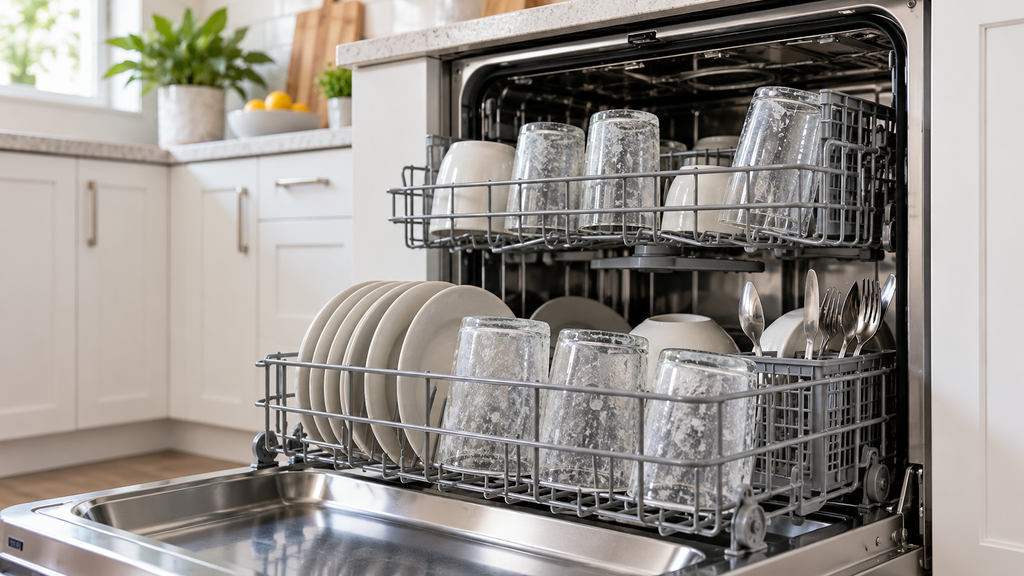
A dishwasher leaving glasses cloudy is usually depositing hard water minerals, leaving detergent residue because the water is below 120°F, or etching the glass when soft water meets too much detergent. Soak one glass in white vinegar for 5 minutes: if it clears, the cause is mineral film and rinse aid or a softener fixes it. If it stays cloudy, the glass is etched and cannot be restored.
Cloudy glasses after a dishwasher cycle can have removable mineral film, detergent residue, or permanent etching. Those conditions may look similar, but etched glass cannot be restored by cleaning or replacing a dishwasher part. This guide explains how to distinguish the haze and adjust the washing conditions so the remedy matches the cause.
Quick Facts
| Detail | At a Glance |
| Difficulty | Easy |
| Time | 10 minutes for the vinegar test, 30 to 60 minutes for a component check |
| Tools | White vinegar, water hardness test strip, dishwasher thermometer or kitchen thermometer, multimeter for element test |
| Part Cost | $0 for settings and rinse aid, $30 to $80 for a heating element, $20 to $60 for an inlet valve |
| Skill | Beginner for tests and settings, intermediate for parts |
Why Is My Dishwasher Leaving Glasses Cloudy?
A dishwasher leaving glasses cloudy can produce mineral film, detergent residue, or permanent etching; a film can be removed, while etched glass cannot be restored by a new part.
The following details help narrow the decision.
| Condition or Detail | Meaning or Next Consideration |
| hard water mineral film | Use this observation to narrow the fault before choosing a replacement. |
| detergent residue | overdosing or low temperature |
| etching | soft water plus too much detergent |
| rinse aid empty | Use this observation to narrow the fault before choosing a replacement. |
| low water fill | Use this observation to narrow the fault before choosing a replacement. |
A symptom points toward a system, but several parts in that system may cause it; the useful question is which observation separates those parts. Visible damage gives stronger evidence than a guess from age alone. An electrical fault needs a reading made at the right points.
Is Cloudy Glassware From Hard Water Deposits or Etching?
Hard water leaves mineral deposits; too much detergent can leave residue, especially in soft water. Heat and harsh washing can also damage the glass itself. The type of haze matters before you change detergent, adjust rinse aid, or pay for a water softener.
The following details help narrow the decision.
| Condition or Detail | Meaning or Next Consideration |
| look | Use this observation to narrow the fault before choosing a replacement. |
| feel | Use this observation to narrow the fault before choosing a replacement. |
| vinegar test result | Use this observation to narrow the fault before choosing a replacement. |
| cause | Use this observation to narrow the fault before choosing a replacement. |
| fix | Use this observation to narrow the fault before choosing a replacement. |
| whether it is reversible | Use this observation to narrow the fault before choosing a replacement. |
A symptom points toward a system, but several parts in that system may cause it; the useful question is which observation separates those parts. Visible damage gives stronger evidence than a guess from age alone. An electrical fault needs a reading made at the right points.
What would make this part a poor choice? A sound test result means you need to consider the other causes before ordering it.
How Do I Test Whether Cloudiness Is Removable With Vinegar?
Follow these steps to check this part of the fault.
Check the Specified Test Conditions
- Soak one glass in white vinegar 5 minutes.
- Rinse and dry.
- Compare.
- Clear means mineral film.
- Still cloudy means etching or scratching.
A symptom points toward a system, but several parts in that system may cause it; the useful question is which observation separates those parts. Visible damage gives stronger evidence than a guess from age alone. An electrical fault needs a reading made at the right points.
Does Rinse Aid or a Water Softener Fix Cloudy Dishes?
These signs need to be read together; a single symptom can point to more than one cause, so the condition of the related parts matters too.
Keep these points in mind.
- Rinse aid dispenser level and setting
- Hardness above 7 grains per gallon needs softening
- Detergent dose for soft water
- Phosphate-free detergent film
A symptom points toward a system, but several parts in that system may cause it; the useful question is which observation separates those parts. Visible damage gives stronger evidence than a guess from age alone. An electrical fault needs a reading made at the right points.
Why Is My Miele Dishwasher Leaving Glasses Cloudy?
These signs need to be read together; a single symptom can point to more than one cause, so the condition of the related parts matters too.
Keep these points in mind.
- Refill the built-in softener salt
- Set the hardness level in the menu
- Raise the rinse aid dose
- Use the glassware program
A symptom points toward a system, but several parts in that system may cause it; the useful question is which observation separates those parts. Visible damage gives stronger evidence than a guess from age alone. An electrical fault needs a reading made at the right points.
How to Clear Cloudy Film and Reset the Dishwasher Settings Step by Step
Follow these steps to complete the covered procedure for dishwasher leaving glasses cloudy.
Phase 1: Run a Vinegar or Citric Acid Cleaning Cycle
- Place a cup of white vinegar on the top rack.
- Run an empty cycle without detergent.
- Use a water hardness test to judge whether a softener is needed.
Phase 2: Fill and Adjust the Rinse Aid Dispenser
- Fill the rinse aid dispenser.
- Adjust its dose for the water conditions.
- Check whether the glass film improves.
Phase 3: Correct Detergent Dose and Check Water Temperature
- Use the detergent dose for the water hardness.
- Rub a glass with vinegar to separate film from permanent etching.
- Use a gentle glass cycle and avoid high heat drying for etched glasses.
- Handwash delicate glassware.
- Remove and rinse blocked spray arms, then refit and check that they spin.
- Remove the model filter and wash it with warm soapy water.
- Refit the filter or replace it if damaged.
- Load glasses on the top rack at an angle without nesting.
- Leave spaces and avoid blocking the arms.
- Split an overcrowded load.
Should You Change Settings, Replace a Part, or Replace the Glasses?
Choose the repair that matches the confirmed fault; a cheaper part will not help if it belongs to a different part of the system.
Keep these points in mind.
- Settings and rinse aid free
- Heating element $30 to $80
- Inlet valve $20 to $60
- Etched glasses cannot be restored and should be replaced
FAQ
Can a Bad Heating Element or Inlet Valve Cause Cloudy Glasses?
Yes, cool water or a short fill can leave detergent residue. Water below 120°F and a restricted inlet can reduce washing quality.
Why Are Only Some Glasses Cloudy?
Glass type, position, and previous etching can differ. Some pieces may also sit in a weaker spray path.
Does the Dishwasher Leaving Dishes Cloudy Mean the Same Cause as Glasses?
Mineral film and detergent residue can affect both. Permanent etching is damage to the glass surface and needs a separate judgment.
How Hot Should the Dishwasher Water Be?
The target stated here is 120°F inlet water. Use the appliance requirements when selecting the supply setting.
Clear Glasses Start With the Right Diagnosis
You have a clearer path when the symptoms, model, and test results agree; focus on the failed part and keep the nearby wiring, mounts, and seals in view. A sound diagnosis helps the repair solve the original problem.
Check the full model number, then choose the compatible rinse aid or water flow parts so the glasses come out clear.