Quick answer
This test covers GE Adora, Cafe and Profile French door designs from 2014 to 2015. The freezer cabinet sensor measures air temperature. It is not the sensor clipped to the cooling coil. Confirm the model’s code meaning and temperature chart before using these resistance values.
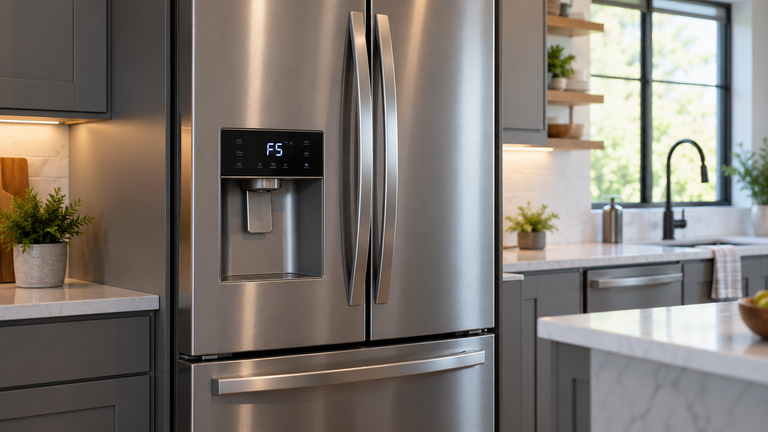
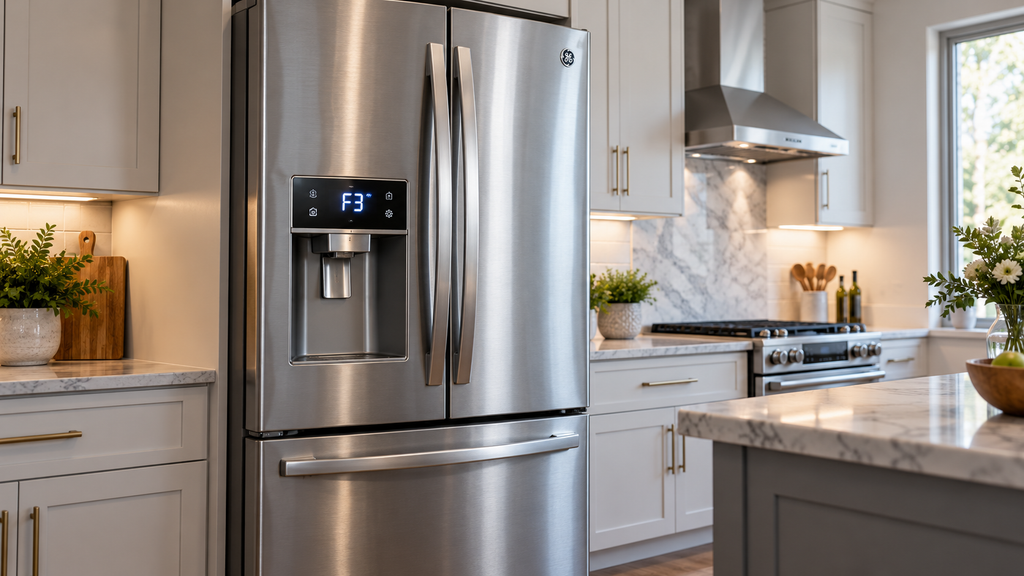
The GE refrigerator F3 error code identifies a freezer cabinet sensor circuit problem on covered French door models. That sensor, called a thermistor, tells the control about freezer temperature. Its electrical resistance changes with temperature. Does F3 prove that the sensor needs replacement? No. A loose connection, damaged wire or control fault can affect the reading too.
What This Symptom or Part Can and Cannot Prove
Use the code to narrow the diagnosis.
- Circuit warning: F3 points to the freezer cabinet sensor circuit on the covered design.
- Bad reading: Resistance outside the correct temperature chart supports sensor failure.
- Passing sensor: Correct readings at both temperatures call for further circuit diagnosis.
- Part location: A freezer evaporator sensor belongs to a different measurement location.
The GE refrigerator freezer cabinet thermistor must be identified from the model’s diagram. Buying a sensor for the wrong position leaves the original fault unresolved.
Verify Your Model First
Look inside the fresh food compartment for the full model label. Check the bottom freezer label locations if you cannot see it.
Find the Refrigerator model tag before ordering. Record the full model number, including its suffix, because parts with the same name can use different connectors, dimensions, ratings or mounting points across models.
Choose a ge freezer thermistor replacement by model. The sensor grille, wires and part number need to match that complete model. The serial number can also help identify the unit when you request service.
Safety Before Testing
Keep these precautions in place.
- Power: Unplug the fridge or shut off its breaker before access, resistance testing and replacement. Confirm that power is off.
- Gloves: Wear insulated work gloves for sharp edges, pinching hazards and debris.
- Space: Use good lighting. Clear clutter and keep children and pets away.
- Dry conditions: Keep hands and the work area dry. Do not touch internal parts with wet hands.
- Handling: Take your time, use gentle force and let hot parts cool first.
- Eyes: Wear safety glasses around chemicals, dust or large debris.
- Instructions: Follow the model’s safety directions. Record or photograph connections before disconnecting them.
- Wires: Avoid exposed terminals and use insulated tools. Gloves do not make powered resistance testing safe.
- Electrical work: Follow local electrical rules. Leave household wiring, outlets and breaker panels to an electrician.
Gather these tools and supplies.
- 1/4, 5/16 and 3/8-inch nut drivers, sockets or wrenches
- T15, T20 and T27 Torx bits
- Flathead and Phillips screwdrivers
- Wire strippers
- Multimeter
- Bell connectors
- Silicone grease
- Correct foil sensor cover
Causes to Check Before Buying a Part
What evidence separates the sensor from the rest of the circuit?
| Cause | Evidence | Safe check | What result means |
| Incorrect code meaning | F3 on an unrelated design | Match the model’s service information | Do not apply these values |
| Connection problem | Loose plug or damaged wire | Inspect with power off | Correct the circuit fault before a parts decision |
| Sensor fault | Reading outside the temperature chart | Power off resistance test | Sensor replacement is supported |
| Remaining circuit fault | Sensor passes but F3 returns | Professional wiring and control assessment | A passing sensor does not prove board failure |
Once the test identifies the failed part, confirm the exact freezer thermistor with the full model number.
How to Diagnose the GE Refrigerator F3 Error Code
Follow these steps only when the sensor location and test values match your model.
Access and Test the Cabinet Sensor
- Unplug the fridge and remove freezer shelves to reach the sensor grille on the freezer’s right wall.
- Slip a small flathead screwdriver under the cover and gently release its edge. Keep track of the alignment tab and two snap tabs.
- Peel back the foil insulation on the cover.
- Release the thermistor from the cover’s four retaining tabs.
- Hold it in a glass of ice water at about 33°F for several minutes.
- Measure resistance with the meter. Expect about 16,000 ohms for this covered sensor in ice water.
- Check resistance at room temperature. Expect about 6,000 ohms, with the actual temperature matched to the chart.
- Replace the sensor if it fails the correct resistance values.
- Have the wiring and main control checked if both temperature tests pass but F3 remains. Verify the board fault before replacing it.
Replace the Confirmed Failed Sensor
- Cut the old sensor wires as close to the sensor as possible.
- Strip the outer case harness covering back 1 inch, then strip each inner wire back 3/16 inch.
- Cut the new sensor wires 4 inches from the sensor and strip them back 3/16 inch.
- Splice the wires with two bell connectors, then fill the completed connectors with silicone grease.
- Snap the sensor into the grille and restore its foil insulation. Place spare wire in the sensor pocket, then snap the grille into the liner with its alignment pin positioned correctly.
- Plug in the fridge and check normal operation and the code. Disconnect power before another resistance test.
Interpret the Result
A GE F3 freezer sensor fault is supported by a valid resistance test, not by the code alone. Ohms measure resistance; 16,000 ohms is often shown as 16k ohms on a meter. An open reading means there is no complete electrical path.
When the temperature test confirms sensor failure, find the exact freezer thermistor for this model number.
What if the sensor passes? Keep the model, temperatures and readings for the technician. Note which reading came from ice water. A recurring GE refrigerator F3 error code then requires the remaining circuit checked. Do not order the main board merely because the sensor did well.
How to Identify the Correct Replacement for This Model
Match the sensor to the freezer cabinet position in the parts diagram. Confirm its approved part number and the required splice supplies. The model number identification help can help you record the full label.
The foil cover belongs back in place. It is part of the sensor arrangement, so a torn or missing piece should not be ignored during the repair.
When to Stop and Call a Professional
Stop if the cover will not release gently, you cannot identify the sensor or the wires cannot be joined securely. Get help when F3 returns despite valid readings. The GE refrigerator F3 error code calls for evidence before choosing a sensor or control.
FAQ
What should be checked first when a GE refrigerator shows error code F3?
Confirm the model’s F3 meaning, then inspect the cabinet sensor connection with power off. An oven’s F3 test is different.
How can you tell whether the GE freezer cabinet thermistor is actually bad rather than a loose plug or damaged wire?
Check the isolated sensor at known temperatures. A loose plug or damaged wire needs its own attention before the sensor is condemned.
What resistance reading confirms a failed freezer thermistor on a GE refrigerator?
Use the model’s temperature chart. On this design, readings should be about 16,000 ohms at 33°F and about 6,000 at room temperature.
Where is the model number on a GE refrigerator and why does the suffix matter when ordering a freezer thermistor?
Look inside the fresh food area. The suffix identifies the complete version and can affect the correct part.
When should a GE refrigerator with a recurring F3 code be left to a professional?
Get help if access is difficult, wiring is damaged or the sensor passes its tests while the code returns.
In Summary
F3 helps locate a circuit problem on the covered design. A temperature matched test supports a parts decision. Correct readings call for further diagnosis.
Check the complete model label, then find the correct freezer thermistor for your model so the sensor fits the intended cabinet location.