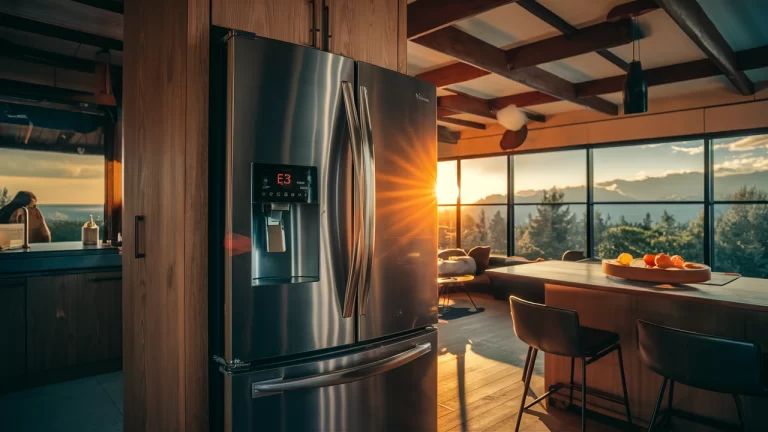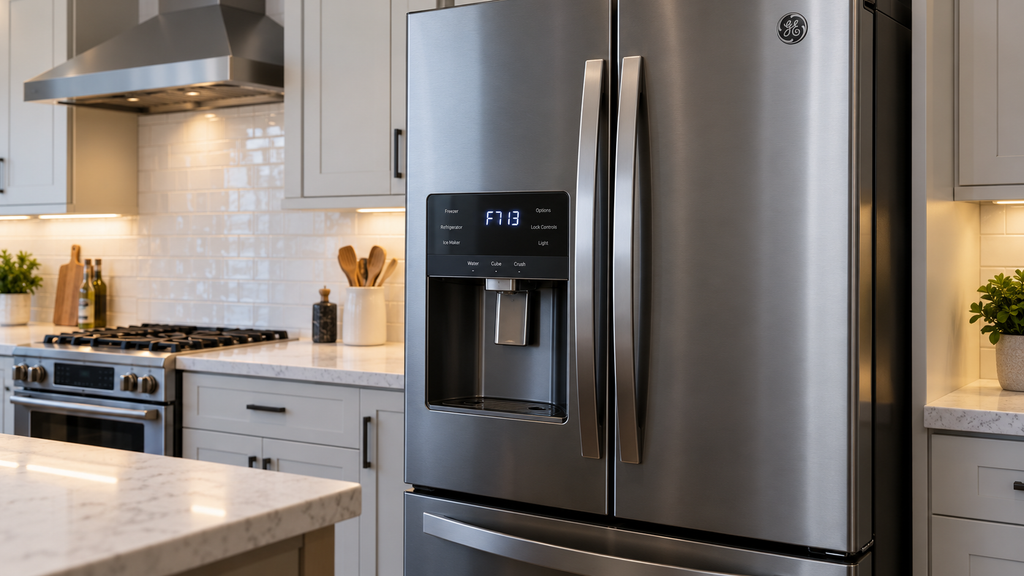
The F713 error code on a GE refrigerator calls for a door-related investigation on the covered models. It does not prove that the door switch is defective. A door that cannot close properly and a switch circuit that reports the wrong state require different repairs.
What This Symptom or Part Can and Cannot Prove
- The code reports a condition detected by the appliance.
- A door left open can produce a complaint without a failed switch.
- A switch purchase requires evidence beyond the code.
Read the complete displayed code rather than a partly remembered version. Record whether the door was open around the time it appeared. This interpretation of GE refrigerator F713 applies to certain 2014 and 2015 Adora, Cafe and Profile French-door designs. It must not be extended to every GE appliance.
Verify Your Model First
Find the Refrigerator model tag before ordering. Record the full model number, including its suffix, because parts with the same name can use different connectors, dimensions, ratings or mounting points across models.
Check the label inside the fresh-food compartment and compare the full model with its service information. GE uses different error systems across products. A code explanation for an oven or another refrigerator family cannot establish the correct diagnosis here.
The full appliance model number must come from the identification label on the appliance, rather than the front badge or an old order receipt. A clear photo makes a useful record when the refrigerator is difficult to reach. The serial number can help identify a production change, but it does not replace the model number.
Safety Before Testing
- Disconnect power before accessing a switch or wiring.
- Protect food during a prolonged repair.
- Keep the work area dry.
- Use gloves around sharp panel edges.
- Keep fingers away from hinges and closing doors.
- Use assistance for work that requires supporting a door.
Causes to Check Before Buying a Part
| Cause | Evidence | Safe check | What the result means |
| Door obstruction | Door stops short of its normal position | Check the visible closing path | An obstruction may explain the door-open report |
| Door sealing problem | Visible damage or an uneven fit | Observe closure without dismantling | A mechanical repair may be needed |
| Switch circuit fault | Door closes but input is still suspect | Arrange model-specific electrical diagnosis | The code alone has not selected a part |
Once the test identifies the failed part, confirm the exact replacement with the full model number. Use that category only when the diagnosis identifies a failed door switch; a different finding needs its own matching part.
Safe Testing and Repair Order
Rule Out Access, Power, Airflow, Water-Flow or Obstruction Causes as Applicable
Describe what “closed” means on this refrigerator. A door can look nearly closed while an item prevents its last movement. The first check should answer whether it reaches its normal resting position. An electrical explanation is premature while that mechanical question remains unresolved.
Check the Door Closing Path
- Inspect the cabinet and door area.
- Look for packages or stored items blocking closure.
- Close the door and note resistance.
- Clear the obstruction.
A door-closing complaint may involve the door switch circuit even when the visible obstruction check finds nothing. Further diagnosis must match the exact refrigerator model. Switch terminal arrangements can differ, so a generic two-terminal test cannot establish the fault.
Interpret the Result
A removed obstruction explains a physical closure problem; it does not establish that a switch also failed. Persistent reporting with a properly closing door needs the matching circuit diagnosis. The switch link below is conditional on that diagnosis. A confirmed gasket defect needs a gasket matched to the door instead.
Test result confirmed the failure? Find the exact door switch for this model number. This purchase step applies only after the stated evidence is present.
How to Identify the Correct Replacement for This Model
Match a confirmed switch to its location and the model diagram. Do not order a door switch because another GE model uses a part with the same name. When the diagnosis identifies a gasket, verify the correct door and its seal specification rather than using the switch category.
Match the full model to the manufacturer’s parts diagram before selecting a replacement part. A part name identifies the component type, while the diagram and compatible service number establish which version belongs in this appliance. A similar-looking photo can help with orientation, but it cannot confirm fit by itself.
Keep these records together:
- The full model number and suffix.
- The diagram position and current replacement part number.
- The observation or test result that led to the repair.
- A photo of the original part and its connections, where safely accessible.
Do not place an order while an unresolved model difference changes the repair method. Ask the supplier to check a superseded number against the actual appliance. The correct order should describe both the compatible part and the evidence for replacing it.
When to Stop and Call a Professional
- The appliance technical sheet gives a different code meaning.
- The door requires support or hinge adjustment beyond safe handling.
- Electrical wiring near the hinge appears damaged.
- A switch test cannot be matched to the terminal diagram.
Provide the code exactly as shown and describe the door’s closing behavior. Include whether clearing an obstruction changed the complaint. This gives the technician a starting point grounded in an observation, rather than an assumed switch failure. Ask for the model-specific result before authorizing a replacement.
FAQ
What should be checked first for F713?
Verify the model’s code definition, then check that the door reaches its normal closed position. Visible interference should be resolved before an electrical part is considered.
Does F713 mean the door switch is bad?
No. The code can describe a door condition. A properly matched switch test is needed to establish that the electrical component fails to report its state.
What result confirms a replacement?
A documented fault in the relevant component confirms the repair direction. A damaged seal and a failed switch are different findings and should lead to different part selections.
Where is the model number, and why does the suffix matter?
Use the interior identification label. The suffix helps identify the exact refrigerator version, including its service information and compatible door components.
When should troubleshooting stop?
Stop when the code meaning cannot be verified or the next action needs exposed electrical work. Door-support tasks also warrant professional help when safe handling is uncertain.
After the diagnosis is settled, find the correct door switch for your model. Keep the model record with the order so the repair starts with a verified match.
In Summary
Start with the actual door condition, then follow the model’s diagnosis. F713 can direct the investigation without becoming a reason to buy a switch. A confirmed finding and a verified model make the final repair decision clearer.
With the cause confirmed, order the refrigerator door switch parts for your exact model and keep the old part until the repair has passed a full cycle.