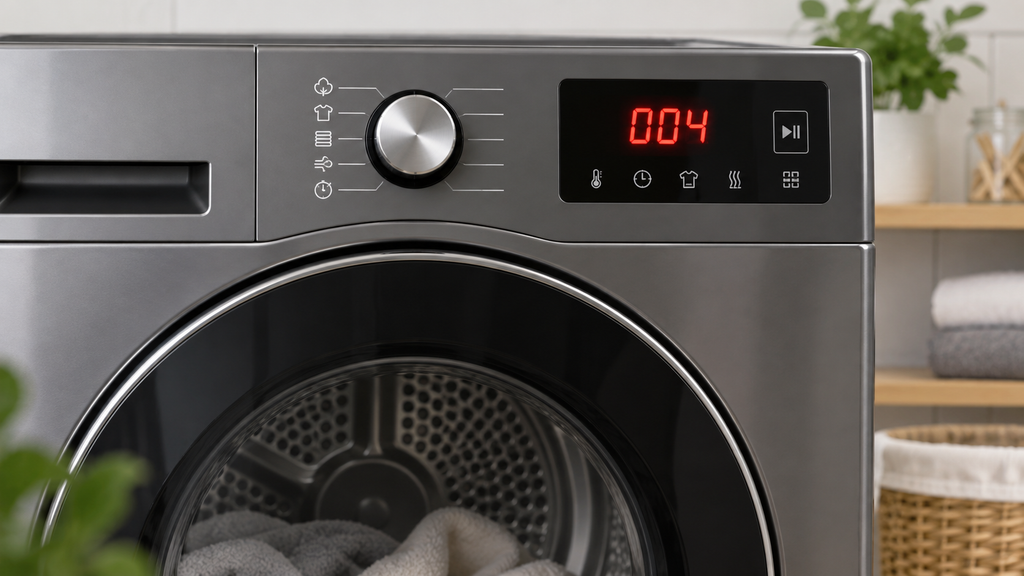
GE dryer error codes 002 and 004 indicate an inlet thermistor circuit fault. This guide explains the likely causes and presents the diagnostic checks in their tested order.
The exact layout and test values can differ by model. The model tag and manufacturer service information should guide access, part selection, and meter settings before any panel is removed.
It also covers basic dryer troubleshooting and dryer maintenance.
What to Know About Dryer
This problem usually has a short list of practical causes. Checking them in order helps separate a setup issue from a failed part or damaged connection.
Normal Inlet Thermistor Operation
To understand potential issues, first examine how the inlet thermistor functions when operating properly:
- The thermistor is mounted along the rear sheet metal duct of the dryer, often covered by a red housing.
- It is a resistive-type temperature sensor. As surrounding air temperatures rise or fall, the electrical resistance predictably decreases or increases.
- Room temperature resistance typically falls between 10,000 to 15,000 ohms. Values double for each 20°F drop in ambient temperatures.
- The main control board supplies 5V DC through the sensor’s wiring harness. By detecting subtle voltage drops caused by resistance changes, air temperature can be determined.
- The board uses inlet readings to properly time heating element cycles, maintaining ideal 175°F drum temperatures.
- Above 190°F, the thermistor triggers the high-limit thermostat to prevent overheating damage.
Error Code 002: Abnormally High Thermistor Resistance
A 002 error code indicates the main control board is detecting higher-than-expected resistance from the inlet thermistor circuit. The board believes inlet temperatures are lower than they should be.
- If damaged internally, the thermistor’s resistance may spike out of normal ranges, into the megaohms.
- Issues like cracked housing, corroded wire leads, or broken internal components can lead to incorrect resistance.
- Loose wire connections, shorts, or improper routing can also cause abnormal resistance increases.
- Intermittent shorts or continuity issues that change with vibration or movement may also be present.
How to Troubleshoot the Dryer
Access the Inlet Thermistor
- Begin by disconnecting the dryer power and implementing proper lockout/tagout procedures for your own safety.
- Carefully open the unit to access the inlet thermistor mounted along the metal rear ductwork.
Testing Resistance with a Multimeter
- With power disconnected, detach the thermistor’s wiring harness plug. Never test resistance through the control board itself.
- Use your multimeter to measure resistance across the thermistor’s terminals. Consult factory specifications.
- Compare your readings to the expected values based on room temperature. Significantly high resistance over 1,000,000 ohms indicates a defective thermistor requiring replacement.
Inspect the Thermistor Wiring
- If resistance is normal, focus your investigation on the wiring harness.
- Visually inspect the harness length, looking for any damage, loose connectors, or poor wire connections.
- Check continuity through each wire segment to reveal any opens or high resistance points.
- Verify wiring routing exactly matches the factory wiring diagram. Any deviations can cause intermittent continuity issues.
Complete Repairs and Retest Operation
- If defective, install a new OEM inlet thermistor. Never attempt to repair the sensor itself.
- Make any wiring repairs identified during harness inspection. Use heat shrink splices for secure wire connections.
- Reconnect all wiring, restore power, and test operation through several full cycles. Error code 002 should no longer appear.
- If the code persists, the main control board may need replacement as a last resort.
Error Code 004: Abnormally Low Thermistor Resistance
A 004 error code indicates the main control board is detecting lower-than-expected resistance from the inlet thermistor circuit. The board believes inlet temperatures are higher than they should be.
- Internal shorts within the device lead to drastic resistance drops. Readings may be under 500 ohms at room temperature.
- Physical housing damage or connector issues can also contribute to incorrect resistance values.
- Shorts between wires or to the ground can sometimes cause abnormal resistance drops.
- Intermittent connections, incorrect routing, or loose plugs could also be affecting resistance.
How to Troubleshoot the Dryer
Access the Inlet Thermistor
- Always disconnect power and follow proper lockout procedures before any troubleshooting to avoid hazards.
- Carefully open the dryer to access the inlet thermistor on the rear duct.
Use a Multimeter to Check the Resistance
- With power off, detach the thermistor’s wiring plug. Never test resistance through the control board itself.
- Verify resistance readings compared to expected values based on ambient room temperature.
- Unusually low resistance, under 500 ohms, indicates a damaged inlet thermistor that requires replacement.
Inspect the Thermistor Wiring
- If resistance is normal, focus on the wiring harness.
- Visually inspect for any breaks, damage, loose connectors or poor connections.
- Check continuity through each wire segment to reveal any unexpected shorts.
- Verify harness routing exactly matches the factory wiring diagram.
Complete Repairs and Retest Operation
- If defective, install a new OEM inlet thermistor. Never attempt repair of the existing sensor.
- Make any wiring harness repairs identified during the inspection. Use heat shrink splices for secure connections.
- Reconnect wiring, restore power, and test operation through several full cycles. The 004 error should no longer appear.
- If the code persists, the main control board may need replacement as a last resort.
Preventing Inlet Thermistor Issues
You can minimize inlet thermistor problems by following these tips:
- Always clean the lint filter thoroughly before each cycle to maximize airflow and cooling.
- Make sure the dryer drum turns freely without friction or binding issues. This prevents overheating.
- Avoid overloading the drum, which can lead to excessive internal heat buildup.
- Allow proper clearance behind the dryer for ventilation and cooling airflow.
- Use care when handling the thermistor itself to avoid damaging wire leads or connectors.
Quick Checks Before Replacing a Part
Review these points first.
- Confirm the exact appliance model before buying any replacement part.
- Check the power supply, plug, breaker, and control settings before opening the cabinet.
- Look for a loose connector, blocked vent, dirty filter, or obvious physical damage first.
- Write down every symptom and error code so the diagnosis stays focused.
- Review the manufacturer instructions because access steps and test values can vary by model.
Common Diagnosis Mistakes
Review these points first.
- Replacing a part before testing it can add cost without correcting the original fault.
- Skipping a power check can hide a tripped breaker, damaged cord, or loose outlet connection.
- Testing resistance through a connected control board can produce a misleading meter reading.
- Forcing a panel or connector can create fresh damage that complicates the repair.
- Reassembling without photos or labels can lead to crossed wires and misplaced fasteners.
When Professional Help Makes Sense
Review these points first.
- Stop when the repair requires live voltage testing and the safe method is unfamiliar.
- Arrange service when wiring is burned, insulation is melted, or arcing marks are present.
- Use a qualified technician for refrigerant, gas, sealed-system, or high-voltage microwave work.
- Ask for help when the appliance must be moved or lifted beyond safe personal limits.
- Schedule service when the same fault returns after every listed check has passed.
Related guides
To Recap
A careful check of the dryer can reveal a simple cause before a costly part is ordered. Model-specific information and one test at a time keep the work clear. Professional service is practical when the repair moves beyond familiar tools or training.
The last step is the part itself: match a dryer thermistor parts to your model number rather than to a photo or a part name.